

- Tensions were high between the US and Iranian presidents at the UN.
- Traders are pricing a 75% chance of a Fed rate hike in October.
- Trump rejected Iran’s proposal to reopen the Strait of Hormuz.
Currency futures edged lower on Monday as the dollar resumed its rally after Trump rejected Iran’s proposal. Talks at the UN only revealed heated tensions between the US and Iran, sending oil prices higher. With this, inflation concerns increased, and Fed rate hike expectations jumped, boosting the greenback. Meanwhile, other major currencies like the euro collapsed.
No major economic releases came out last week. As a result, all focus was on developments in the Iran war. The bombing paused briefly, and Trump said he was willing to negotiate with Iran at the UN meeting. However, during the meeting, tensions were high between the presidents of the two nations. None was willing to back down or soften their stances. Their remarks remained hostile, dashing hopes for peace.
These comments led to a surge in oil prices, increasing inflation concerns. Consequently, Fed rate hike expectations jumped. After September’s meeting, Fed officials projected one more rate hike, likely in December. The likelihood of a hike in October was around 49%. However, after the UN talks, traders were pricing a 75% chance of a hike in October. The dollar jumped while currency futures dropped.
Reports later revealed that Iran presented the US with a proposal to reopen the Strait of Hormuz. However, Trump rejected the proposal. He had already said he would not go back to the June agreement.
“If certain conditions are met, the Strait of Hormuz will be open at the end of seven days, and talks will be restarted,” Araghchi told reporters on the sidelines of the General Assembly.
“The conditions we have asked the US to meet are nothing new, nothing more than what was already in the Islamabad MOU, which was signed by the US president,” he added.
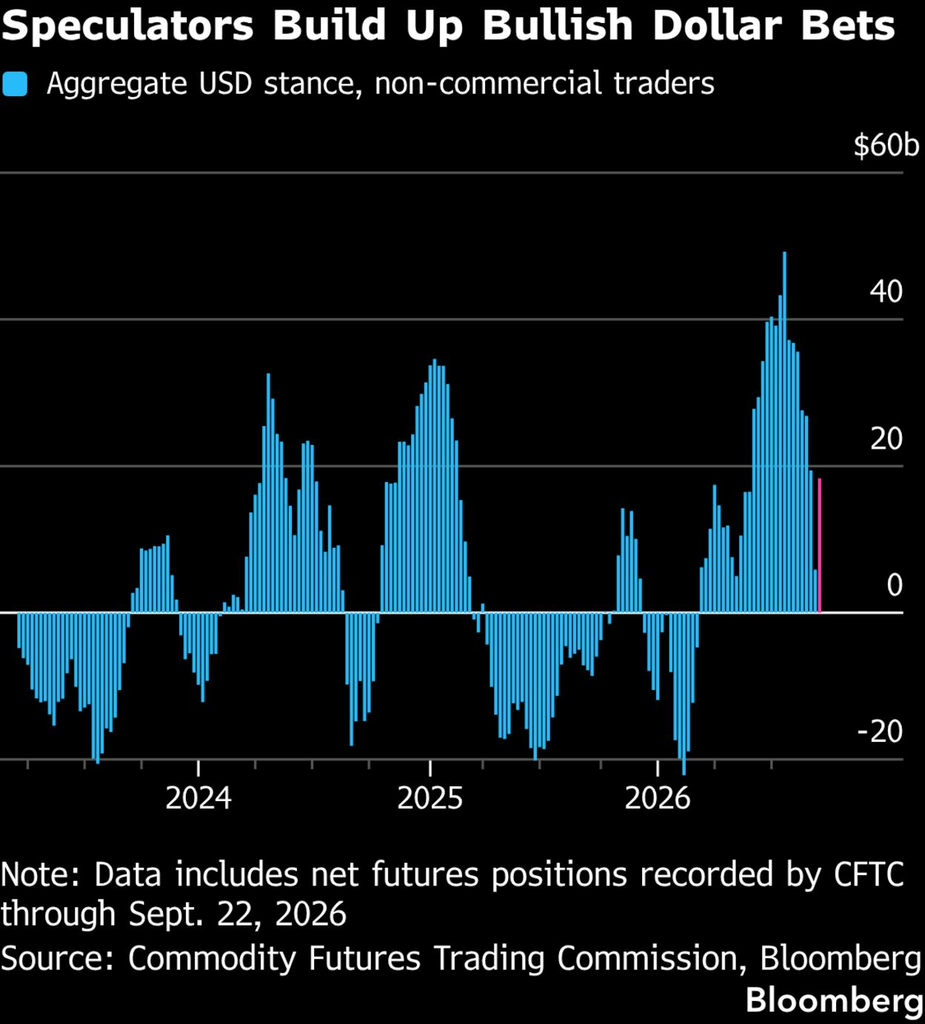
Dollar stance (Source: CFTC, Bloomberg)
With so much uncertainty surrounding the war, traders can only remain cautious. That means that safer currencies like the dollar and the yen will perform better than their peers. Meanwhile, riskier currencies like the pound might suffer.
Nevertheless, other factors like monetary policy and economic data will continue shaping movements in currency futures. This week, the US will release its crucial monthly employment report that will show the state of the labor market. The report will shape the outlook for Fed rate hikes.