


- Trump said Iran was unlikely to accept the US’s terms to end the war.
- Data revealed that crude inventories in the US unexpectedly increased by 4.4 million barrels last week.
- FOMC minutes on Wednesday revealed that policymakers are willing to hike rates if inflation remains elevated.
Oil resumed its rally on Thursday as market participants worried about supply disruptions in the Middle East. Hopes to reopen the Strait of Hormuz have faded as the US and Iran disagree on the terms. Elsewhere, FOMC minutes revealed that policymakers are willing to hike rates if inflation remains elevated.
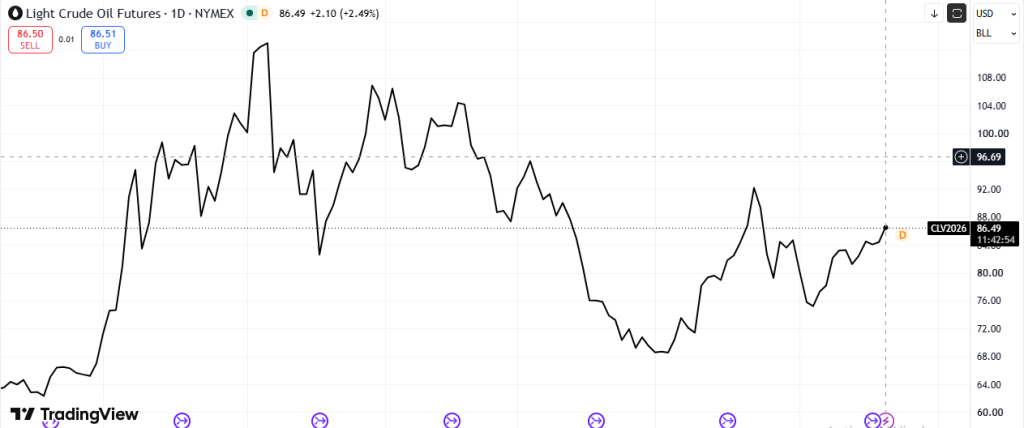
Crude oil futures (Source: TradingView)
Oil has rallied in the last two weeks as traders assessed developments in talks between the US and Iran. When these talks resumed, oil prices collapsed as investors hoped for peace and a reopening of the Strait of Hormuz. However, negotiations have stalled, leaving traders uncertain about the future.
This week, it became clear that these talks were collapsing after Trump said Iran was unlikely to accept the US’s terms to end the war. On the other hand, Iran said the Strait of Hormuz would remain closed until the US accepts its conditions. Additionally, Trump said he would not extend the ceasefire with Iran, meaning the war could escalate at any time.
With neither country willing to back down and both claiming full control of the Strait of Hormuz, it remains unclear whether they will come to an agreement. The back-and-forth has kept oil prices elevated this week.
“Oil prices remained elevated as the market is supported by sporadic attacks in the Middle East but lacks fresh momentum without a major escalation,” said Hiroyuki Kikukawa, chief strategist of Nissan Securities Investment, a unit of Nissan Securities.
“The market is likely to maintain a gradual upward trend given uncertainty over peace talks and tensions involving the United Arab Emirates, Oman and Iran,” he added.
Elsewhere, data revealed that crude inventories in the US unexpectedly increased by 4.4 million barrels last week. Economists had forecasted a 600,000 decline. The increase is a sign of poor demand. Recent figures on GDP, employment, and sales have revealed a showdown in the economy.
Meanwhile, the FOMC minutes on Wednesday revealed that policymakers are willing to hike rates if inflation remains elevated due to expensive oil. Higher borrowing costs will further slow the economy, hurting demand. Weak global demand and tight supply could mean prices will consolidate.