

- Oil fell at the start of the week after the US paused its two-week-long attacks on Iran.
- Reports revealed that Iran targeted a US base in Jordan.
- The Fed kept interest rates unchanged on Wednesday, as expected.
Oil prices soared on Wednesday as Trump said the US would retaliate after Iran targeted a US base in Jordan. The surge dampened earlier expectations of peace after the conflict paused over the weekend. The two countries had resumed talks, which were going well. Elsewhere, the Fed kept interest rates unchanged.
At the start of the week, oil was falling after the US paused its two-week-long attacks on Iran. Instead, the two nations decided to give room for diplomacy. Talks started, and the US president said they were going well.
However, all this changed on Wednesday when reports revealed that Iran had targeted a US base in Jordan. Fortunately, the missiles were intercepted, avoiding any destruction. Still, Trump said the US would retaliate for the attempt. He said the US would be hitting Iran hard.
The uncertainty in global markets remains, especially with these two nations shifting stances every so often. Every time they get close to closing a deal or ending the war, things change, and markets are plunged back into the heat of fighting and oil supply disruptions.
“We remain exceedingly skeptical that we are on the brink of a major diplomatic breakthrough that will resolve the nuclear standoff that started the war five months ago or enable the normalization of maritime traffic,” said Helima Croft, head of commodity strategy at RBC Capital Markets, in a note to clients Tuesday.
The widening conflict now includes Iran’s allies in Iraq and those in Yemen who are targeting and attacking Saudi Arabia. The war in Saudi Arabia significantly impacts the oil market, as it is a major producer.
With such uncertainty, traders remain vulnerable to Middle East developments. Therefore, sentiment in the oil market will keep changing.
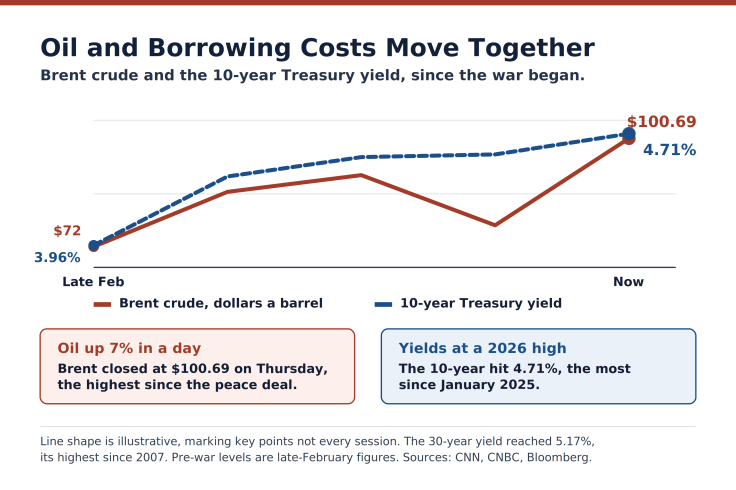
Oil and US yields (Sources: CNN, CNBC, Bloomberg)
The constant change in oil prices is also affecting US yields and monetary policy. A spike in oil prices increases the cost of living as inflation goes up. The Fed is then forced to tame inflation. On Wednesday, the central bank kept interest rates unchanged as expected. However, three policymakers were supporting a hike during the meeting. Meanwhile, the tone and messaging at the meeting remained fairly similar to the previous one. Traders are pricing a 77% chance of a hike in September.