


- Trump vowed retaliation for its fallen service members.
- The Houthis announced a naval blockade on Saudi Arabia.
- Market participants are looking forward to the FOMC policy meeting.
Oil prices rallied to new highs on Wednesday after the US started its eleventh consecutive day of strikes on Iran. Meanwhile, Iran has been busy attacking US facilities in Gulf countries like Kuwait. The escalating tensions have intensiied supply disruptions, tightening a market that had started loosening.
Tensions between the US and Iran have escalated this week since Trump vowed retaliation for its fallen service members. Reports on Monday revealed that three soldiers had died in the exchange of fire between the US and Iran. The news led to a sharp rally in oil as it meant a likely escalation of the conflict and more supply disruptions.
“Every time Iran kills an American Soldier they will pay for that killing many times over!” Trump said in a post on Truth Social. “This directive has been passed on to Secretary of War, Pete Hegseth, Chairman of the Joint Chiefs of Staff, Daniel Caine, and every Leader in the Military.”
This whole week has witnessed an exchange of fire between the two countries. It has caused a lot of panic and uncertainty about the future. Supply disruptions have significantly hurt traffic through the Strait of Hormuz, sending oil prices higher.
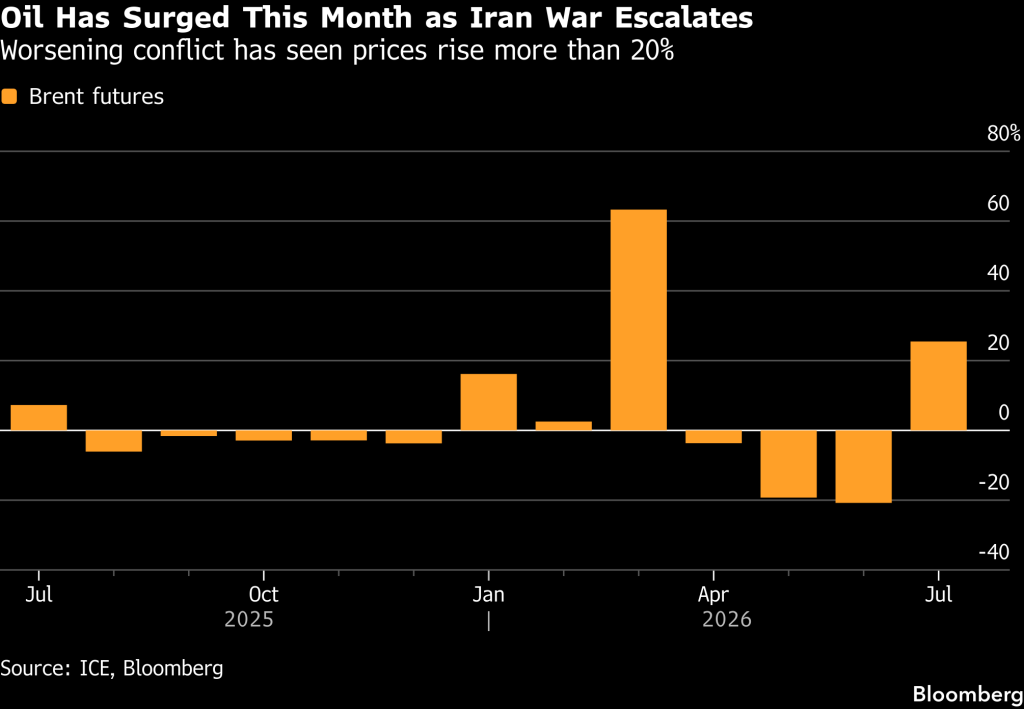
Brent futures (Source: ICE, Bloomberg)
Sentiment shifted in June after the ceasefire deal started collapsing. It intensified this month after Iran began attacking ships in the Strait of Hormuz and the US reimposed its blockade on Iranian ports. Within a matter of weeks, the two nations went from almost ending the war to intense attacks. By Wednesday, the US had struck Iran for ten consecutive days. Moreover, Trump said it would continue. Meanwhile, Iran is fighting back by targeting US facilities in the Gulf countries.
Furthermore, Iran’s allies, the Houthis, on Monday, announced a naval blockade on Saudi Arabia that will further hurt oil supply. Tensions between them and Saudi Arabia have also been escalating in recent days.
The outlook for global oil supply keeps changing as geopolitical tensions rise and fall. Currently, the oil market is heading for a tighter future, meaning prices might keep climbing. Oil will only come down when the fighting stops and diplomacy takes center stage.
Elsewhere, market participants are looking forward to the FOMC policy meeting next week. The recent rise in oil has increased pressure on the Fed to tame inflation. This could mean a more hawkish tone.