



- The US economy added 57,000 new jobs in June, missing the forecast of 115,000.
- Traders are now assigning a 54% likelihood to a September hike.
- Policymakers will closely watch this month’s inflation figures.
Interest futures remained subdued on Friday after a mixed US jobs report in the previous session. At the same time, the bond market has faced downward pressure this week amid tensions between the US and Iran. At the same time, the recent surge in expectations of Fed rate hikes has supported yields and hurt interest futures.
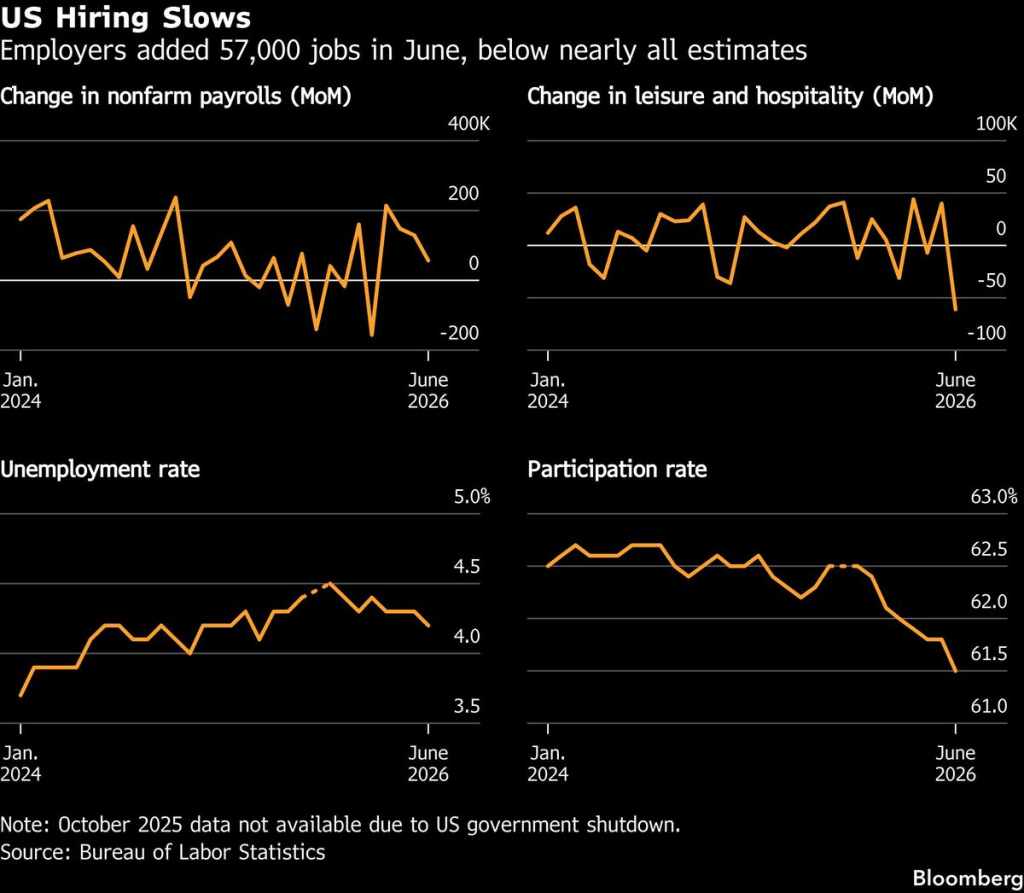
US employment (Source: Bureau of Labor Statistics)
Data in the previous session revealed that the US economy added 57,000 new jobs in June, missing the forecast of 115,000. Additionally, it was a sharp decline from the previous month when employers hired 129,000 new workers. This figure was also revised down from 172,000.
However, the report also showed that the unemployment rate came in at 4.2%, better than the 4.3% estimate. The mixed report led to some easing in expectations for Fed rate hikes. Traders are now assigning a 54% likelihood to a September hike, down from 66%.
The repricing led to a decline in Treasury yields. However, it had little impact on interest futures, which have trended lower the whole week. Although bets have eased, the timing of a move in September is still quite hawkish compared to before the June FOMC meeting. Therefore, yields will likely remain elevated until there is a significant dent in the labor market and the broader economy.
Policymakers will also watch this month’s inflation figures, which will shape the outlook for monetary policy. The recent peace deal between the US and Iran has reduced worries about inflation in the global economy. Oil has erased its wartime gains, and the cost of living in most economies is set to drop.
Consequently, experts believe inflation will also come down. If this is the case, rate-hike bets will fall along with yields, allowing interest-rate futures to rally. However, all this depends on whether the US and Iran will reach a longer-lasting deal to end the war.
Over the weekend, the two countries were at it again, exchanging fire. As a result, uncertainty weighed on interest futures. Although talks have continued, they are now being conducted indirectly, raising concerns about a fragile ceasefire deal.