

Introduction
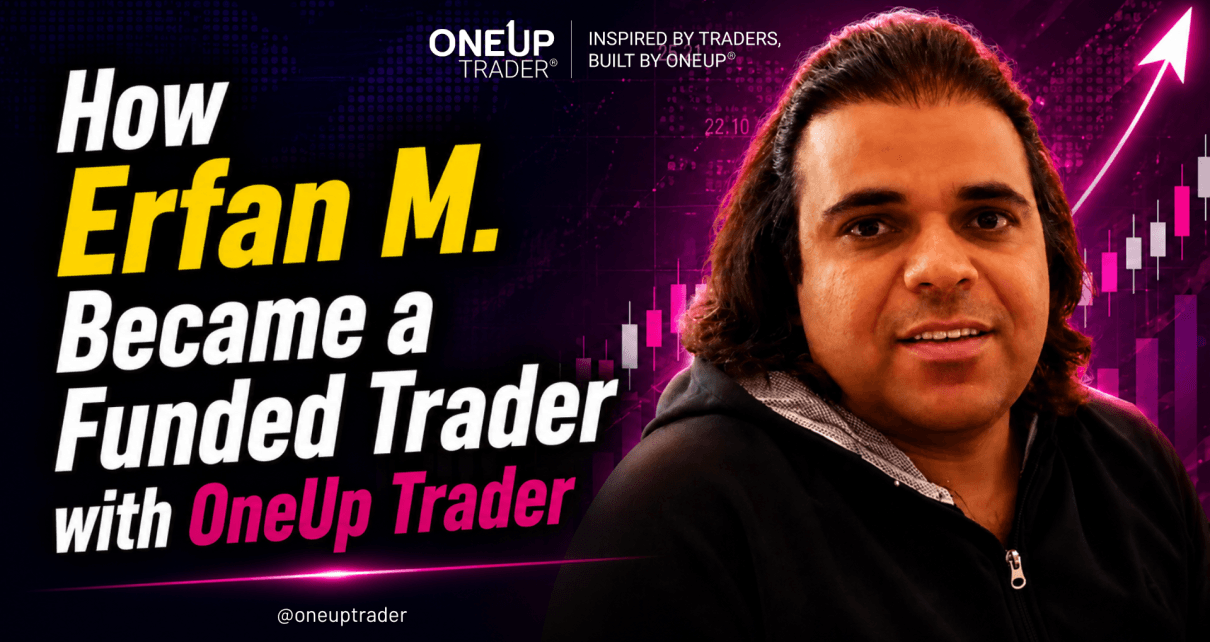
It’s time for another Trader Spotlight, and this week we’re looking at Erfan, a trader whose statistics challenge one of the biggest misconceptions in trading.
Most traders believe they need to win more often than they lose. After all, if you’re wrong nearly two-thirds of the time, how could you possibly make money?
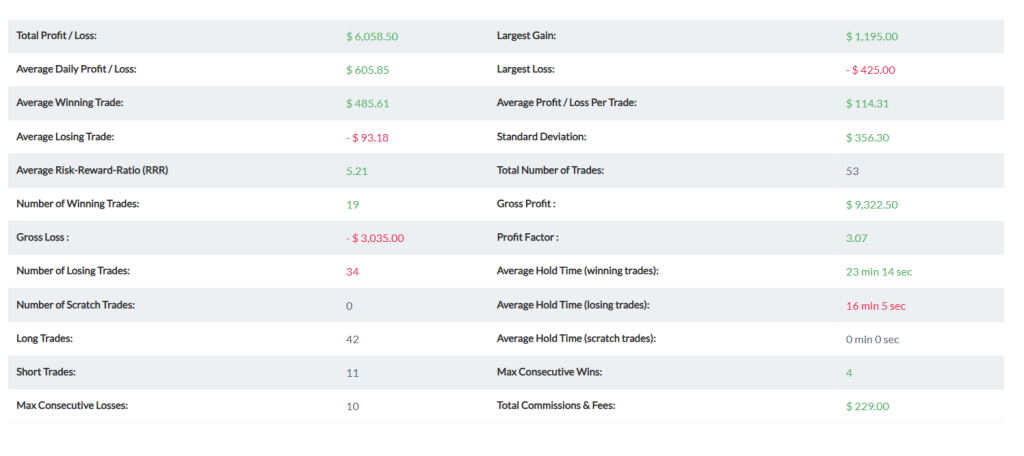
During his OneUp Trader evaluation, he generated more than $6,000 in profits while winning just 35.85% of his trades. At first glance, those numbers don’t seem to make sense together. The interesting part isn’t the win rate itself, though. It’s the way his entire trading system is built around it.
Today, we’ll take a closer look at his statistics, trading approach, and mindset to understand why a low win rate isn’t always a bad thing.
Evaluation Performance
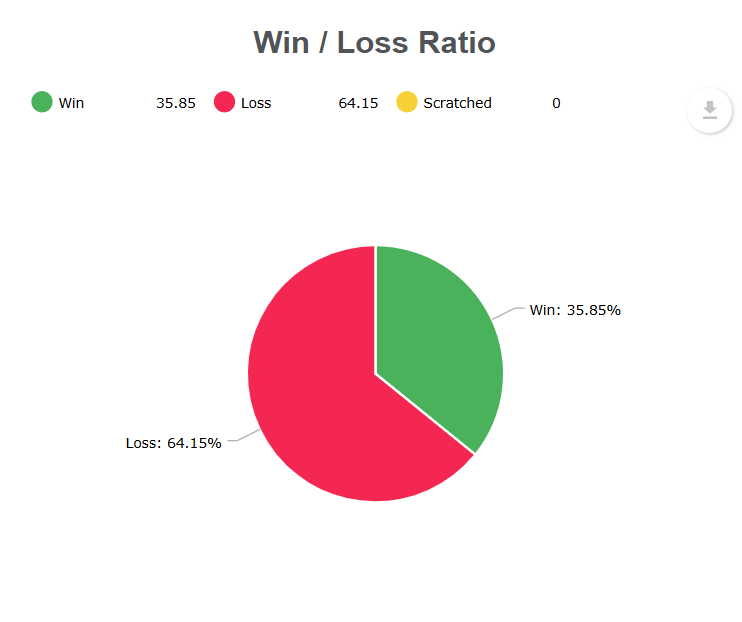
It is very common knowledge in the trading industry today that you should be winning more trades than you lose in order to have a sustainable long-term strategy. Erfan is not the first trader at the OneUp Trader-funded trader program to show us that it is not always true. It is all about forming an edge, if that means that the win rate is lower than 50% but over a set number of trades, you end up making more money than you lose then that is the key.
It can be difficult to find a strategy that has a win rate above 50% and also has a risk reward ratio of 2:1 or better. This is because mathematics play a role. If you place a trade with a stop loss 50 points away and a profit target 50 points away in the opposite direction, the law of probabilities would state that, based purely on this, there is a 50% chance of the profit target being hit. We know that markets do not operate in a random way; however, the chances are different, and there are many other variables to take into account.
The key to understanding here and what we can take from Erfan’s strategy is that it is all about having an edge, regardless of win rates and risk-reward ratios.
High Risk-Reward Changes Everything
His average winning trade was $485.61 and his average losing trade was just -$93.18. That gives him an average risk-reward ratio of 5.21:1. This means that Erfans winners are making more than 5 times his losers. Now, if we look back at his win rate, it doesn’t look that concerning.
Erfan shows us here that he is fully accepting of losses and understands that they are a part of the game; he doesn’t deny that.
Holding Time
Another detail helps paint a clearer picture of how he manages positions which is his holding time for each trade.
His average winning trade lasted 23 minutes and 14 seconds, while his average losing trade lasted 16 minutes and 5 seconds. When a trade is working, he gives it enough time to develop instead of rushing to lock in profits. At the same time, losing trades aren’t being held for hours while hoping for a recovery.
Trading Multiple Markets Through Volume
Throughout his trading, he focuses primarily on three markets:
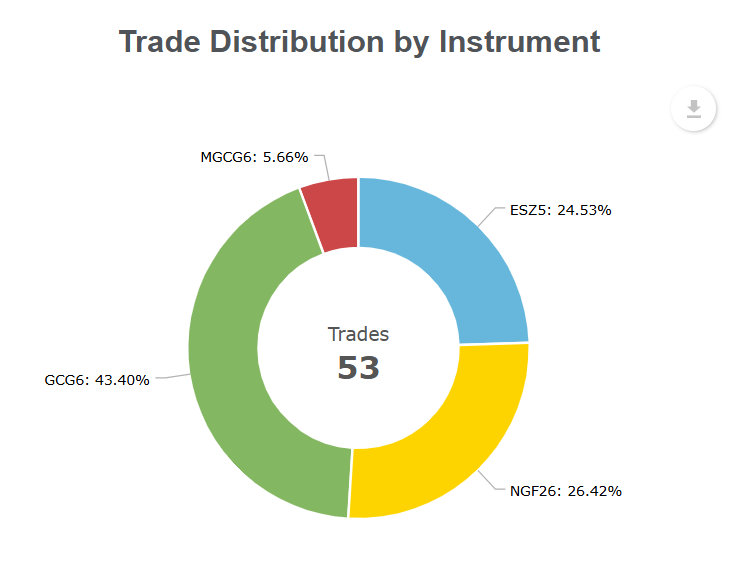
Gold accounted for the largest percentage of his trades, followed by Natural Gas and the E-mini S&P 500.
For some traders, switching between markets creates inconsistency because every instrument behaves differently. A trend-following strategy that performs well on one market may struggle on another. Anyone who has traded both Nasdaq futures and Natural Gas knows how different they can feel.
For the past three years, he has traded a volume-based strategy. Rather than relying on a specific indicator, he studies how buyers and sellers behave around support and resistance levels. Because those principles exist across every futures market, he can use the same or a very similar strategy across the different markets he trades.
Trading Background & Approach
Erfan told us in his interview he has been involved in the financial markets for more than eight years and has spent the last three refining his volume-based strategy. When asked why he became a trader, his answer wasn’t about money or financial freedom. He described trading as a profession built on responsibility.
According to him, successful trading requires discipline, emotional control, patience, and accountability. More importantly, he believes trading isn’t suited to everyone because those qualities have to be developed over time.
Instead of beginning with individual trade setups, he starts from the bigger picture. Before each session, he reviews the previous day’s news, studies the overall market trend, identifies important levels, and decides whether he’s looking for long or short opportunities. Only after price reaches those predefined areas does he begin looking for entries using volume.
OneUp Trader Experience
He discovered OneUp Trader through a mentor, who recommended the funded trader program based on its reputation and overall experience. When asked what stood out most, he highlighted the respectful customer support, user-friendly platform, and fast trade execution.
He rated OneUp Trader 10 out of 10 overall and said he was very satisfied with both the evaluation process and customer support.
Final Thoughts
Looking at the complete picture, this evaluation tells a much bigger story than simply making over $6,000 because it reminds us that being a profitable trader isn’t determined by a single statistic.
His win rate was below 36%, yet his average winner was more than five times larger than his average loser. His preparation removed much of the emotion from trading, his risk remained controlled, and his discipline allowed the statistics to work over a series of trades.
So the lesson that we can take from Erfan is that there isn’t one perfect way to trade the markets. Some traders win often with smaller rewards. Others, like Erfan, are comfortable being wrong more frequently because they understand that one good trade can outweigh several small losses.
In the end, profitable trading is about building a system where your risk management, execution, and psychology all support each other, then having the discipline to follow that system day after day.