


- The reopening of the Strait came as a relief for oil-exporting countries.
- The US removed sanctions on Iranian oil.
- Traders are pricing a 69% chance of a Fed rate hike in September.
Oil prices fell nearly 4% on Wednesday, extending declines caused by the reopening of the Strait of Hormuz. Meanwhile, market participants are paying close attention to ongoing talks between the US and Iran for a longer-lasting peace deal.
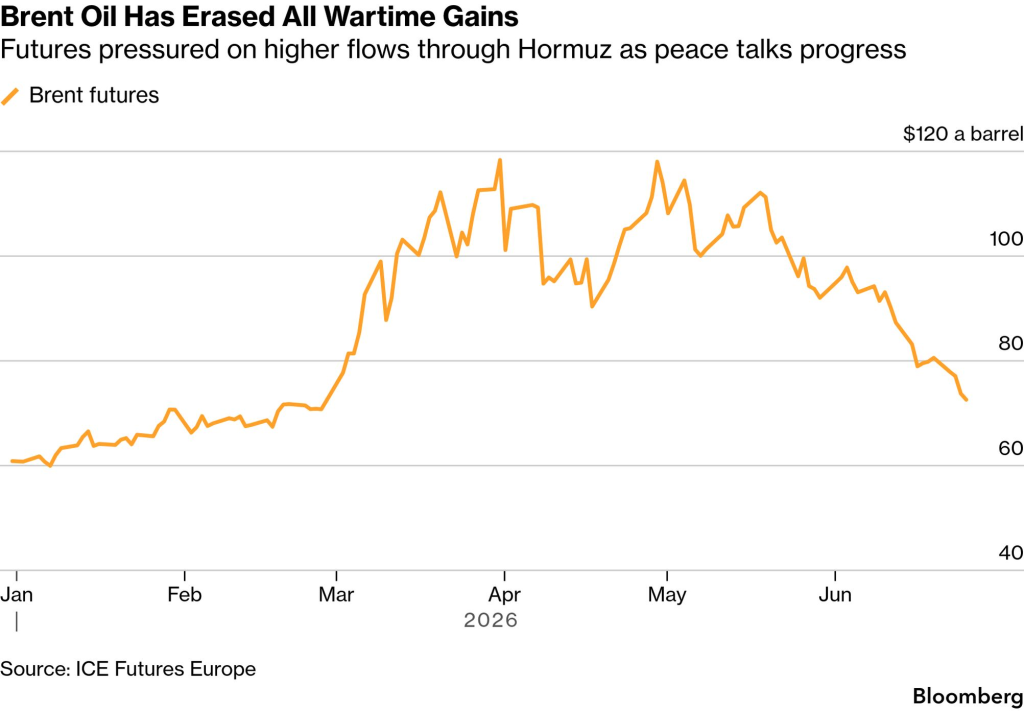
Brent futures (Source: ICE Futures Europe)
Sentiment in the oil market shifted significantly last week after the US and Iran finally announced a deal. After months of fighting, which caused massive oil supply disruptions, the two nations finally agreed to end the war. The deal would see the immediate reopening of the Strait of Hormuz. At the same time, the US pledged to end its blockade of Iranian ports.
Supply has fallen significantly since the war began, tightening the market and sending prices higher. The reopening of the Strait came as a relief for oil-exporting countries. Meanwhile, the global market cheered the looming increase in traffic and oil supply that will loosen the market. With more oil in the market, prices are set to decline further.
“Supply chain pressures have increased due to longer transit times for vessels trapped in the Strait of Hormuz and disruptions to air freight capacity,” CEO of DHL Global Forwarding Greater China Aditi Rasquinha said on CNBC’s ‘Squawk Box Asia.’
“With the Strait opening up, potentially a lot of that should ease,” Rasquinha said, but noted that it would take some time for the supply chain to normalize.
After the deal signing on Friday, there were some hiccups as negotiations in Switzerland were almost canceled. Iran also threatened to close the Strait, causing some panic. However, by Monday, calm returned, and talks led to further developments.
The US removed sanctions on Iranian oil, further boosting the outlook for supply. Meanwhile, Iran finally agreed to have its nuclear activities monitored by the International Atomic Energy Agency.
Elsewhere, the dollar continued its rally after last week’s hawkish Fed meeting. The fact that nearly half the board was in favor of hiking rates this year sent expectations higher. At the moment, traders are pricing a 69% chance that the Fed will increase borrowing costs in September.
A strong dollar makes oil more expensive for foreign buyers, reducing demand and lowering prices. The core PCE price index report, set to be released later in the day, will shed more light on the future of monetary policy.

