


- The US Energy Secretary noted that ship traffic through the Strait had risen.
- Iran and Israel agreed on a ceasefire deal.
- Data released on Wednesday showed that US inflation rose to a 3-year high of 4.2%.
Oil extended its decline on Thursday as market participants hoped for a near-term supply surge. The decline came despite rising tensions in the Middle East. Furthermore, there was pressure from a rallying dollar after solid jobs data and inflation hitting a three-year high.
Tensions in the Middle East escalated last week after Israel renewed its attacks on Lebanon. This worsened relations between the US and Iran, dashing hopes for a near-term peace deal. In the new week, the conflict continued with the US and Iran exchanging fire. However, oil prices remained subdued.
Traders were hoping for an increase in oil supply after the US Energy Secretary noted that ship traffic through the Strait had risen. Other experts, like JP Morgan analysts, believe traffic has been increasing and will continue to rise. This created enough optimism to overshadow the rise in tensions. As a result, oil declined.
Furthermore, earlier in the week, Trump called on Iran and Israel to stop fighting and make peace. The two countries agreed to a ceasefire, easing concerns about prolonged fighting. The US president also said a deal with Iran would be reached in a few days. All these remarks came as fighting continued.
The outlook for the war remains uncertain. However, it is clear that market participants have become less sensitive to sudden hostilities. The war has dragged on since February, driving oil prices up by 30%. A deal to end the war would ease supply disruptions, allowing the market to loosen.
Meanwhile, a rally in the dollar has also contributed to the recent slide in oil. Data released on Friday showed that the US economy added 172,000 jobs in May. The figure was larger than the forecast of 85,000 and led to an increase in expectations of a Fed rate hike. Traders are now placing a 70% chance of a hike in December. Higher borrowing costs reduce demand for oil, leading to lower prices.
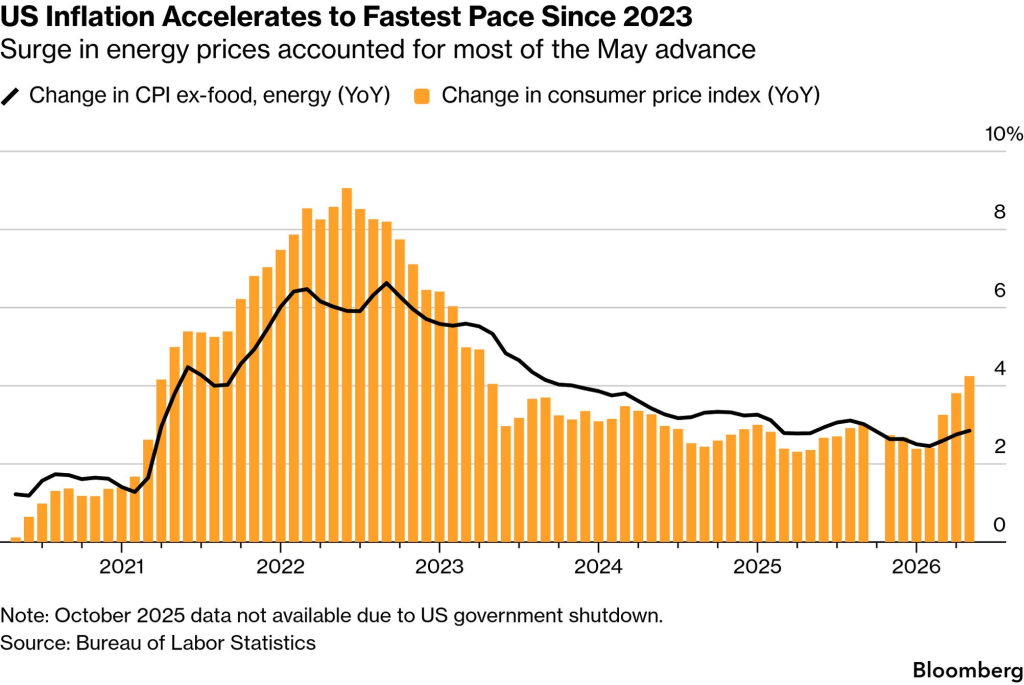
US inflation (Source: BLS, Bloomberg)
Meanwhile, data on Wednesday showed that US inflation rose to a 3-year high of 4.2%, as expected. The surge will definitely add pressure on the Fed to hike interest rates.