



- Interest futures hit new highs on Wednesday after the US-Iran ceasefire deal.
- Israel continued attacking Lebanon, and Iran warned it would retaliate.
- The US will release its crucial CPI report on Friday.
Interest futures ended mostly unchanged on Thursday after fluctuating with developments in the US-Iran war. Nevertheless, the price closed well below the previous session highs, indicating a pullback. The US-Iran ceasefire deal initially eased inflation worries, boosting the bond market. However, cracks in the deal emerged, renewing concerns about global price pressures.
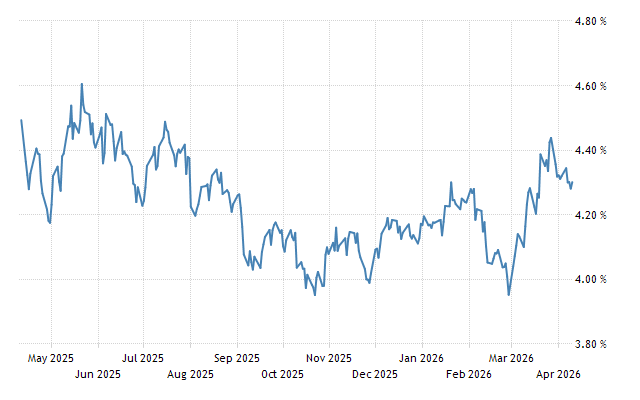
US 10 Year yield (Source: Trading Economics)
On Wednesday, US Treasury yields pulled back further, while interest rate futures hit new highs after reports that the US and Iran had agreed to a two-week pause in their war. This news came as a relief for investors as oil prices plunged, easing inflation worries.
Since the war began at the end of February, attacks on energy infrastructure and the closure of the Strait of Hormuz have disrupted oil supply. As a result, the market grew tighter, and oil prices rose sharply. This increase meant that prices of most things in many economies, like the US, would rise. With higher inflation, the Fed would be forced to consider raising interest rates. At the same time, policymakers would have to set aside their previous plans to cut rates. As a result, Treasury yields soared. Meanwhile, interest futures collapsed.
However, the decline paused when the two countries started negotiations. Market optimism rebounded in hopes of an end to the destructive war. Relief came on Wednesday after Trump agreed to halt bombing Iran for two weeks. However, the relief was brief as cracks emerged in the ceasefire deal. Israel continued attacking Lebanon, and Iran warned it would retaliate. As a result, tensions remain high between the three countries.
Market participants will keep an eye on developments to see whether the deal holds. If it does not, the war could continue, rekindling inflation worries. Notably, FOMC minutes revealed that some policymakers were ready to resume rate hikes and push back against rate cuts. If inflation spikes, such a scenario could happen. Such an outcome would boost Treasury yields and weigh on interest futures.
The US will release its crucial CPI report on Friday. Economists are forecasting an increase from 2.4% to 3.4% in the annual figure. Anything higher would spook traders and increase market volatility. Moreover, it would increase the likelihood of a more hawkish Fed, weighing on interest futures.