



- US interest futures remain mixed, shedding off odds of an immediate rate hike.
- The divergence between short-term and long-term contracts is greater with a longer Fed rate stance.
- The Middle East war adds to the already uncertain market conditions, affecting the Fed’s next policy move by influencing inflation and government spending.
US interest futures are sending mixed signals this week amid uncertainty over the Fed’s next move and the broader state of the economy.
Short-term futures, such as 30-day Federal Funds contracts, indicate that investors disregard the odds of an immediate rate hike. After Fed Chair Powell said inflation is slowing, but the central bank is still data-dependent, traders are betting on a pause or even one cut by year-end. This means that borrowing costs for retail investors may remain the same, along with money market yields, over the coming months.
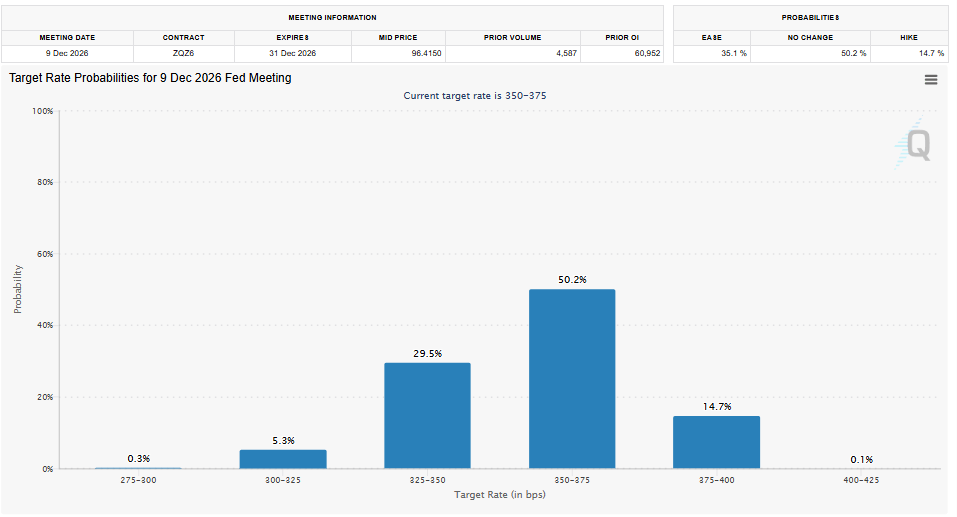
According to People.CN, “Short-term futures are basically a thermometer for what the market thinks the next Fed decision will be. It’s showing caution right now, but not panic.”
Long-term futures, like the 10-year note, linked to US Treasury bonds, tell a different story. As yields surge, these contracts have been declining, suggesting that investors expect rising borrowing costs over the coming years. The divergence suggests that the Fed may keep rates steady for now, but inflation and government spending pressures could keep long-term interest rates high.
The split has real-world effects for retail investors. A stable short-term interest rate environment can help adjustable-rate loans or credit cards. On the other hand, higher long-term yields may affect mortgage rates, retirement planning, and bond investments. Market participants should keep an eye on both ends of the curve: short-term contracts for timing the Fed’s policy and long-term contracts for information on borrowing costs.
Market watchers also note that geopolitical tension in the Middle East renders the situation more uncertain. Traders are using interest rate futures not only to bet on the future, but also to hedge themselves from sudden changes in borrowing costs. Moving ahead, today’s NFP data release is important as the Fed’s next policy may depend on labor market conditions.

