




- US equities found a relief rally after Trump hinted at easing tensions in the Middle East, which had pushed oil prices lower.
- Investors remain cautious, rotating funds out of US markets into Europe and Asia.
- Sustained higher oil prices could affect corporate margins and slow down economic growth.
US equities bounced back as geopolitical tensions showed early signs of easing at the beginning of the week. However, underlying risks continue to cast doubt on the rally’s sustainability.
Investor confidence rose after President Trump said that US-Iran talks were fruitful, which eased fears of further escalation in the Middle East. This caused oil prices to drop sharply, with Brent crude dropping more than 13%. Moreover, the event lowered inflation expectations and supported stock prices, especially in sectors sensitive to interest rates.
The market’s initial reaction shows how closely US equities are tied to macroeconomic risks driven by energy. Lower oil prices make things cheaper for both businesses and consumers, which helps margins and demand in the short term. But it looks like the rally is more tactical than structural.
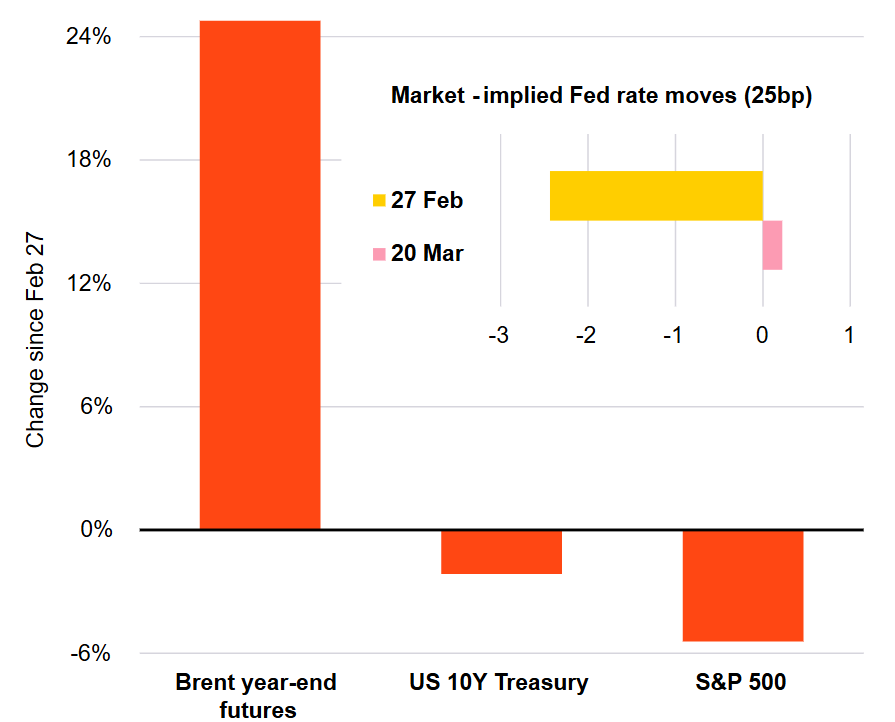
Data on flows support a larger change in process. Natixis Investment Managers says investors are still moving money out of US stocks and into Europe, Japan, and emerging markets. This shows worries about high US valuations, unclear policies, and the risk of having too many mega-cap technology stocks in one place.
HSBC also says that US markets have remained strong amid recent geopolitical shocks. The energy sector’s strength and the fact that large-cap tech stocks are less affected by changes in commodity prices have helped stabilize performance. The difference suggests that the US market isn’t weakening, but rather pickier.
Investors should be aware of two competing forces when making decisions. On one hand, lower oil prices and receding geopolitical risk support a short-term rise. On the other hand, tight valuations, global diversification trends, and macroeconomic uncertainty are structural headwinds that make broad-based growth harder.
Meanwhile, BlackRock adds a warning that markets may not be pricing in the full economic damage that recent energy volatility could cause. If input costs stay high, they could lead to slower growth and rising prices, which would hurt both earnings and multiples.
Actionable takeaway: treat rallies as opportunities for selective positioning rather than aggressive risk-on exposure. Focus on sectors with pricing power and global revenue diversification, while gradually reducing overexposure to crowded mega-cap trades. Tactical flexibility remains critical as geopolitical developments continue to dictate short-term market direction.