

Introduction
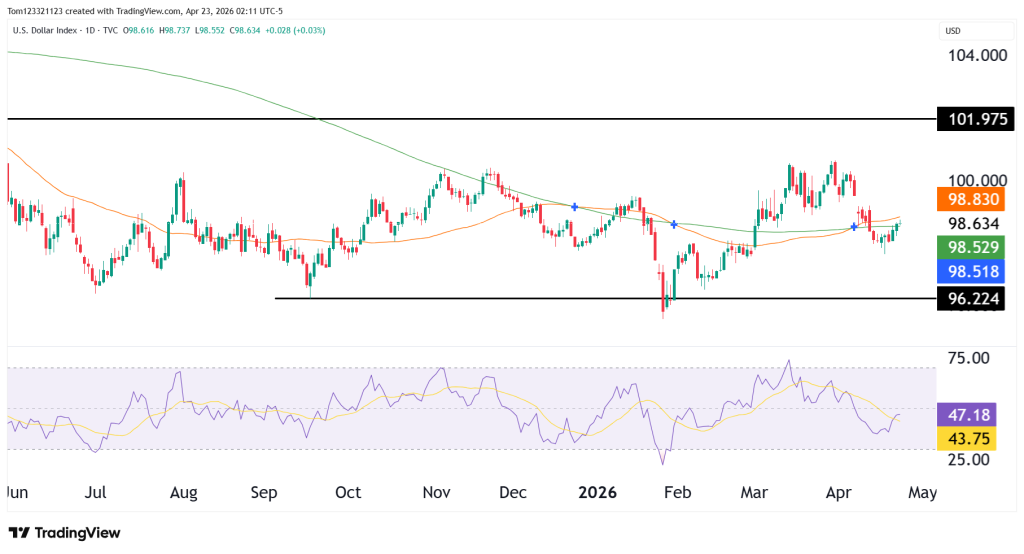
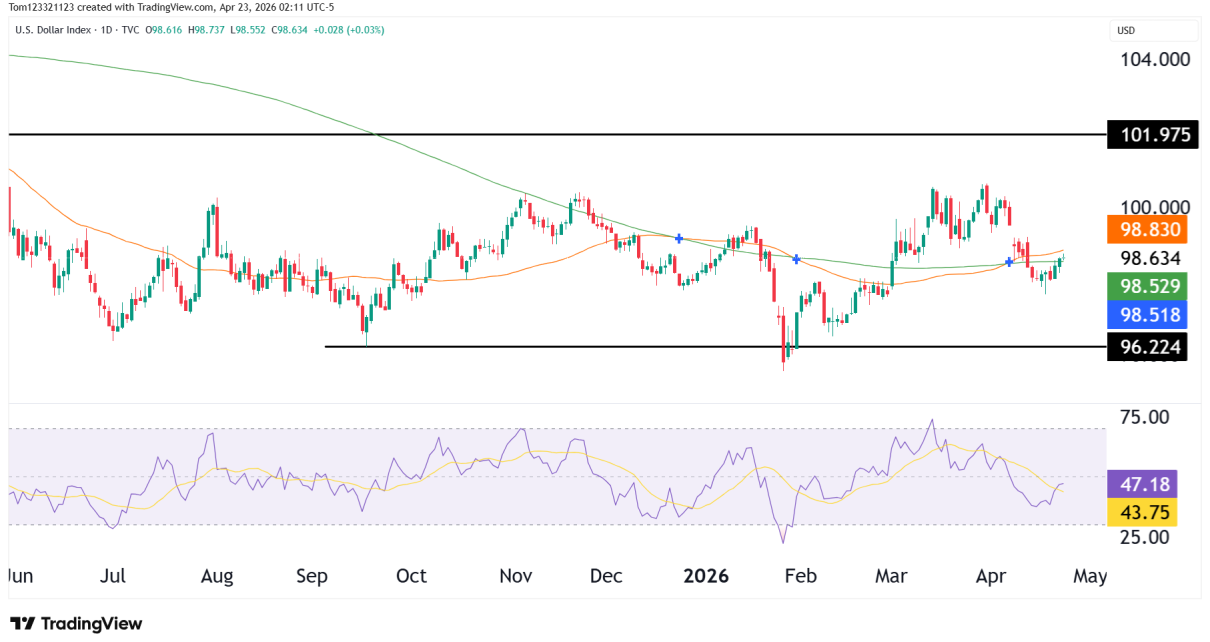
The Dollar has pulled back from its recent strength as rhetoric from the Trump administration has been less bullish for the greenback. DXY is still within the wide range we marked out earlier, between 96.22 and 101.97.
A good reason for us to look at the Dollar is the impact it has on equities, metals, and oil. This is because those assets are priced in dollars, and if the Dollar is weaker, then they should rally more easily and vice versa. In today’s analysis, we will take a look at the technicals for the Dollar index, but also pay close attention to what the macroeconomic landscape is telling us to get a better picture of the direction of the market.
Technical Analysis
The recent bounce off the lows was good, but not particularly strong. Price moved up from the 96 area and is now sitting right in between the 50 MA and the 200 MA.
The structure is still clean, and the levels haven’t changed much.
- Support: 96.20–96.50
- Mid-range: 98.50–99.00
- Resistance: 101.50–102.00
Right now, price is sitting just under that mid-range zone, trying to push back above it. If DXY can reclaim and hold above 99, it opens the door for a move back toward 101–102.
But if it continues to stall here and roll over, the focus shifts back down toward 96. For this to happen, though, we need to see some development, fundamentally speaking. If a big event occurs in relation to the Middle East, is it likely we will see a readjustment again in the Dollar?
Scenarios and Probabilities
| Scenario | Description | Estimated Probability |
|---|---|---|
| Range | Continued chop between ~96 and ~102 | 45% |
| Breakdown | Loss of 96 → move lower | 30% |
| Bounce Higher | Reclaim 99 → push toward 101+ | 25% |
Why This Matters for Equities
The dollar and equities often move in opposite directions most of the time. When the Dollar is strong, financial conditions around the world begin to tighten, and U.S. exports become more expensive. When the Dollar is weak, however, the opposite happens, and liquidity improves.
Upcoming Catalysts to Watch
Here are some important events to watch for:
First, Federal Reserve expectations.
Upcoming inflation data and labor market reports will shape how the market prices interest rates. If inflation stays firm or the labor market remains tight, the Fed has less reason to ease. That supports the dollar. If data begins to soften, especially on inflation, rate cut expectations increase, and the dollar tends to weaken.
Second, developments in the Middle East still matter, even if they are not front-page every day.
The earlier move in oil and risk sentiment came from escalation fears. Recently, those fears have eased, which has taken some pressure off the dollar. But that can change quickly. Any renewed tension, especially involving supply routes or regional escalation, would likely push the dollar higher as markets move toward safety. Continued stability would have the opposite effect, supporting risk assets and weighing on the dollar.
Third, global growth trends, particularly out of China and Europe, will play a role.
If global growth slows, demand for the dollar tends to increase as a defensive move. If growth stabilizes or improves, capital flows back into risk assets, and the dollar can lose strength. These shifts are often gradual, but they build over time.
Finally, U.S. Treasury yields remain a key transmission mechanism.
The dollar tends to follow yields. If yields move higher, reflecting tighter financial conditions or fewer expected rate cuts, the dollar usually strengthens. If yields fall, the dollar tends to soften.
This analysis is for educational and informational purposes only and does not constitute trading advice. Futures and forex trading involve significant risk and may not be suitable for all investors. Always conduct your own research before making trading decisions.