



- Gold collapsed last week, reaching $3,500.
- John Williams said on Monday the central bank would have to tighten monetary policy due to persistent inflation.
- Gold is facing pressure due to the recent selloff in the US equities market.
Gold prices extended declines on Wednesday, retesting lows hit last week amid a rally in the dollar and Treasury yields. Growing hawkish Fed rhetoric amid inflation concerns has boosted rate-hike expectations, weighing on the non-yielding metal. Meanwhile, traders are awaiting the US core PCE report for more clues on monetary policy.
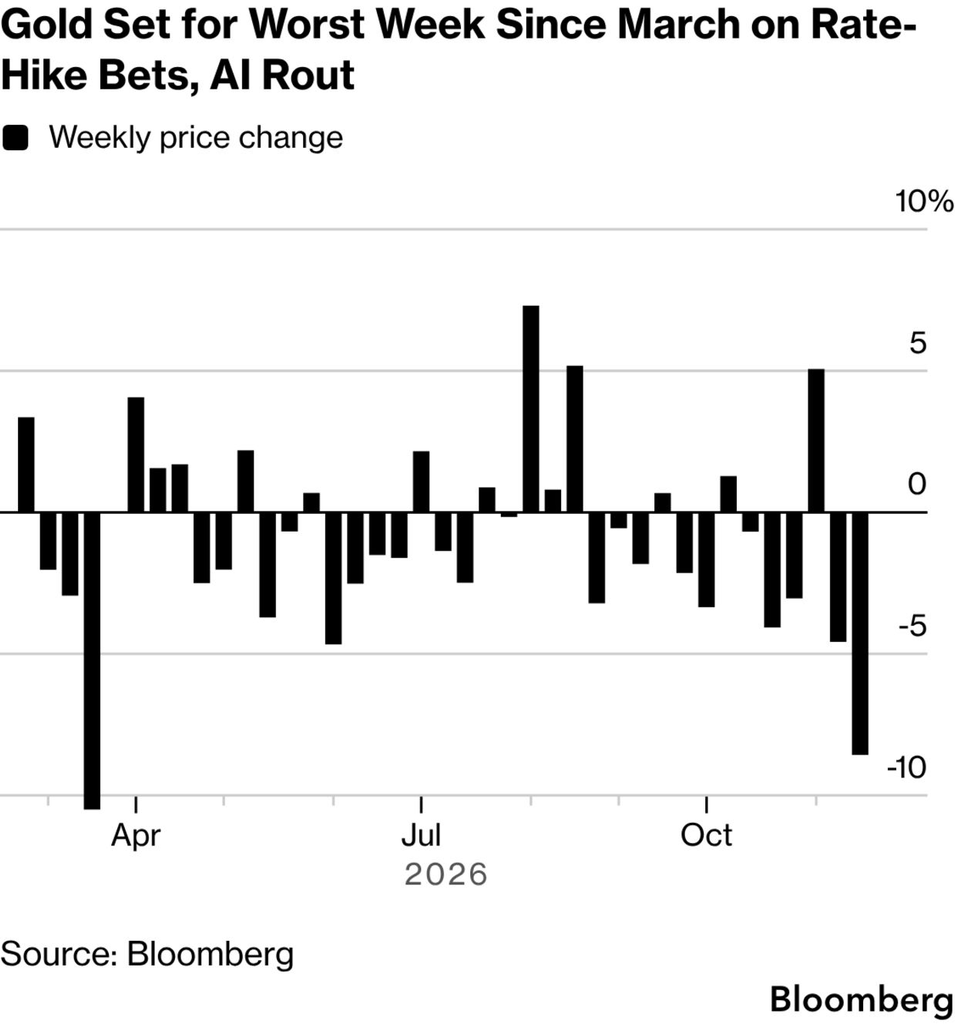
Gold weekly change (Source: Bloomberg)
The recent rally in the dollar and Treasury yields has weighed heavily on gold prices. The yellow metal collapsed last week, reaching $3,500. Traders were focused on policymakers’ remarks after absorbing economic data. Notably, the job market showed resilience in October. Meanwhile, inflation beat expectations. Consequently, Fed officials grew more hawkish, projecting additional rate hikes to tame inflation.
Fed’s John Williams said on Monday the central bank would have to tighten monetary policy due to persistent inflation. However, he also said the timing and the pace of rate hikes will depend on incoming data.
Market participants expect the core PCE report due later in the day to show the state of underlying inflation. The figure, a key inflation measure for the Fed, will play a huge role in shaping the outlook for rate hikes.
“Gold is struggling to find meaningful support because central banks, led by the Fed, are hawkish, which is keeping the precious metal under pressure,” said Fawad Razaqzada, market analyst at Forex.com.
“Adding to the pressure on metals is liquidation from the equity space that is forcing investors to free up margins by closing gold and silver,” Razaqzada added.
At the same time, gold is facing pressure due to the recent sell-off in US equities. AI concerns and worries about leadership squabbles at Nvidia drove stocks lower last week. As stocks collapse, investors are seeking liquidity in other assets, such as precious metals.
Nevertheless, despite the many catalysts for gold’s decline, it still has support from central bank purchases. Moreover, geopolitical tensions have always sent investors to the safe-haven metal. Notably, oil prices have been declining amid a surge in global supply.
Therefore, although tensions between the US and Iran persist, the impact on oil prices and inflation has dropped. If central banks are not overly concerned about high oil-driven inflation, demand for the non-yielding metal could just go up.