



- Trump said Iran was talking very politely.
- Tanker attacks have continued in the Strait of Hormuz.
- Data revealed that the US economy added a significant 165,000 jobs in October.
Oil prices steadied on Wednesday after collapsing in the previous sessions amid hopes for a de-escalation in the Iran war. Catalysts for this move included the push to restart negotiations between the US and Iran. At the same time, the Republican loss during the midterm elections and Trump’s remarks since then have pointed to a push for diplomacy to end the war.
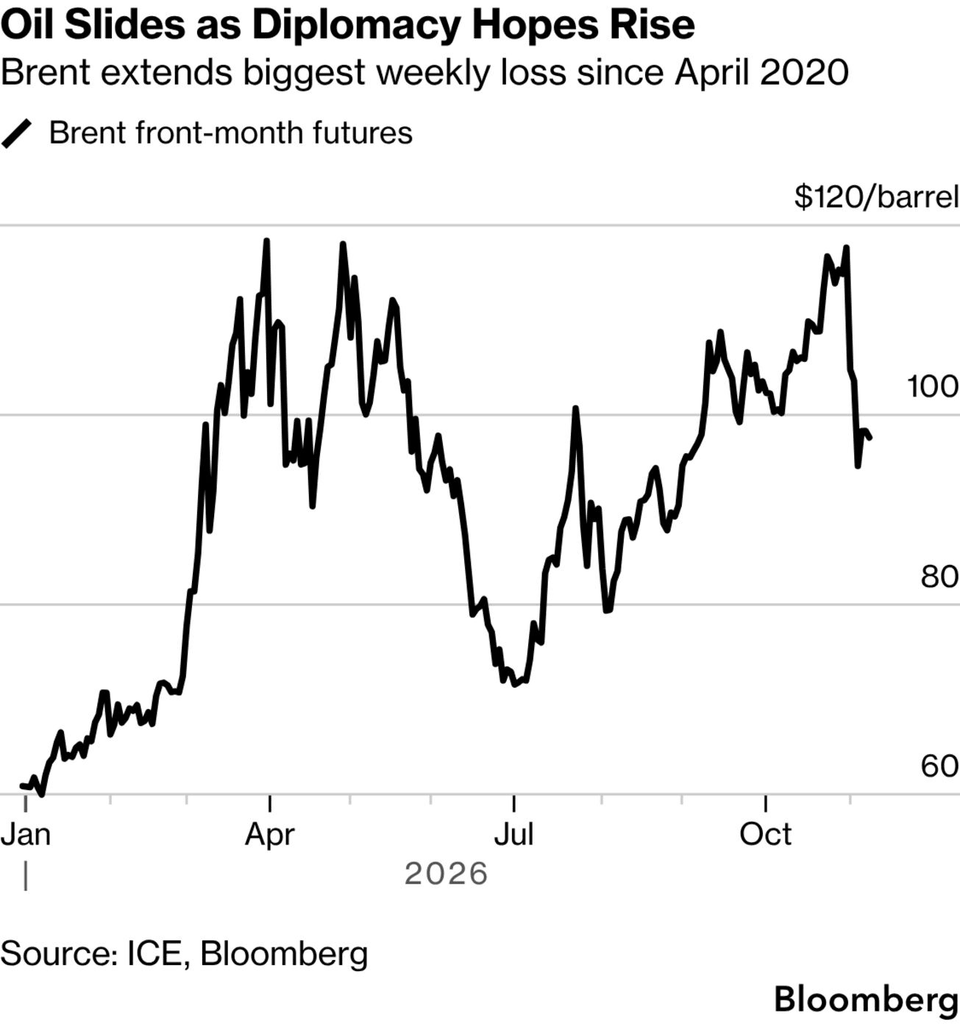
Brent futures (Source: ICE, Bloomberg)
For weeks, market participants were worried about an escalation in the conflict between the US and Iran in November. Trump had promised heavy attacks after the midterm elections, sending oil prices higher. However, things began to change when top officials in the US began pushing for diplomacy.
The election left Trump weaker as Democrats took the lead in the Senate and the House. The Democrats are likely to put pressure on the president to end the war. After the elections, Trump said he had no immediate plans to attack Iran. Moreover, he said the attacks would not occur if talks between the two nations went well and that Iran was speaking politely.
Nevertheless, attacks have continued in the Strait of Hormuz, with reports of destroyed tankers as recent as Tuesday. The attacks could slow down flows through the key waterway, hurting supply. Experts believe it would take time to increase these flows even in the event of a deal to end the war.
“Even in the event a deal is struck, an increase in flows through the waterway would still depend on mine clearance, insurance costs, and whether or not shipowners would even be willing to take the risk,” LSEG Oil Research said in a November 10 note.
Elsewhere, market participants paid attention to key US economic reports, including non-farm payrolls and consumer inflation data. On Friday, data revealed that the US economy added a significant 165,000 jobs in October. The figure came in above the estimate of 65,000, pointing to a robust labor market. Additionally, the unemployment rate was lower at 4.1%.
A strong economy means demand for oil remains strong, boosting prices. However, it also means the Fed can hike rates without worrying too much about growth. This would hurt demand in the long run. Meanwhile, consumer inflation was higher than expected at 0.4% in October, increasing expectations for a rate hike in December.