


- Trump warned Gulf nations of an impending attack in the region.
- The US Vice President sent a letter to Iran in a bid to revive negotiations.
- Tensions between the Houthis and Saudi Arabia persist.
Oil prices pulled back on Thursday amid expectations that direct talks between the US and Iran would resume. However, prices had rallied in the previous session after reports that Trump had warned Gulf countries to prepare for an intense military campaign in the region in November.
Prices soared on Wednesday as market participants worried about an escalation in the war in Iran. On several occasions, Trump has said that the US will resume its attacks on Iran after the November midterm elections. Reports on Tuesday indicated that he went as far as to warn Gulf nations of an impending attack in the region.
Furthermore, Trump said the war in Iran would end when he wanted it to end. This stance sent oil prices higher and dashed hopes for a peace deal. Initially, investors had been optimistic after Qatar sent mediators to Iran over the weekend. As a result, oil started the week down.
The decline on Thursday came after the US Vice President sent a letter to Iran in a bid to revive negotiations. If the two nations can resume direct talks, hopes for a peace deal would put downward pressure on oil prices. However, this will only happen when traders are sure that there won’t be an escalation in November. Otherwise, the risk premium on oil prices remains.
“Selling pressure is prevailing amid expectations that peace talks may resume,” said Yuki Takashima, an economist at Nomura Securities. “However, the decline remains limited.”
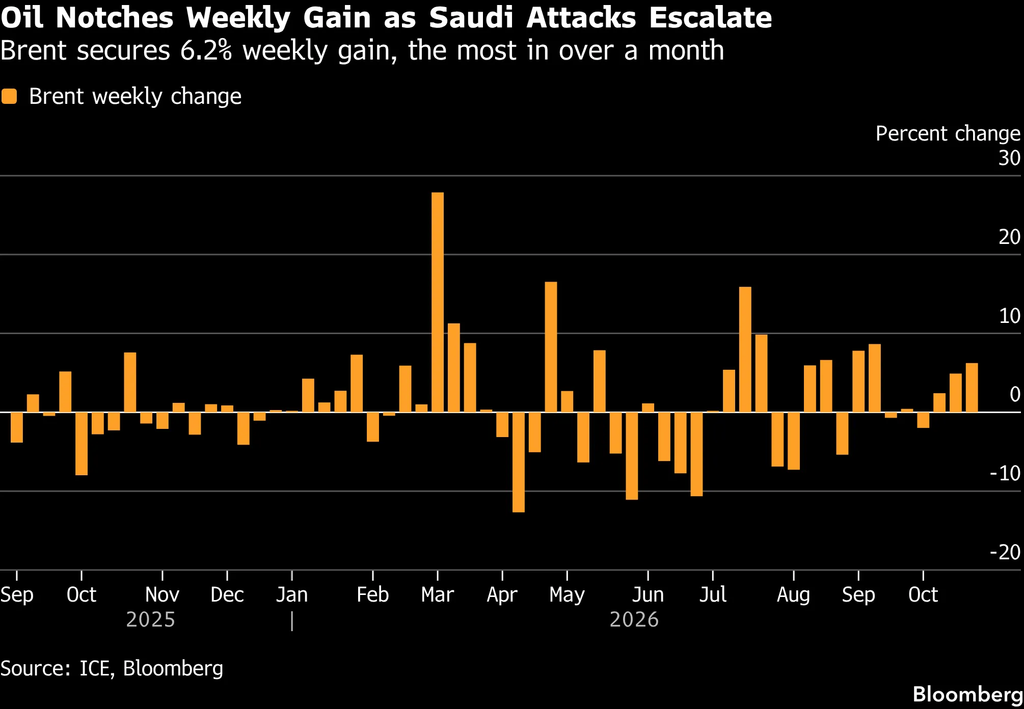
Brent weekly change (Source: ICE, Bloomberg)
At the same time, tensions between the Houthis and Saudi Arabia persist, keeping prices elevated. Saudi Arabia is busy intercepting missile targets in various parts of the country. The militant group hit the country’s biggest oil refinery, raising concerns about supply. At the same time, the group has attacked airports, which will negatively impact the country’s economy.
As long as these conflicts continue, oil prices will remain elevated. Inflation concerns will keep central banks on high alert.
On Wednesday, the Fed kept interest rates on hold as expected. Moreover, Warsh emphasized that future moves would depend on incoming inflation data. This, in turn, will depend on oil prices and geopolitical developments. Market participants are still pricing a hike in December. Higher borrowing costs hurt demand for oil, pushing prices lower.