

- The US core PCE price index increased by 0.2%, below the forecast of 0.3%.
- The likelihood of an October Fed rate hike fell to around 40%.
- Oil supply worries eased after the damaged Saudi Arabian pipeline resumed operations.
Oil prices recovered on Wednesday after downbeat US inflation data sent the dollar lower, making the commodity cheaper for foreign buyers. However, a rebound in oil exports from the Middle East eased global supply worries, putting a lid on gains.
US inflation data on Wednesday showed that the core PCE price index rose 0.2%, below the forecast of 0.3%. The Fed prefers this measure of inflation, and policymakers use it as a guide for future policy moves. Initially, unsuccessful talks between the US and Iran had shaped the outlook for Fed policy.
Last week, the presidents of the two nations spoke openly at the UN, with each supporting their current positions. Hostile remarks like the US would annihilate Iran and Tehran would fight to its last breath dashed hopes for a near-term peace deal.
Furthermore, Trump rejected Iran’s proposal to reopen the Strait of Hormuz in seven days. Iran was ready to resume the June agreement, which lifted the blockade on Iranian ports, among other terms. After the failed talks at the UN, Trump said he would be back to bombing Iran after the US midterm elections in November. Inflation worries intensified, sending rate-hike expectations higher. Market participants pushed up the likelihood of an October rate hike to 75%.
However, after Wednesday’s inflation report, this likelihood dropped back to around 40%. As a result, the dollar fell, making oil cheaper. At the same time, a decline in rate hike expectations brightened the outlook for oil demand in the US. Traders are now awaiting the US non-farm payrolls report for more clues on future policy moves.
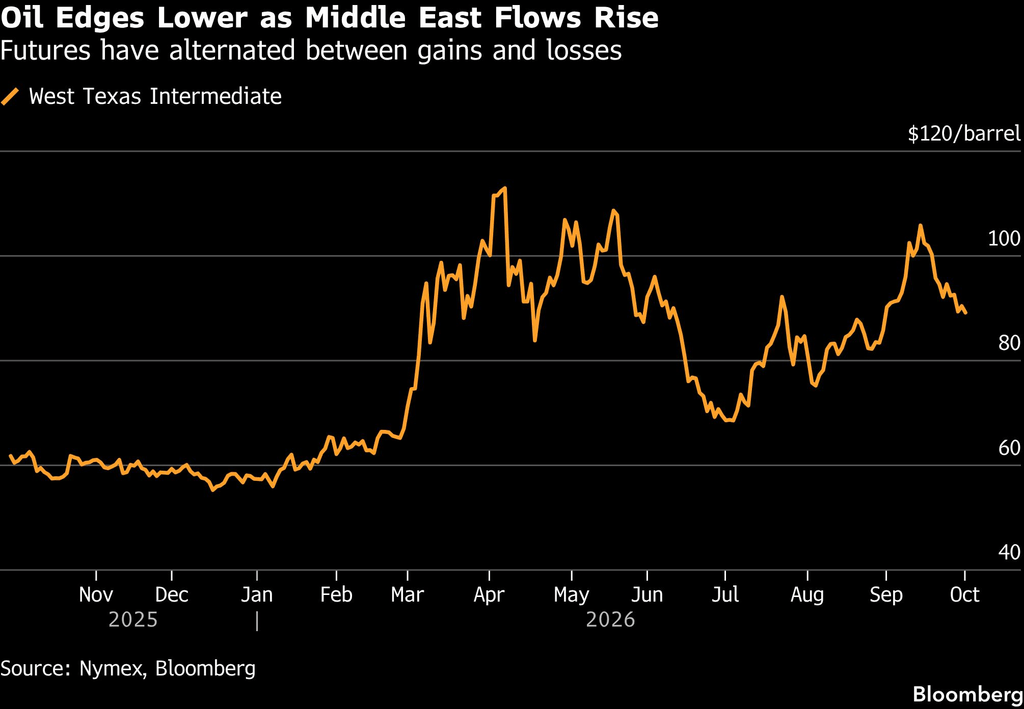
WTI futures (Source: Nymex, Bloomberg)
Meanwhile, before the inflation data, prices were dropping as oil supply worries eased. Reports revealed that the damaged Saudi Arabian pipeline was back in business, operating at half its maximum capacity.
“The pipeline has done much of the heavy lifting when it came to moving crude out of the Gulf, given that Iran has blocked the Strait of Hormuz,” said David Morrison, senior market analyst at Trade Nation, on Wednesday.
“Analysts say that the pipeline is nowhere near running at full capacity. But the fact that it is open provides some relief and has helped oil prices retreat,” Morrison added.