



- The renewed fighting in the Middle East has reduced traffic through the Strait of Hormuz.
- The Houthis announced a naval blockade of Saudi Arabia.
- Traders are placing an 80% chance of a Fed rate hike in September.
Interest futures were heading for a very bearish close to the week on Friday amid geopolitical tensions that sent oil prices soaring. Expensive fuel will most likely drive inflation higher, boosting bets on Fed rate hikes. As these go up, Treasury yields climb while the bond market suffers.
Bond futures have collapsed since Monday as the tensions in the Middle East intensified. Three US soldiers died in the exchange of fire between the US and Iran, which went on without pause. Meanwhile, Iran hit US facilities in Gulf nations. As a result, hopes for diplomacy and a return to negotiations have fallen. Instead, market participants are again grappling with an uncertain future and an escalating war.
The renewed fighting has reduced traffic through the Strait of Hormuz, disrupting oil supply. Consequently, traders are expecting higher oil prices in the future if the war continues. This week, the war escalated to include Iran’s allies, the Houthis in Yemen. The group on Monday announced a naval blockade on Saudi Arabia, a major producer and supplier of global oil.
Reports later revealed that the group was attacking tankers in Saudi Arabia’s Red Sea coast. This will significantly dent oil supply, sending prices higher.
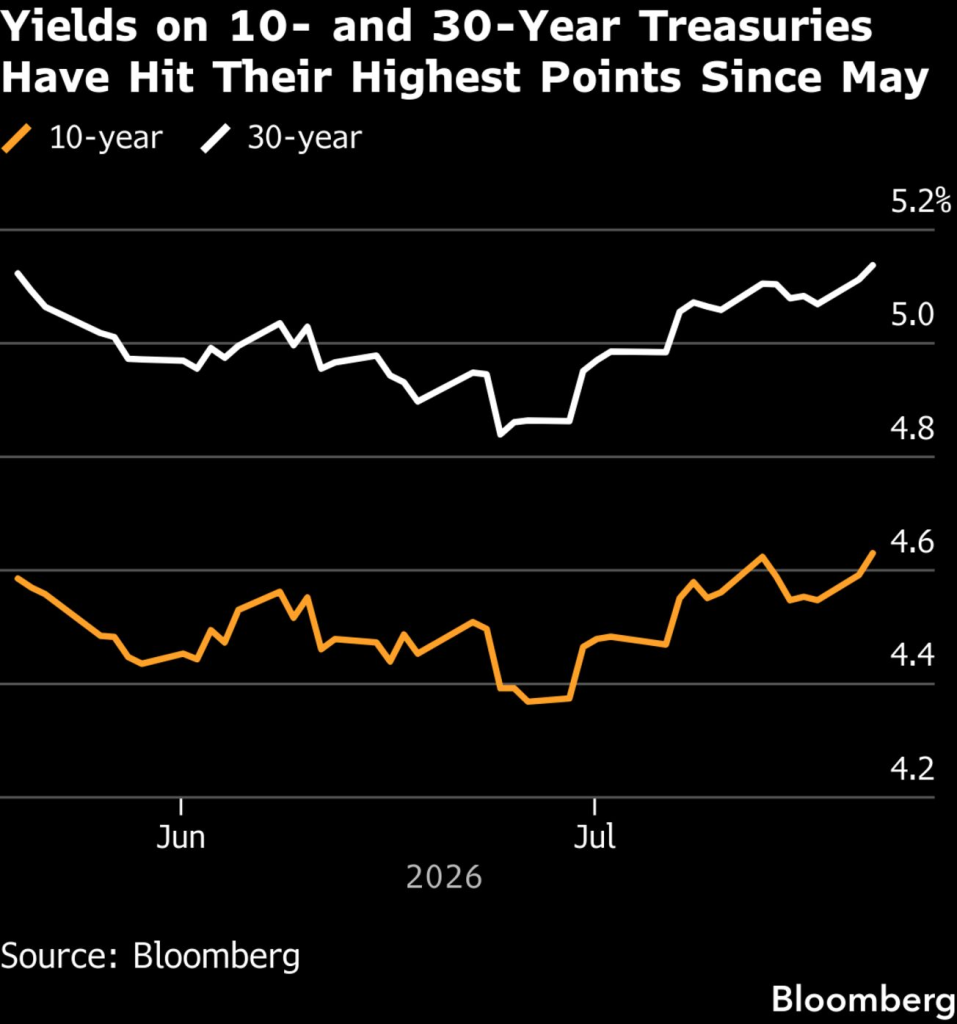
10-year and 30-year yields (Source: Bloomberg)
As oil rises, inflation increases, and major central banks, including the Fed, are forced to tighten monetary policy. A week ago, traders were pricing in a 52% chance of a September hike. However, after this week, the likelihood of such a move has gone up to 80%. Higher borrowing costs are bullish for yields and bearish for interest futures.
Elsewhere, data showed that US unemployment claims came in well below expectations, pointing to a strong labor market. However, this could change as oil prices rise. The Fed will then have the difficult task of balancing inflation and growth. Market participants will assess the tone at the policy meeting next week.
“The economy may be heating up today, but the path ahead for the employment markets could still be rockier with the escalation of the war in the Middle East causing a u-turn in energy prices virtually overnight this week,” said Chris Rupkey, FWDBONDS chief economist.
“The economy isn’t out of the woods yet from the dangers posed to either growth or the affordability crisis and higher prices,” he added.