

- Nearly half of the Fed officials were ready to hike rates this year.
- The likelihood of a Fed hike in September increased from 29% to 69%.
- The US and Iran finally reached a deal to end the war.
Gold continued sliding on Tuesday as demand fell amid a rally in Treasury yields. The precious metal started falling after the Fed held a surprisingly hawkish stance last week. Afterwards, rate hike expectations soared, increasing the opportunity cost of holding gold. It also overshadowed optimism from easing geopolitical tensions in the Middle East.
Bullion has had a difficult time since the war in Iran broke out. The sudden spike in oil prices caused widespread inflation concerns. Consequently, major central banks were repositioning to less dovish stances. The Fed, which had been easing monetary policy, was now considering a rate hike in December.
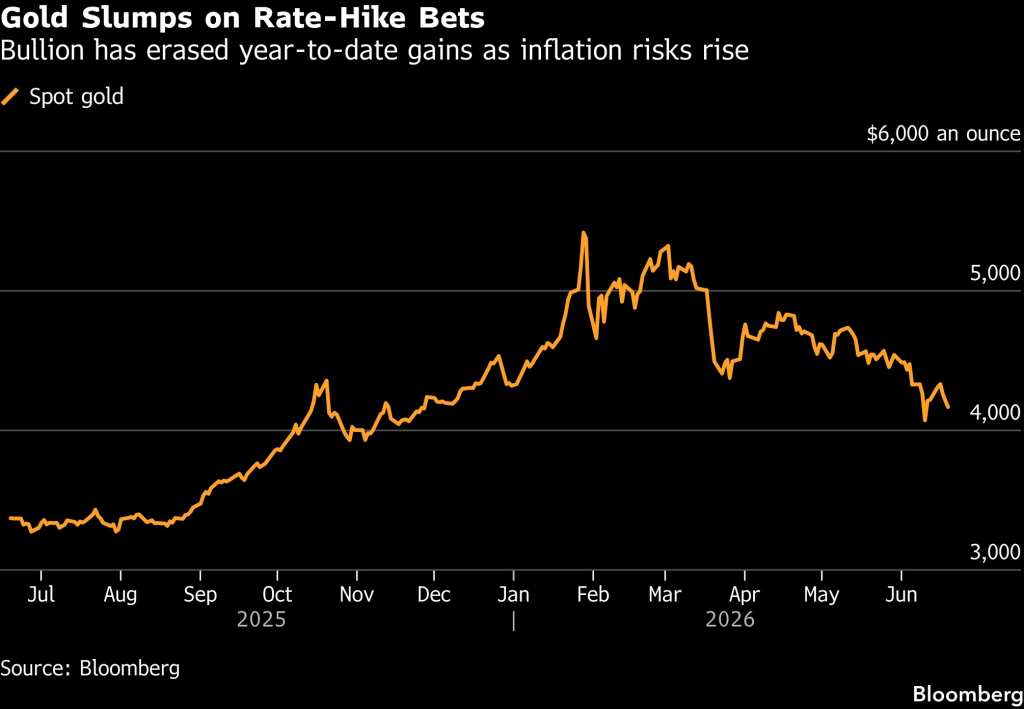
Spot gold (Source: Bloomberg)
The prospects of higher borrowing costs weighed on gold, a non-yielding asset. On the other hand, demand for the yielding dollar increased. This move became even more pronounced after the Fed meeting on Wednesday. Nearly half of the officials were ready to hike rates this year.
Soon after the meeting, traders were fully pricing such a move in October. At the same time, the likelihood of a hike in September increased from 29% to 69%. As a result, the dollar rallied, and gold collapsed. A strong dollar is also bearish for the metal because it makes it more expensive for foreign buyers, reducing demand.
“The strength of the dollar, reinforced by last week’s hawkish tilt from the Fed, is creating a headwind for gold prices,” said ActivTrades analyst Ricardo Evangelista.
“Over the medium to long term, gold prices are likely to be driven primarily by monetary policy, with the Fed and the strength of the US dollar remaining particularly significant factors,” Evangelista said.
Meanwhile, gold traders cheered developments in the Middle East. Last week, the US and Iran finally reached a deal to end the war and reopen the Strait of Hormuz. Furthermore, they agreed to continue with talks for a longer-lasting peace deal.
The reopening of the Strait means an increase in traffic and oil supply. Consequently, oil prices have been dropping, easing inflation concerns. In the long run, a lasting deal would relieve pressure on central banks to hike borrowing costs, favoring gold.
This week, market participants will focus on the core PCE price index for further Fed policy cues.