



- Reports on Wednesday revealed that Iran seized two ships in the Strait of Hormuz.
- The US seized a tanker carrying Iranian oil in the Indian Ocean.
- The Fed will meet next week and likely keep interest rates unchanged.
Interest futures ended lower on Thursday as escalating tensions between the US and Iran sent oil prices higher. Inflation worries increased, sending Treasury yields higher. At the same time, the recent decline in expectations for Fed rate cuts has weighed on interest-rate futures.
Tensions between the US and Iran escalated this week despite an extension of the ceasefire deal. The two-week pause ended on Tuesday, and Trump said he would extend it to allow for a more unified Iranian proposal. Consequently, market participants were more hopeful that the two nations would have enough time to negotiate a better deal. However, the optimism was brief. Soon after, reports on Wednesday revealed that Iran seized two ships in the Strait of Hormuz.
Furthermore, the US seized a tanker carrying Iranian oil in the Indian Ocean on Thursday. The developments have raised concerns that the ceasefire deal will not hold. Therefore, the war might continue.
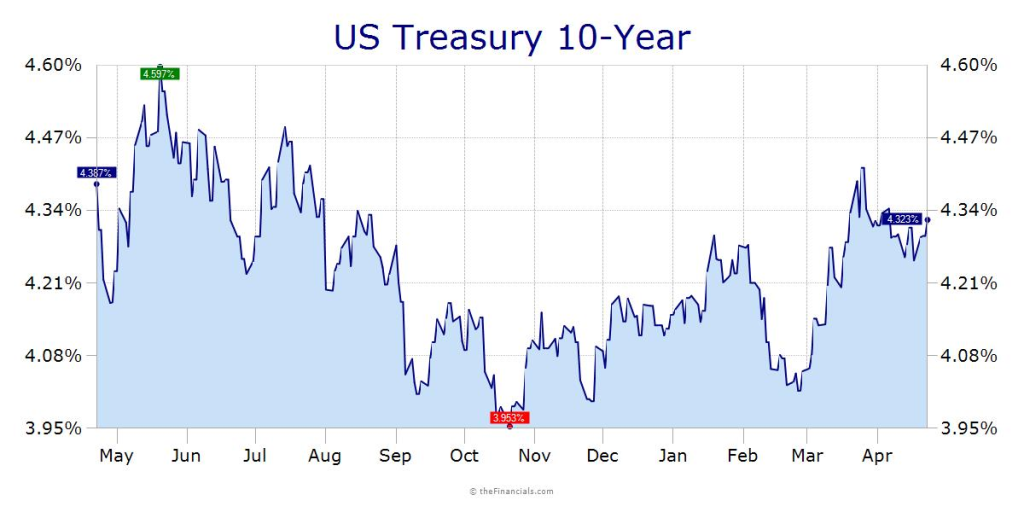
US 10-Year yield (Source: theFinancials)
The uncertain outlook has sent yields and oil higher. As energy prices rise, global inflation also increases, leading to overheating economies. This forces central banks like the Fed to pause and consider rate hikes, boosting Treasury yields.
Recent data from the US has revealed solid jobs and a spike in inflation. Moreover, figures on Tuesday indicated that retail sales jumped by 1.7%, beating the forecast of 1.4%. The numbers pointed to solid consumer spending, lowering bets on a Fed rate cut this year.
The Fed had been lowering borrowing costs as high inflation caused by the Ukraine war steadily declined. However, the US-Iran war has changed the outlook for price pressures. The Fed may have to raise rates to cool the economy if inflation rises again.
High interest rates are bullish for Treasury yields. On the other hand, interest futures drop when borrowing costs increase. The Fed will meet next week and likely keep interest rates unchanged. Market participants will also focus on the meeting’s messaging, especially regarding the war and inflation. Additionally, the US will release the core PCE inflation reading that will shape the outlook for future policy moves.