


- The US is currently blocking the Strait of Hormuz.
- The blockade has increased tensions between the US and other nations that buy Iranian oil.
- The IMF lowered its forecast for global growth this year from 3.3% to 3.1%.
Oil prices dropped on Wednesday before recovering to close well above lows as traders assessed developments in the Iran war. The US’s move to block the Strait of Hormuz could increase geopolitical tensions. However, markets are not reflecting panic at the moment.
Market participants remain hopeful that future talks between the US and Iran will yield a longer-lasting ceasefire deal. Trump on Tuesday said talks could resume in Pakistan. This comes after talks over the weekend failed.
At the same time, the US moved to block the Strait of Hormuz, raising concerns of an escalation in the war. Initially, Iran was blocking the strait in retaliation for attacks from the US and Israel. As a result, oil supply was disrupted, and prices shot up, raising concerns about a surge in global inflation. Consequently, there were calls for the three countries to negotiate and end the war.
Talks between the US and Iran resulted in a two-week ceasefire deal that eased inflation and recession worries. However, the optimism was brief as talks between the two countries collapsed. The US also assumed responsibility for the Strait of Hormuz blockade. The move could cause economic damage in Iran.
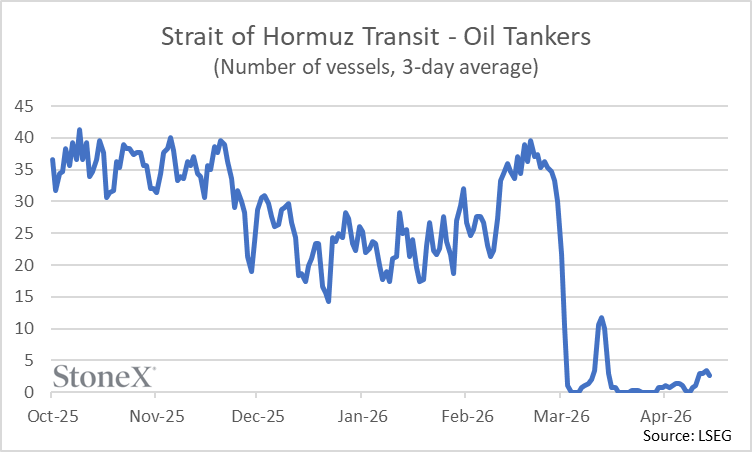
Strait of Hormuz traffic (Source: StoneX, LSEG)
“The US blockade of Iranian ports is now fully into effect, ‘completely’ cutting off Tehran’s international sea trade that powers about 90% of its economy,” the US Central Command said late Tuesday stateside.
Furthermore, the blockade has increased tensions between the US and other nations that buy Iranian oil, including India and China. Therefore, it puts global economic growth at risk. The longer it continues, the higher oil prices will remain. This, in turn, will hurt most economies. At the same time, higher inflation will force central banks to rethink policy and consider rate hikes.
These developments have seen the IMF lowering its forecast for global growth this year from 3.3% to 3.1%.
Elsewhere, recent US figures have revealed cooler-than-expected consumer and wholesale inflation. The headline CPI came in at 3.3%, missing the forecast of 3.4%. Meanwhile, the monthly PPI increased by 0.5%, compared to the forecast of 1.1%. The numbers eased some worries about inflation and increased Fed rate cut expectations.