



- Gold futures rose sharply as the US dollar weakened amid hopes of a ceasefire in the Middle East.
- Softer oil prices increased the investor flows into gold.
- Higher real yields and the Fed’s expected higher-for-longer stance remain headwinds for gold buyers.
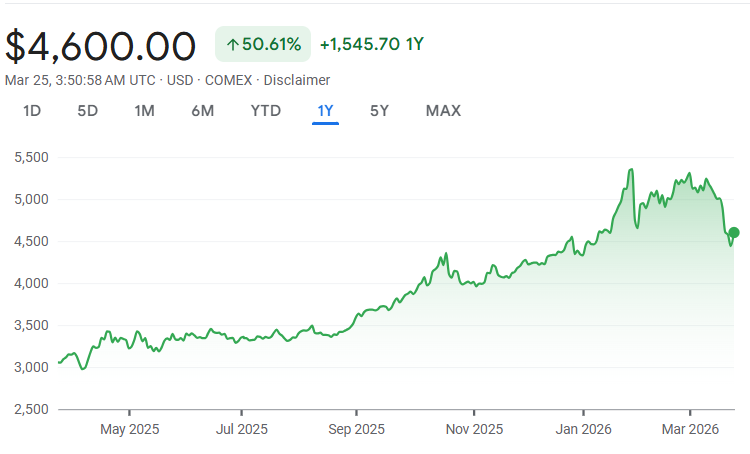
Gold prices jumped sharply on Wednesday, rising more than 2% as a weaker US dollar and lower oil prices improved the metal’s short-term outlook. Spot gold rose to about $4,588 per ounce, while US futures rose by more than 4%, getting close to the $4,600 mark.
The dollar’s drop made gold cheaper for investors outside the US, which brought back demand after a time when the dollar’s strength had hurt gold prices. Analysts note that gold’s appeal as a safe-haven remains intact. The recent rise suggests that investors are returning as currency headwinds ease.
A big reason for the move was a substantial fall in oil prices, with Brent crude falling below $100 per barrel. This eased concerns about a resurgence in inflation and lowered expectations of long-term high interest rates, both of which are key factors affecting gold. Lower inflationary pressures usually help gold, as it means aggressive monetary tightening isn’t needed as much.
Reports that the US is working on a possible ceasefire agreement with Iran also boosted market sentiment. As markets grew more hopeful that the Middle East would calm down, the dollar became less popular as a haven. This helped gold indirectly. But the uncertainty persists as there is no confirmed timeline or agreement, and reports of ongoing military deployments keep the risks high.
Even though the prices have surged, gold is still about 17% below its peak in late January. The metal remains hurt by higher interest rate expectations, and markets are now pricing out any rate cuts by the Federal Reserve this year. Rising real yields are a major downside risk as they make non-yielding assets like gold less appealing.
On the other hand, major institutions still have a positive long-term view. Goldman Sachs expects gold to reach $5,400 by the end of the year as central banks continue to buy it amid ongoing uncertainty about global events. JP Morgan also sees the recent drop as a good time to buy, especially if global tensions remain high.
In the near term, gold is likely to stay sensitive to three things:
- What investors perceive above the Fed’s actions
- Where the US dollar is heading
- Changes in the global geopolitical scenario.
The most recent rise is good news for bulls, but it will only last if real yields stay low and geopolitical risks keep safe-haven demand strong.