

Introduction
A 23% win rate doesn’t sound like the formula for a $13,747 withdrawal. But for Pamela, a 29-year-old freelancer from Chile, it was. Just 14 days after receiving her first funded account with OneUp Trader, Pamela withdrew $13,747 while trading the E-mini S&P 500 (ES).
What makes her performance especially interesting isn’t simply how much she withdrew or how quickly she did it. It’s how she traded to get there. Across 262 trades, Pamela won fewer than one out of every four. Yet her average winner was more than 5 times larger than her average loss. She also held profitable trades significantly longer than losing ones.
Her results offer an interesting example of an important trading principle: you don’t necessarily need to be right often if you manage your risk effectively when you’re wrong and maximize opportunities when you’re right.
Who Is This Funded Trader?
Pamela is a 29-year-old freelancer based in Quilicura, Chile. Before trading full-time, she worked as a consultant, which helped her develop structure and discipline in her work. She’s been trading for about three years and made the shift into financial markets to gain more control over her time and lifestyle.
Pamela starts her mornings with breakfast and exercise before turning her attention to the markets. From there, she reviews her trading guidelines and prepares for the session before placing any trades. She describes herself as a day trader with a medium-risk approach, focusing primarily on the E-mini S&P 500 (ES) through NinjaTrader.
When asked about her strengths, she points to experience. Having gone through both good and difficult periods in the market, she’s built a level of resilience that shows up in her performance. At the same time, she’s aware of her weaknesses. She mentions a tendency to overtrade, which many traders struggle with, especially when trading full-time. But with a simple review, this can be fixed.
Why Pamela Chose OneUp Trader
One factor stood out when Pamela explained why she chose OneUp Trader: the withdrawal policy. From her perspective, being able to access profits quickly was an important part of choosing a funded trader program. OneUp Trader prides itself on having the best withdrawal policy in the industry because when a trader succeeds, they deserve to withdraw their money without restrictions.
She also highlighted the dashboard as a strong point, describing it as ‘very good and easy to use.’ Overall, Pamela rated her experience with OneUp Trader 10 out of 10 and said she would be very likely to recommend the program to other traders.
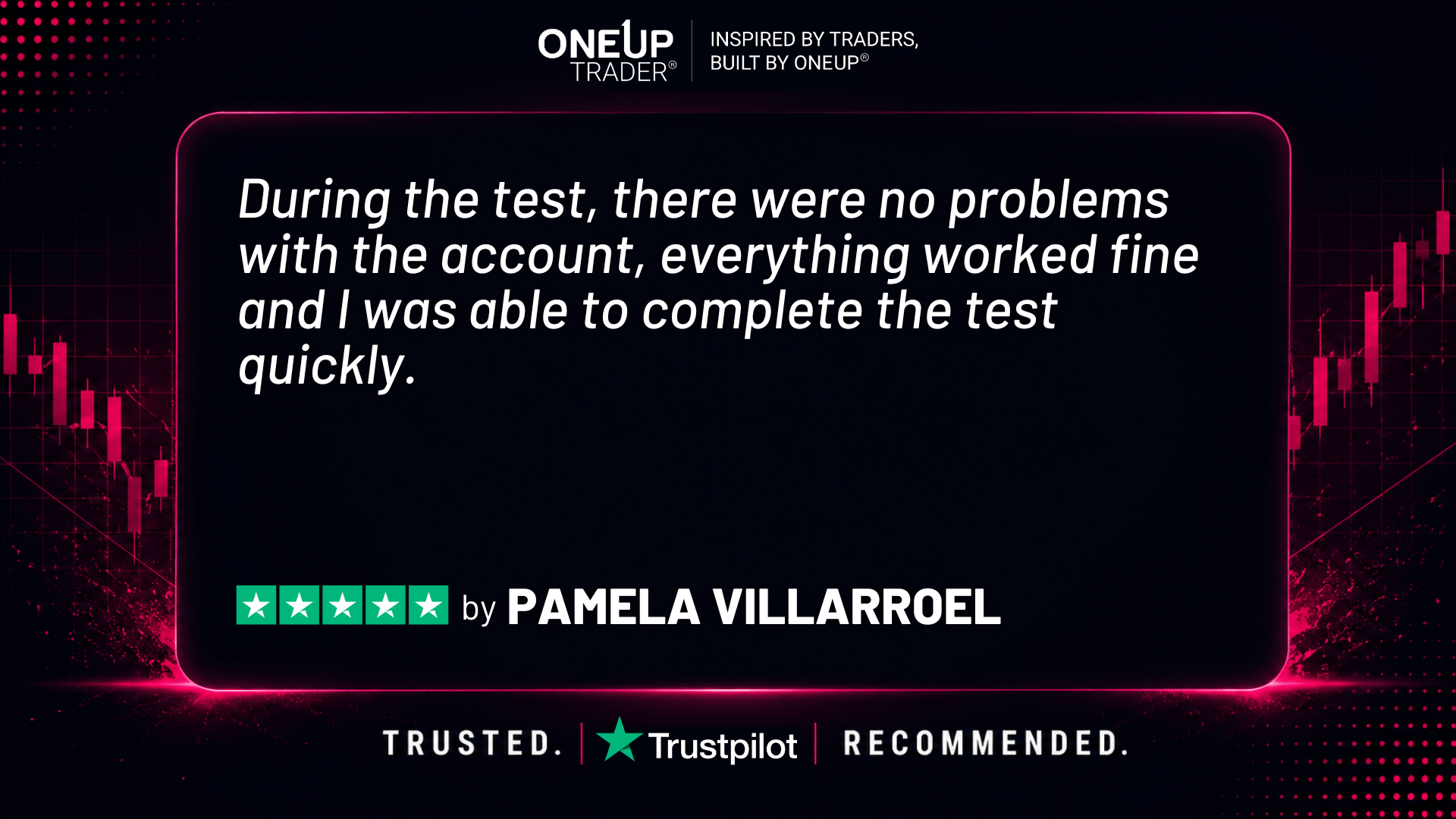
And her positive experience with OneUp Trader actually began before she received her funded account. In a five-star Trustpilot review posted after completing her evaluation, Pamela wrote:
That smooth evaluation experience was soon followed by something much more significant: her first funded withdrawal.
Funded Trading Performance
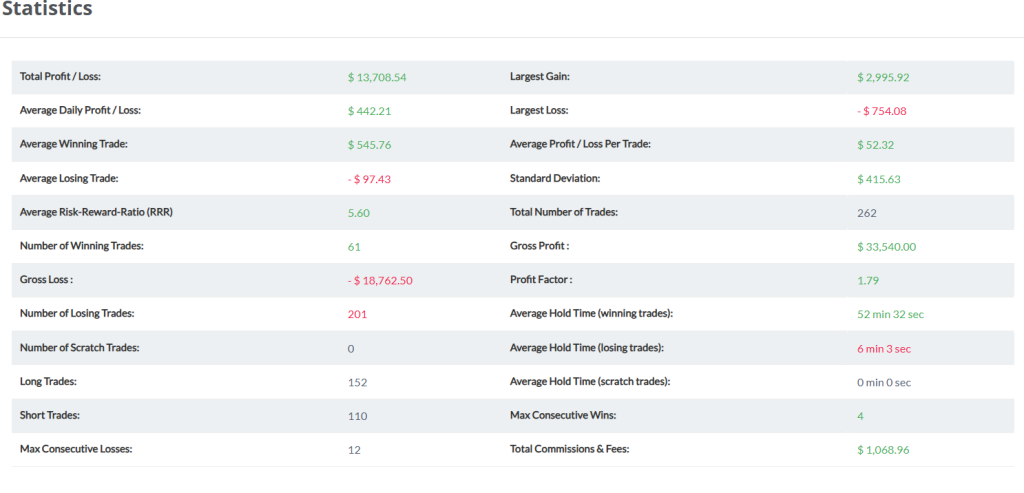
During her first 14 days of funded trading, Pamela completed 262 trades and generated $13,708.54 in trading profit, with an average daily profit of $442.2 and a profit factor of 1.79.
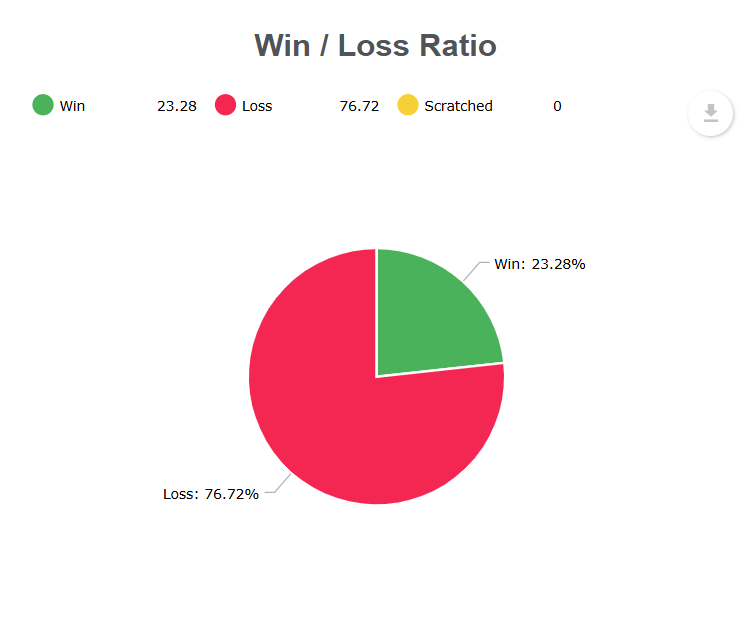
At first glance, one statistic stands out: her win rate of just 23%. Most traders assume they need to win more than half their trades to be profitable. Pamela’s results show the opposite. How is a trader able to be so successful with such a low win rate?
She had:
- 61 winning trades
- 201 losing trades
The reason becomes clear when you look at her risk-to-reward ratio. Her average winning trade was $545, while her average losing trade was only $97. That’s a 5.6 to 1 reward-to-risk ratio. This is one of the most important lessons in her performance. She is a trader who looks for home runs and cuts losses very quickly.
A Key Insight: Letting Winners Run
Another detail reinforces this aspect of Pamela’s trading strategy.
Her average winning trade lasted over 52 minutes, while her losing trades lasted just 6 minutes. That means Pamela held her average winner nearly nine times longer than her average loser.
This gives us an interesting glimpse into her trade management. She shows the patience to let profitable trades develop while recognizing quickly when a position is not working and exiting before the loss grows. That discipline is a key factor behind her success.
This is something many traders struggle with. The common mistake is doing the opposite, holding losers too long and closing winners too early.
Managing Drawdowns
Her biggest loss came in at about $754. On the flip side, her largest win was close to $3,000.
At one point, she went through a rough patch with 12 losing trades in a row. Most traders would struggle to recover from that. But her system didn’t fail because her winners are so much bigger than her losses.
No strategy can avoid losing streaks. They’re part of trading. What matters is having a system that can handle them without falling apart. Pamela’s approach is built for that. It doesn’t rely on being right all the time. It relies on making more when it’s right than it loses when it’s wrong.
Consistency Over Perfection
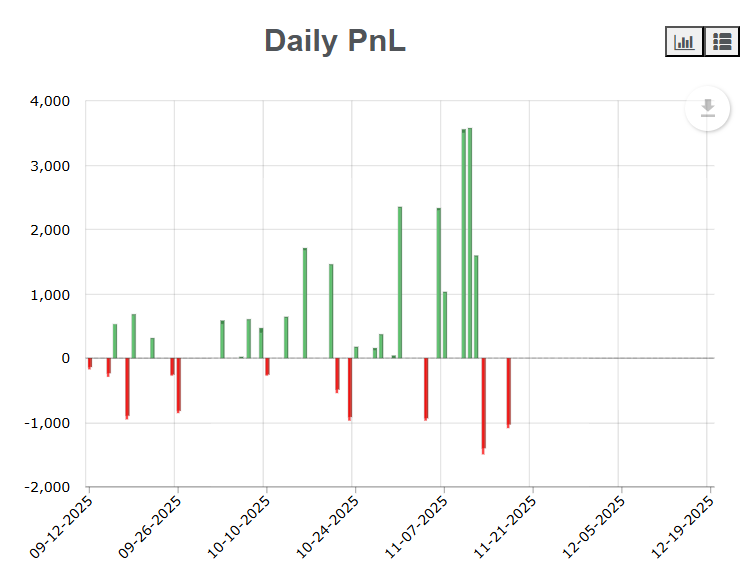
Her average daily profit was $442, and her total performance built steadily over time rather than relying on a single outlier trade. Even with a relatively low win rate, she maintained consistency through structure and discipline.
It’s also worth noting that she executed 262 trades in just 14 days. That is a high level of activity, and interestingly, Pamela herself identified overtrading as one of her weaknesses when answering our funded trader questionnaire.
Despite the high trading frequency, her risk management remained effective during this period. But that doesn’t mean more trades automatically lead to better results.
If anything, Pamela’s experience highlights why traders need to recognize their own behavioral tendencies.
Knowing the difference between taking a trade because it fits your strategy and taking another trade simply because you want to be in the market can be crucial.
Final Thoughts
Pamela’s story highlights several important lessons for traders:
- You don’t need a high win rate to be profitable
- Strong risk-to-reward ratios can outweigh frequent losses
- Cutting losses quickly is just as important as finding good entries
- Letting winners run can completely change your results
- Self-awareness, especially around habits like overtrading, is critical
Her ability to withdraw $13,747 in just 14 days on her first funded account shows what’s possible when discipline and structure come together.
For traders looking to improve, her results are a reminder that success doesn’t come from being right all the time. It comes from managing risk and executing consistently.