



- Gold futures surged on Wednesday amid intensified Middle East tensions and fears of an energy shock.
- The risk of resurgent inflation could push the Fed to pause its easing, keeping dollar bulls alive and limiting gold rallies.
- US ADP, PMI, and NFP data are key to watch this week for further impetus.
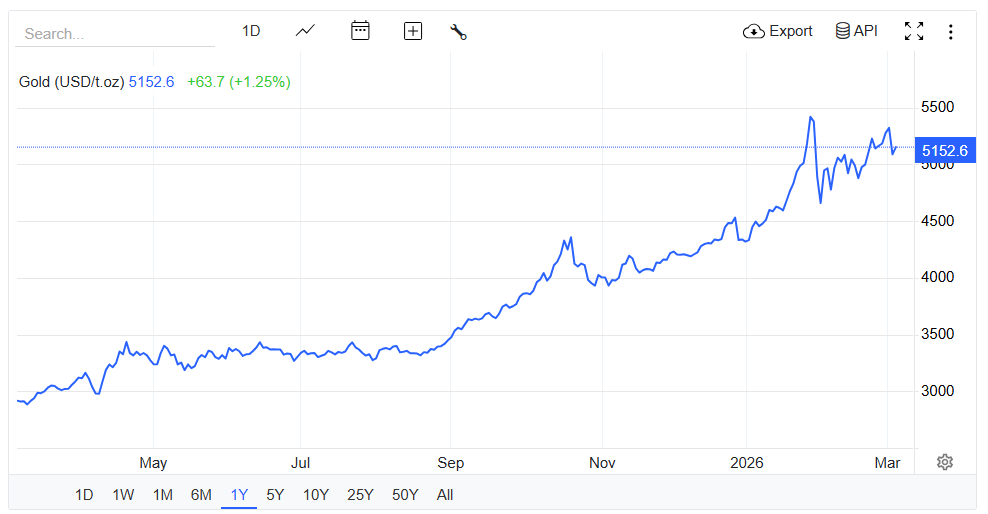
Gold futures rose sharply in Wednesday’s Asian session, with April contracts surging by almost 1% to about $5,170, and spot gold stayed above $5,150 per ounce. The recovery comes after a sharp 4% drop earlier in the week, when a stronger US dollar and fading hopes of near-term rate cuts pushed gold to its lowest level since February 20.
The price rise is primarily due to heightened geopolitical tensions in the Middle East. President Donald Trump said that military operations in Iran could last four to five weeks and that more strikes are likely. Iran has stepped up its threats of retaliation and targeted critical energy infrastructure in response. The Strait of Hormuz, a major oil transit point, has been closed, which has caused crude oil prices to rise to their highest levels since June 2025. This has raised fears of another energy shock.
The situation has shaken up stock markets around the world, especially in the Gulf region, where investors are selling off assets linked to the Middle East. Marine insurance costs are surging, and attacks on US military bases are making things even more uncertain. Institutional flows show a classic risk-off rotation, with money moving out of stocks and into long-term US Treasuries. This has pushed 10-year yields down to a four-month low and increased demand for safe-haven gold.
But the US dollar is still strong, keeping gold rallies limited. The US Dollar Index (DXY) is close to a three-month high, driven by sticky inflation data and shifting interest rate expectations. In January, core producer prices rose 0.8%, the most significant monthly increase since mid-2025. This makes investors worry that the Federal Reserve may put off easing. CME Group FedWatch data shows that markets see only a 4.4% chance of a rate cut in March. Most market participants expect rates to remain between 3.50% and 3.75%.
The trade policy is also a key factor in gold pricing. The US government’s use of Section 122 to impose universal 10% tariffs, which could rise to 15%, adds another layer of systemic risk and makes gold more appealing as a hedge against inflation.
Traders will keep an eye on key US data releases this week, including the ADP employment report, the ISM Services PMI, and the NFP report. Still, geopolitics remains the main reason for the price change. If the price stays above $5,200 for a long time, it would show more bullish confidence. On the other hand, if the dollar remains strong, it could keep gains capped in the near term.