



- The Trump administration had lifted key sanctions on Russia.
- Data last week painted a picture of a strong economy that will give the Fed more room to hike interest rates.
- The likelihood of a Fed pause in October remained at around 84%.
Equities rebounded on Monday as oil prices eased amid expectations for increased fuel supply from Russia. The recovery came after a bearish week, as market participants absorbed inflation and sales data pointing to a more hawkish outlook for the Fed.
Reports revealed that the Trump administration had lifted key sanctions on Russia. Traders cheered the move, as it will allow the oil-producing country to export more of its fuel to the global economy. Increased supply will loosen the market and lower prices, easing inflation concerns.
The global economy is slowly adapting to the Middle East war, which might last longer than expected. Tensions between the US and Iran are still simmering despite the pause ahead of the US midterm elections. At the same time, the Houthis continue to attack energy facilities, among other targets, in Saudi Arabia.
Other major oil producers, including G7 countries, have also announced plans to release fuel stocks into the market. If oil prices drop, inflation worries will ease, reducing pressure on the Fed to hike interest rates. However, as long as tensions in the Middle East remain, oil prices could remain elevated.
Last week, equities fell after a set of upbeat US data. The first report revealed a bigger-than-expected acceleration in the headline inflation number, which came in at 3.7%. Experts had predicted a 3.6% acceleration from the previous month’s 3.4%. Meanwhile, wholesale inflation increased by 1.3%, compared with an estimate of 0.6%.
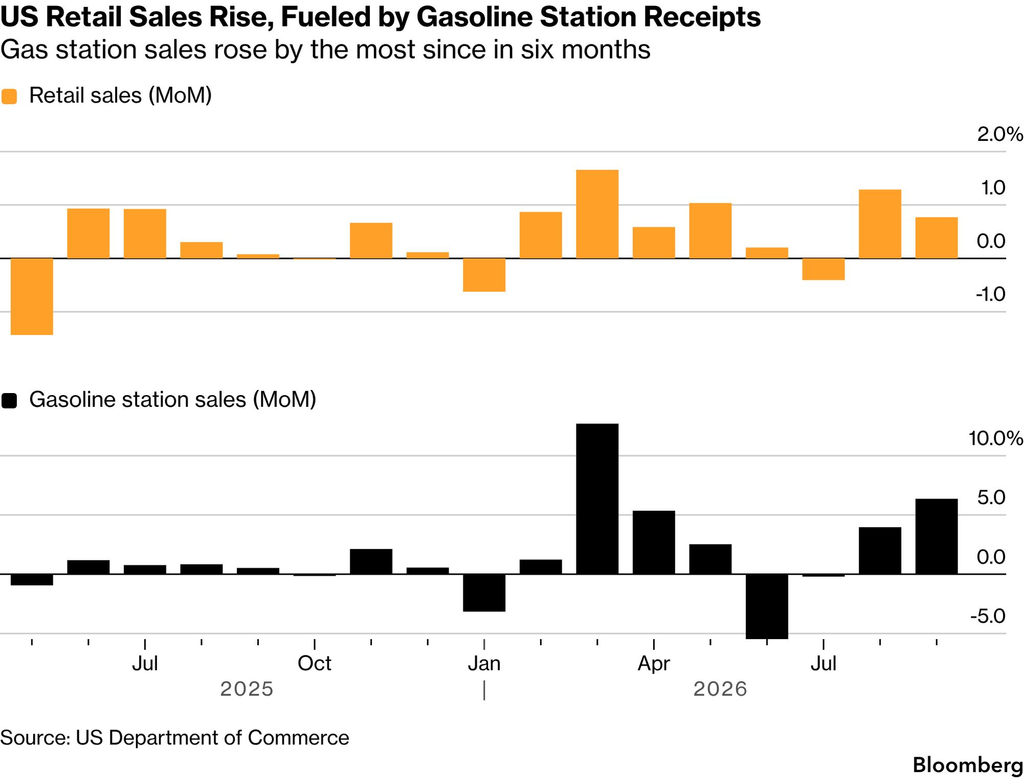
Retail sales (Source: US Department of Commerce, Bloomberg)
Finally, a separate report on Thursday indicated that sales increased by 0.8% in September, beating the forecast of 0.3%. The numbers painted a picture of a strong economy that will give the Fed more room to hike interest rates.
However, after the reports, policymakers, including Warsh, maintained that the central bank would only hike interest rates once this year. Consequently, the likelihood of a pause in October remained at around 84%.
Still, the combination of geopolitical tensions, elevated oil prices, and higher inflation will likely lead to tighter monetary policy in the future, curbing growth and hurting stocks.