



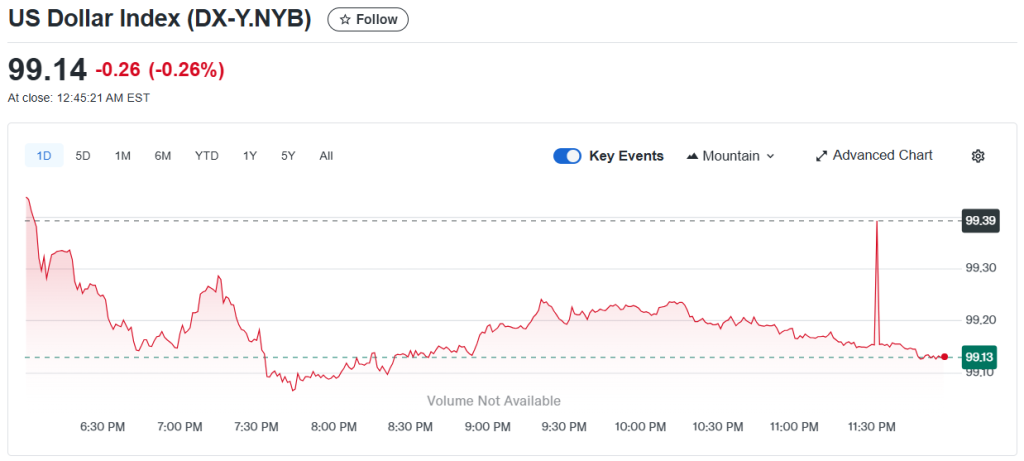
- The currency futures remain positive as the dollar weakens on tariff and political worries.
- Major currency futures edged higher on Monday, pushing the euro, pound, yen, AUD, and CAD to recover from their lows last week.
- Traders will be eyeing key data releases this week for fresh impetus.
Currency futures are strongly bid against the US dollar as the new week begins, largely due to heightened US political risk and new US-Greenland and trade-war headlines. Despite stronger US economic data, the situation is limiting the greenback’s recovery.
Tariffs on the UK and Europe have lowered USD sentiment, supporting pound futures (6B). If the UK labor market or CPI prints lower later this week, expectations for a more dovish BoE could rise, pushing GBP futures to fall. As positioning signals short-covering rather than a trend break, 6B will be heavily dependent on data in the next sessions.
Even though the tariffs target Europe, they are driving demand for euro futures (6E) as markets factor in higher US political risk. A cohesive and credible EU retaliation package could initially strengthen EUR through a “less-bad-than-USD” channel. However, it could harm Eurozone growth forecasts and lower 6E gains. Strong US labor numbers and a delayed Fed easing cycle (the January FOMC doesn’t foresee a cut) suggest EUR futures will trade in a range.
Positive Chinese activity figures and higher crude oil prices bolster CAD. Petro-currency leg pushes CAD futures (6C) higher in the short run. However, Iran tensions may ease, and a limited, data-dependent Fed easing sequence later this year may limit the CAD. If tariffs or Middle East developments cause another risk-off wave, short 6C positions might rise swiftly.
Most structural support lies in the JPY complex. Safe-haven flows, intervention warnings, and a higher probability of an earlier BoJ hike continue to support the demand for 6J. Politics surrounding an earlier election could trigger volatility. Medium-term buyers favor 6J dip buying due to trade war fears, geopolitical tensions, and a weaker USD.
Australian inflation indications and China’s better-than-expected output and GDP figures are driving Aussie futures (6A). Australian inflation remains high but falling, and the RBA is expected to do little more. The downside of 6A is narrowing. Daily swings will be influenced by sentiment toward China and global risk appetite.