




- Currency futures remain cautious as the delayed US NFP data will be released on Wednesday, followed by Friday’s CPI report.
- The Euro, Pound, Yen, CAD, and AUD post mild gains against the dollar in the wake of shifting central bank expectations.
- Market participants remain sidelined, favoring volatility around the key data releases.
Currency futures markets started the week in a cautious tone as traders positioned around shifting central bank expectations and delayed US data. The price action shows investors moving away from safe-haven dollar exposure toward selective risk trades. Meanwhile, the rate cut timing remains a key macro driver.
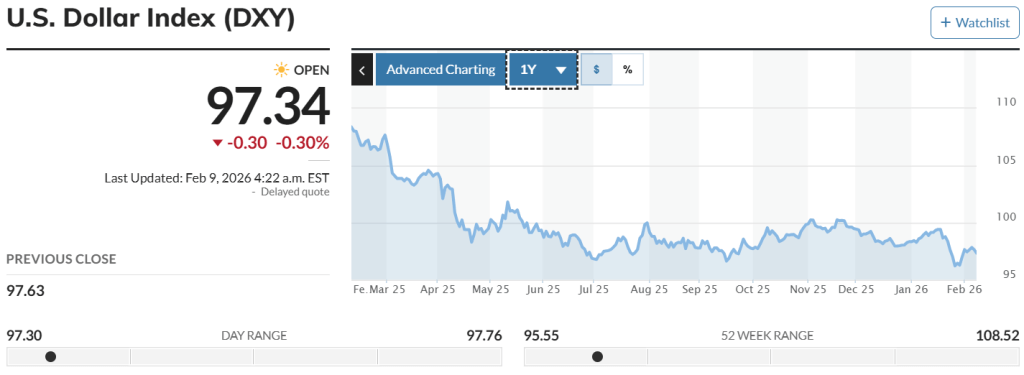
The Dollar Index (DXY) extends losses in the second session as the market participants de-risk ahead of Wednesday’s NFP data and Friday’s inflation report. Meanwhile, futures pricing reflects a high probability that the Fed will hold rates in the March meeting, with cuts expected after midyear. The upside is further capped by the recent uptick in consumer sentiment, reducing the odds of a panic bid for USD safety.
The Euro FX futures (6E) built momentum for a rebound on Friday, as the ECB-Fed divergence has become obvious, with two cuts from the Fed and a hold from the ECB in 2026. The renewed stimulus and resilient Eurozone growth keep the Euro buying intact.
On the other hand, the British pound futures (6B) stays slightly weak on Monday after posting a meaningful recovery on Friday. The recent MPC vote split reinforced the dovish bias, restraining the rallies. The futures curve shows the BoE will cut once and then pause until mid-2027.
North American futures remain more balanced, with Canadian dollar futures (6C) posts solid gains despite mixed Canadian jobs market data. The unemployment ticking to the lowest level since late 2024 keeps the currency supported. This reduces the odds of BoC easing.
Meanwhile, the Australian dollar futures (6A) extends gains, supported by firm risk sentiment stemming from easing geopolitics and hawkish RBA. Governor Bullock’s recent comments reiterate the need for a tighter policy despite contraction in household spending. On the other hand, the Japanese yen remains supported as intervention warnings from Japan’s authorities offset the concerns about weak real wages and expansionary fiscal policy.
With NFP and CPI looming as key event risks, traders in DXY are likely to maintain defensive positioning, favoring volatility and relative‑value strategies over outright directional bets.