


- Crude oil futures saw volatility amid the US seizure of a Venezuelan oil tanker.
- The US EIA report indicates an adequate oil supply, accompanied by slow demand.
- A consistent Russian oil supply continues to cap the upside in oil prices.
Crude oil futures experienced increased volatility on Wednesday as geopolitical tensions, macroeconomic expectations and shifting supply flows collided. The markets were left torn between short-term supply risk and structural long-term concerns.
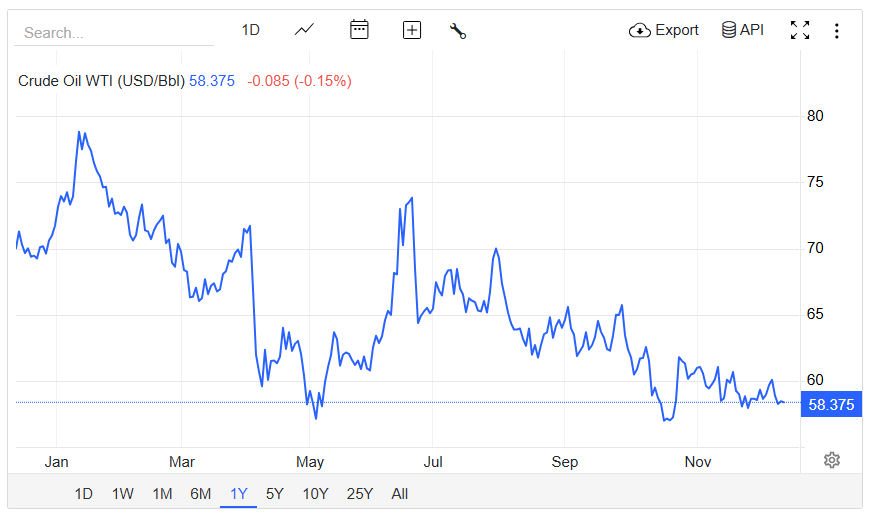
The WTI futures settled near mid-58.00, while Brent futures ended above $62.00. The modest gain came after the US seized a sanctioned crude oil tanker of Venezuela. This injected a geopolitical risk premium into prices.
The VLCC Skipper tanker, loaded with 1.8 million barrels of Venezuela’s Merey crude, was intercepted by the US forces. Washington called the move a sanction enforcement, while Caracas condemned it as international piracy. The incident underscored an already fragile supply environment, raising concerns about wider disruption if tensions intensify.
However, the broader oil market narrative remains dominated by the tug-of-war between oversupply and uncertain demand. The recent US EIA report showed a 1.8 million barrel reduction in crude inventories, lower than API estimates and analysts’ forecasts. This shows a comfortable supply level of US stockpiles, keeping the crude prices under pressure.
Meanwhile, developments in Asia add further complexity to the crude oil market. India’s imports of Russian crude oil in December are expected to rise to 1.85 million barrels per day (mpbd), the highest in six months, as refiners capitalize on lower prices. Moreover, China is also maintaining a steady inflow of Russian oil. These consistent flows keep the global supply excessive, capping any rally in gold prices.
On the other hand, China’s accelerating progress in shale oil technology reveals that the world’s largest crude oil buyer is expected to gain long-term self-sufficiency. Although China is far behind the US shale industry, its gradual build could shift the global supply balance in the years ahead.
On the macroeconomic front, crude oil experienced mild relief after the Federal Reserve reduced rates by 25 basis points as expected. Fed Chair Powell ruled out easing and hinted at at least one cut in 2026. Oil prices gained slightly, anticipating a rise in demand and a weaker US dollar.
The short-term fundamental view is bearish, with analysts warning of a growing surplus in 2026 as inventory builds are expected to remain steady in the early part of the following year. For now, crude oil futures sit at the crossroads; pressured by oversupply today, but increasingly shaped by the risk of a shortage tomorrow.