


- Trump said there was no need for the US to make a deal with Iran.
- The US CPI increased by 0.4%, above estimates of 0.3%.
- Goldman Sachs is now predicting another Fed hike in March of next year.
Interest futures collapsed Thursday as oil prices soared after Trump made remarks that pointed to a prolonged war with Iran. At the same time, prices plunged while yields rose after the US released hotter-than-expected consumer inflation numbers that increased expectations for a Fed rate hike. Traders are now looking forward to wholesale inflation data.
Since the midterm elections, market participants have been hopeful about talks in the Middle East. Trump downplayed the likelihood of renewed attacks on Iran and said things would remain calm as long as talks progressed well. At the same time, Democrats were now holding majority seats in the House and Senate. Therefore, market participants were expecting more pressure on the president to end the war. Consequently, oil prices plunged.
However, there was renewed buying on Thursday after Trump said there was no need for the US to make a deal with Iran. With no deal, the two nations could resume fighting, and oil prices would climb even higher.
“We don’t need a deal with Iran. Those days have long since passed,” Trump wrote in a Truth Social post.
“We’ve got their money, hundreds of billions of dollars, and we’ve got their Strait!” Trump wrote, referring to the Strait of Hormuz, a key choke point in the ongoing US-Iran war.
Interest futures were also under pressure amid a rebound in Treasury yields. On Friday last week, the US released its non-farm payrolls report, which showed robust growth in October. The economy added an unexpected 165,000 jobs while the unemployment rate eased to 4.1%. The report showed resilience despite the Iran war, giving the Fed enough room to hike interest rates.
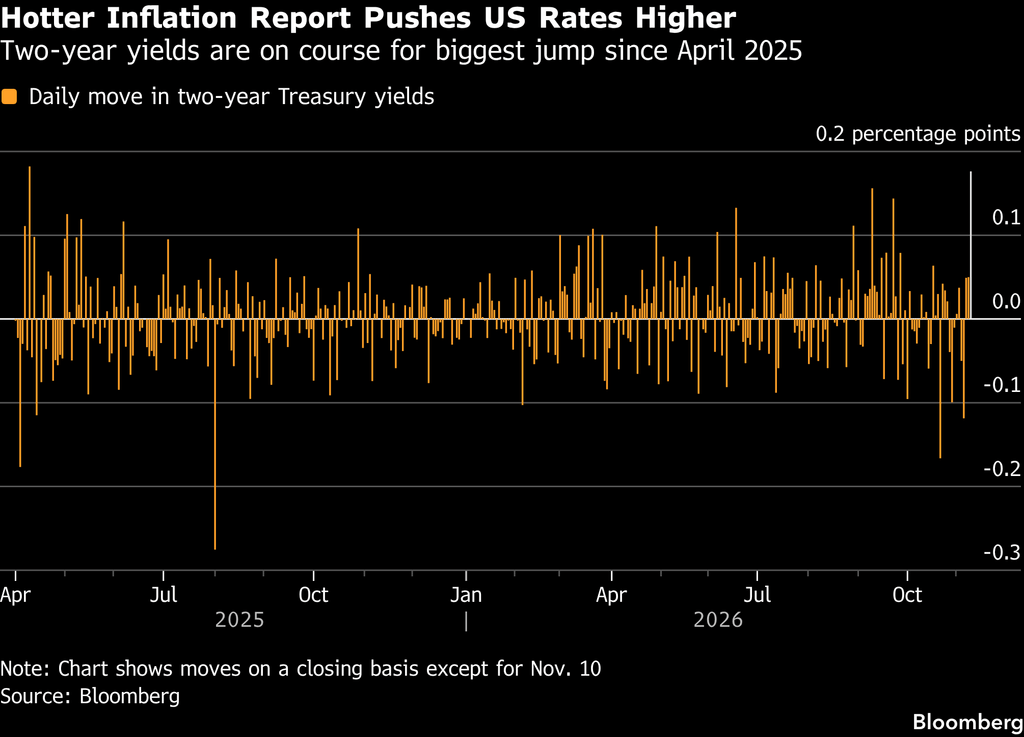
2-year yields (Source: Bloomberg)
Afterward, focus shifted to the consumer inflation report. In October, price pressures increased by 0.4%, above estimates of 0.3%. The data immediately sent expectations for a Fed rate hike higher, with traders now fully pricing a hike in December.
Moreover, Goldman Sachs is now predicting another hike in March next year. As a result, Treasury yields jumped. If the war in Iran continues, inflation will remain a problem for the Fed. Yields would stay elevated while interest futures decline. Market participants are now awaiting the US PPI report for more policy cues