

- Currency futures collapsed on Wednesday as the dollar jumped after a hawkish Fed meeting.
- Oil prices extended last week’s declines as supply concerns eased.
- The BoJ raised rates to the highest level since 1995.
Currency futures pulled back on Monday as the dollar strengthened with market focus returning to US monetary policy. Meanwhile, oil prices extended last week’s declines as supply concerns eased. Saudi Arabia has made efforts to continue supplying oil despite the damage to a major pipeline that bypasses the Strait of Hormuz.
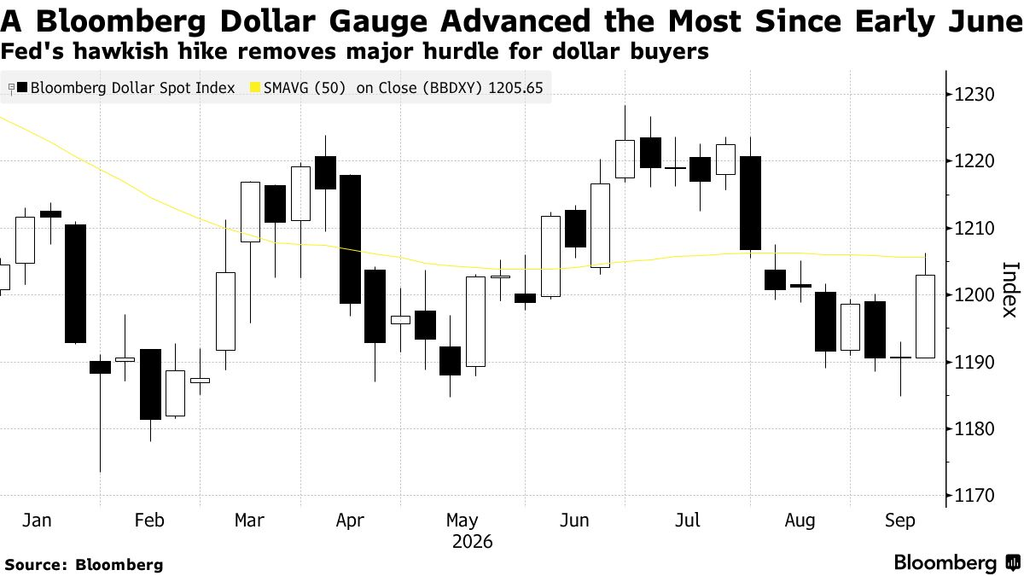
Bloomberg dollar index (Source: Bloomberg)
Last week, currency futures collapsed on Wednesday as the dollar jumped after a hawkish Fed meeting. Since the week began, expectations for rate hikes had supported the greenback. During the meeting, all policymakers voted to hike interest rates by 25 basis points as expected. Moreover, Fed Chair Kevin Warsh noted that inflation remains hot and the Fed would work to bring it down to its 2% target.
Furthermore, policymakers projected one more rate hike this year. Meanwhile, market participants are more hawkish, betting on two hikes before the year ends. However, the rally paused as the week came to a close, with oil prices declining.
Since the Iran war began, the dollar has been tracking moves in oil prices. When oil increases, the dollar rallies because inflation concerns increase, sending rate hike expectations higher. Last week, oil prices pulled back from highs hit in the previous week after reports of an attack on a major Saudi Arabian pipeline. The news caused supply worries, sending prices higher.
Fortunately, prices pivoted on reports that the pipeline would be operational in a few days. Moreover, Saudi Arabia started using the US’s route through Oman’s coast to transport oil to the global market. Consequently, oil prices fell, sending Treasury yields and the dollar lower.
Traders also watched policy decisions in the UK and Japan. The Bank of England kept interest rates unchanged as expected. As a result the pound fell against the dollar on policy divergence. Still, policymakers were aware of rising inflation caused by the Iran war and will likely hike at the next meeting.
Elsewhere, the yen rose throughout the week as market participants looked forward to a rate hike. During the meeting on Friday, the central bank did as expected, raising rates to the highest level since 1995. The yen jumped before erasing some of its gains. At the same time, policymakers showed concern about rising inflation that could keep them hiking.