



- Recent data has pointed to a slowdown in the US economy.
- Trump said Iran was not likely to accept the US’s terms to end the war.
- The US Treasury plans to intervene in the bond market.
Interest futures soared on Wednesday after the US Treasury Department announced it would intervene to support the bond market. The move came despite a lower likelihood for a near-term deal to end the war in Iran.
Bonds have consolidated this month as traders tried to balance US economic data and the Middle East conflict. Both factors play major roles in shaping the outlook for monetary policy. Interest futures rise when borrowing costs are low. On the other hand, the prospects for higher interest rates push up yields, hurting government debt.
On the economic front, recent data have pointed to a slowdown in the US economy and softer inflation. GDP data came in below estimates for the second quarter. At the same time, there was unexpected weakness in the labor market, with the economy losing 23,000 jobs in July. Furthermore, consumer spending was much weaker than expected in the same period. All these indicators point to a weaker economy, which puts the Fed in a tight spot. A slowing economy needs lower borrowing costs. Higher rates would only worsen the situation, increasing the risk of a recession. As a result, interest futures rose as rate hike bets fell.
On the other hand, the situation in the Middle East has changed with time. Earlier in the month, market participants were hoping for a deal to reopen the Strait of Hormuz. Moreover, officials hinted at a ceasefire deal that would allow them to resume nuclear talks. This, coupled with a slower economy, would have been perfect for bonds as Fed rate hike expectations fell.
However, the situation has changed. This week, reports revealed that Trump said Iran was not likely to accept the US’s terms to end the war. Therefore, what was the point of negotiating?
At the same time, the US claims full control of the Strait of Hormuz, which it says is open.
Meanwhile, Iran has said it will remain closed until the US accepts its conditions. The stalled talks have left many fearing an escalation. At the same time, ongoing oil supply disruptions have rekindled inflation worries, increasing rate hike bets and hurting interest futures.
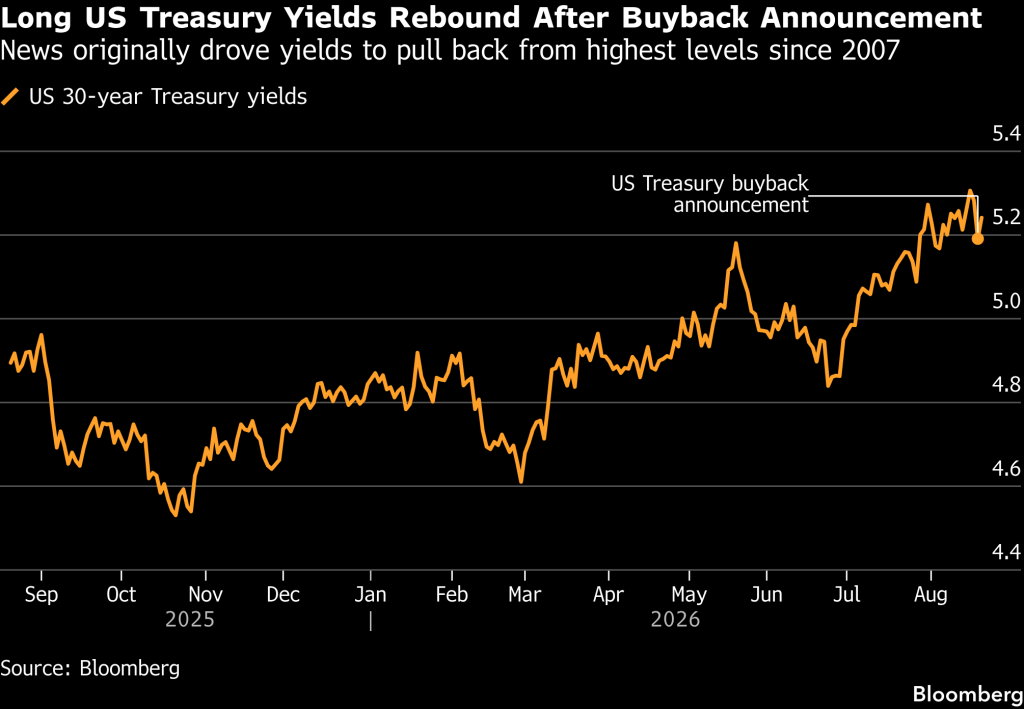
US yields (Source: Bloomberg)
The move on Wednesday only came after reports of a looming September government intervention to support the bond market. However, current fundamentals still support higher yields.

