



- Business activity in the US manufacturing sector fell from the previous month.
- Data on Thursday revealed that the US economy added 57,000 jobs in June.
- Trump said talks in Qatar were progressing well.
Currency futures had a strong week as the dollar fell after downbeat economic data. Market participants assessed manufacturing PMI and employment figures, which both missed the estimates. As a result, expectations of a Fed rate hike eased. At the same time, focus remained on talks between the US and Iran in Qatar.
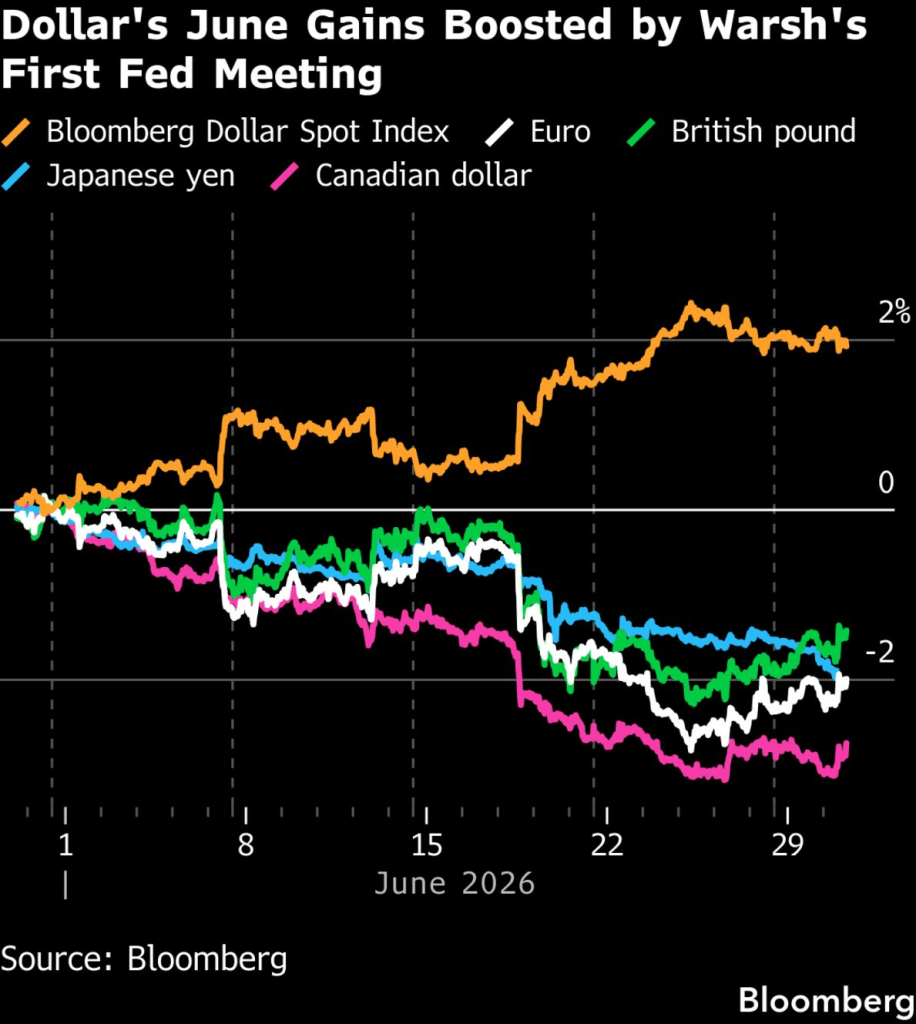
Dollar performance (Source: Bloomberg)
The dollar has been on a strong rally since the June FOMC policy meeting. This move came despite an easing of geopolitical tensions and a decline in oil prices. Meanwhile, currency futures have suffered.
The hawkish Fed meeting led to a significant repricing in the outlook for monetary policy. Markets went from anticipating a December hike to betting on a move as early as September. Moreover, policymakers showed a willingness to raise borrowing costs on more than one occasion.
At the same time, as the dollar rallied, risk appetite was gradually increasing. The deal between the US and Iran that reopened the Strait of Hormuz sent oil prices tumbling. So far, oil has erased all its wartime gains. Consequently, inflation concerns have eased, allowing traders to consider some riskier currencies.
Last week, the dollar fell after a set of poor economic data. This, combined with the recent improved risk sentiment, allowed currency futures to recover some of their losses. The first report revealed that business activity in the manufacturing sector fell from the previous month and missed the forecasts. Nevertheless, the figure remained above the expansion level. The PMI came in at 53.3, below the estimate of 53.8.
Furthermore, data released on Thursday showed that the US economy added 57,000 jobs in June, well below the 114,000 forecast. At the same time, the May number was revised from 172,000 to 129,000. The miss led to a drop in rate hike expectations, hurting the dollar. Nevertheless, the likelihood of a move in September remains above 50%.
Elsewhere, tensions between the US and Iran, which had caused uncertainty at the start of the week, eased. Strikes over the weekend almost led to the collapse of talks in Qatar. However, when calm returned, negotiations continued through mediators. Moreover, Trump said they were progressing well. As a result, oil fell, supporting currencies that had suffered the most during the war, like the euro.