



Introduction
In October of last year, we highlighted a funded trader named Sali who impressed us with five separate withdrawals totaling $16,900. Since then, Sali hasn’t slowed down. So far in 2026, he has already added another $12,000 withdrawal, bringing his total close to $30,000!
In this short review, we will re-examine Salis’s approach, what she does best, and what we can learn from his success.
Read the previous article on Sali here.
Her Simple Approach
Sali trades the $50,000 evaluation account and keeps her strategy extremely simple. He uses no indicators and no complicated systems. There’s no heavy analysis or advanced tools involved.
Instead, she focuses on pure price action, watching how the market moves in real time and waiting for clean pullbacks when a trend is clearly established. If the setup isn’t there, she doesn’t force a trade.
That same simplicity extends to how she manages risk and maintains consistency. By trading only when conditions are clear, Sali avoids overtrading and unnecessary losses. This patience is especially important in evaluation accounts, where traders may feel more tempted to force trades than they would in personal accounts. Because evaluations are relatively inexpensive and can often be reset, they can create a false sense of security, leading traders to develop bad habits instead of treating each trade with the seriousness it deserves.
The bigger takeaway is that consistency doesn’t come from doing more. It comes from doing less, but doing it well. A simple price-action approach, combined with discipline and patience, can produce steady results without complex tools or constant screen time.
Sali’s Most Recent Funded Account
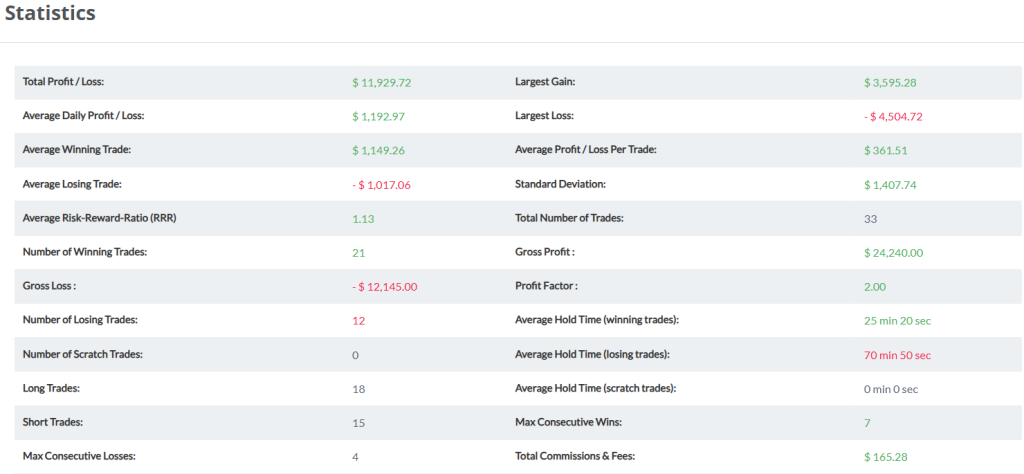
A Disciplined Daily Routine
This discipline to wait is something many traders underestimate. Sitting on the sidelines can feel uncomfortable, especially when others are active or when the market is moving without you. But by removing the need to always be involved, Sali keeps his decision-making clear and emotion out of the process. Se treats trading as a game of probabilities, not participation. If the odds aren’t clear, there’s no reason to trade just for the sake of it.
Traders can apply this by simplifying both their preparation and their expectations. Instead of trying to trade every session, focus on recognizing when your specific edge is present and give yourself permission to walk away when it’s not. Over time, this approach reduces overtrading, protects mental energy, and leads to more consistent results, not because of constant action, but because of patience and selectivity.
Consistency Over Perfection
The $12,000 withdrawal didn’t come out of nowhere. It followed several payouts earlier in the year and confirms that Sali’s approach works consistently over time, not just during a single good market stretch.
She understands that losses and drawdowns are a natural part of trading and doesn’t view them as failures. Instead, she treats them as learning opportunities. When an evaluation doesn’t work out, she doesn’t chase losses or overhaul her strategy. She resets, waits for the right conditions, and executes the same process again. This long-term mindset helps her stay focused on steady progress rather than short-term frustration.
Traders should take note of this, because most failures don’t come from bad strategies, but from poor reactions. Forcing trades, over-risking after losses, or abandoning a plan too early is what usually breaks accounts. Sali’s results show that patience, acceptance of setbacks, and consistently repeating a proven process are often more important than searching for a “better” strategy.
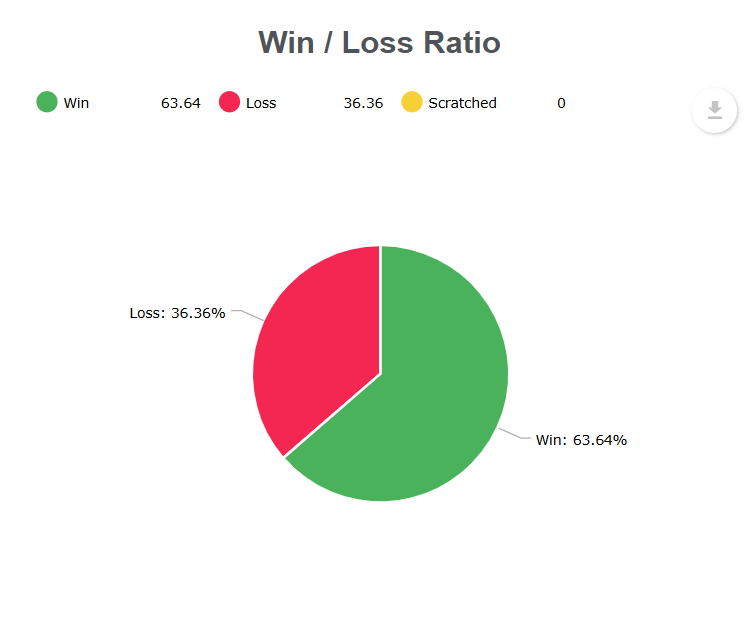
What We Can Learn From Sali
Sali’s results highlight a few important lessons:
- Simple strategies can work when executed well
- You don’t need indicators or complex systems to be consistent
- No trading is often just as important as trading
- Discipline and patience matter more than being right every day
- Funded trading can fit alongside a full-time career
What stands out most is how repeatable his approach is. There’s nothing in her process that relies on perfect timing, constant screen time, or catching every move. Instead, she focuses on showing up, waiting for conditions that make sense, and executing the same plan without forcing outcomes. That consistency is what allows results to stack over time.
The main point is that trading success doesn’t come from complexity. It comes from sticking to a simple plan, managing risk, and staying patient, especially when the market isn’t offering much. With nearly $30,000 withdrawn, Sali shows that doing the basics well, over and over, is what leads to consistent results. Not through constant action, but through restraint, discipline, and a long-term mindset.