


Market Context
YM has now broken above its prior all-time high, only 1,200 points away from 50,000. Both the weekly and daily timeframes confirm that this is a well-established uptrend that has been in place since the 2023 lows.
The next big level is the psychological 50,000 level, with no horizontal resistance; this would be the main focus for the bulls. Let us take a closer look at the technicals and see what they tell us.
Weekly Chart Perspective
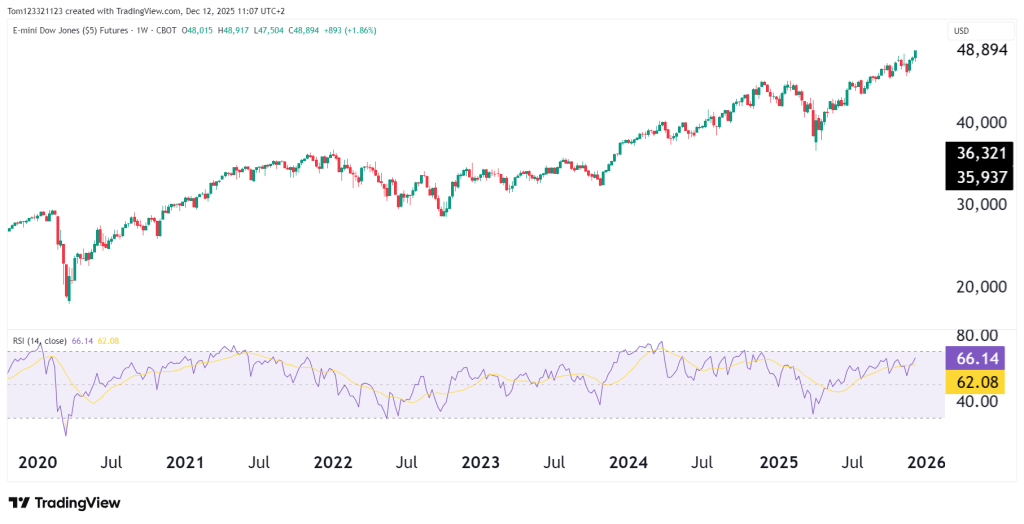
From a higher-timeframe view, the Dow’s trend still looks very healthy. On the weekly chart, price continues to make higher highs and higher lows, with the most recent candle closing clearly above the prior all-time high. Weekly RSI is holding in the mid-60s, which typically points to steady bullish momentum rather than an overheated market.
With no real resistance overhead on the weekly chart, the most likely outcomes are continued upside, sideways consolidation, or only shallow pullbacks unless a major external shock changes the picture.
Daily Chart Perspective
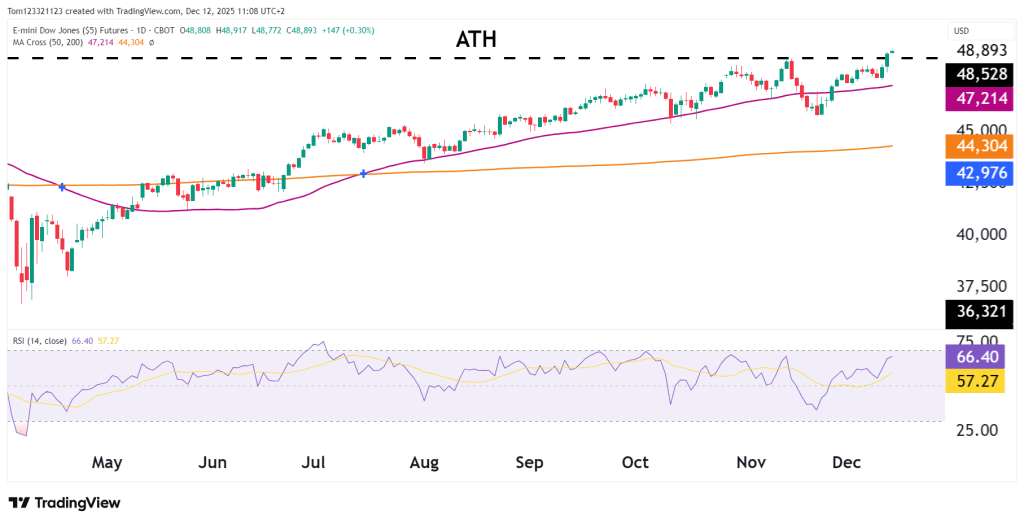
The daily chart adds more detail to how the breakout is developing. Price has moved back above the old all-time high area near 48,500 and is holding there, turning what was resistance into support. The 50-day moving average around 47,200 is still trending higher and has consistently supported price during recent pullbacks.
The 200-day moving average near 44,300 sits well below current levels, which supports the broader bullish trend. Daily RSI around 66 shows solid momentum without signs of being stretched. Since the breakout, price action has been clean and controlled, with little downside pressure. The market is accepting these new highs as there is little selling pressure after the break.
Fundamental Factors Impacting Dow Futures This Week
Dow futures are being driven by a mix of economic data, earnings signals, and expectations around Fed policy. The main focus is on U.S. inflation, especially the CPI and PPI reports.
Investor sentiment is also being shaped by early earnings commentary ahead of the Q4 reporting season. Companies with heavy international exposure may feel pressure from the strong U.S. dollar, which can hurt overseas revenues. At the same time, geopolitical risks tied to global shipping and energy prices are adding uncertainty, especially for transportation and manufacturing names. The labor market is another key factor to watch, as signs of cooling could strengthen the case for a future Fed pivot while easing wage pressure on large-cap companies.
________________________________________________________________________________________________________________
This analysis is for educational and informational purposes only and does not constitute trading advice or a recommendation to buy or sell any futures contracts. Futures trading involves significant risk and may not be suitable for all investors. Always conduct your own research and consult with a licensed financial professional before making trading decisions.