



- Interest futures remain cautious as the Fed maintains a “hold” policy for longer, especially after the Middle East war.
- Short-term futures have experienced significant volatility as traders bet on a single rate cut this year.
- The Fed’s projection for the core PCE index has changed to 2.7% from 2.4%, suggesting more time is needed to reach the inflation target of 2%.
US interest futures are pricing in a long period of tight policy after the Federal Reserve decided to keep its benchmark rate steady this week. A recent rise in global oil prices and ongoing inflation have made it harder for the Fed to ease up in 2026.
The FOMC ended its two-day meeting on Wednesday by keeping the federal funds rate at 3.50% to 3.75%. The central bank’s quarterly “dot plot” still shows a median of one rate cut by the end of the year, but the mood in the futures market has changed since Fed Chair Jerome Powell’s “hawkish pause.”
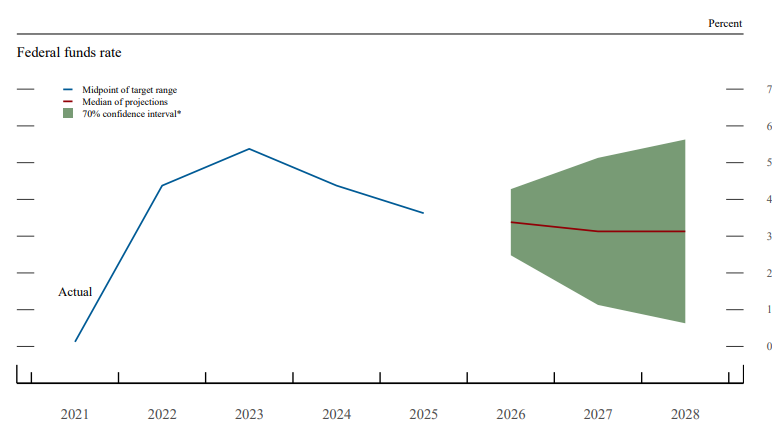
Fed Funds Futures and 3-Month SOFR contracts have seen significant price changes in short-term markets. Traders who used to bet on multiple cuts this year are now coming together around one move, which will probably happen in the fourth quarter. The front end of the curve is still sensitive to new information, and the implied chance of a move in April was almost completely erased after the meeting.
As yields rise, longer-term Treasury futures, like 10-year and 30-year notes, have been pushed down. This bear flattening of the yield curve shows that investors are becoming more concerned that the Fed may have to keep rates high even as the economy slows.
Powell told reporters that “uncertainty is high,” and he pointed to the conflict in the Middle East as an example.
Powell said that the Fed might have to “look through” temporary energy shocks as oil prices surged to $100. This could affect the inflation; the Fed would continue to monitor closely for further action.
The Fed also raised its forecast for core PCE inflation in 2026 from 2.4% in December to 2.7%, which makes it less likely that the bank will quickly reach its 2% target. Analysts note that since Powell’s term ends in May, the central bank seems to be sticking to a “first, do no harm” approach, which means that inflation must be clearly beaten before any major policy change can be made.