




- US interest futures took center stage amid an unusually large trade in Fed Funds futures.
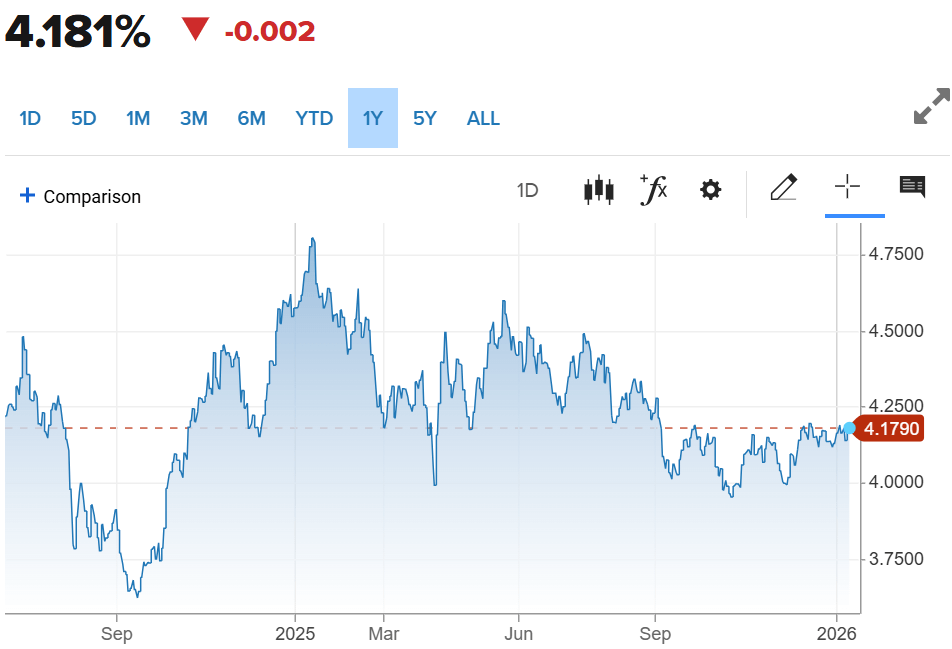
- US 10-year yields remain slightly elevated along with short-term contracts.
- Markets await key US NFP data for further directional bias.
US interest futures got a lot of attention since an unusual trade occurred in the Fed Funds futures market just days before a key US jobs report. On Tuesday, the largest trade in this market to date occurred: a single block trade of 200,000 January Fed Funds futures contracts.
The size alone has led to speculation about what some of the biggest players might be preparing to face in Friday’s Nonfarm Payrolls report.
According to market analysts, the trade was a sell order with a risk exposure of about $8 million for every single basis point move. The identity and exact purpose of the position are still unknown, but its timing is hard to ignore.
As the Federal Reserve’s January policy meeting gets closer, even small changes in rate expectations could mean big gains or losses for a position this big.
As of now, futures markets indicate only a 15% probability of a rate cut at the end of January. If the trade is for a new position instead of closing an older one, it suggests that expectations for near-term easing may fade even more, especially if new labor data shows a resilient economy.
The January contract settles based on the average effective federal funds rate for the month, which is currently around 3.64%. This means the position is favorable as long as rates don’t drop significantly below their current level.
The broader interest futures market has also started to move cautiously. Investors were awaiting new labor data, so US Treasury yields rose slightly. The 10-year yield was just above 4.18%, and shorter-term yields also mildly increased.
Weekly jobless claims were close to the forecast, so they didn’t change the story much on their own. However, they did add to the sentiment that the job market is slowing down without deteriorating significantly.
The payroll report on Friday is now key to watch. This will be the first release on time since the long government shutdown last year, which made it hard to collect data and made recent labor market signals less clear. Economists anticipate that the unemployment rate will decline slightly, with potentially a small increase in jobs. An upbeat data supports the current rate pricing.