



- US equities bounce as the lower yields support despite rising energy prices.
- Financial and AI stocks gained modestly while energy stocks slightly ticked higher.
- Despite the upside, the equities remain under pressure as recession concerns mount.
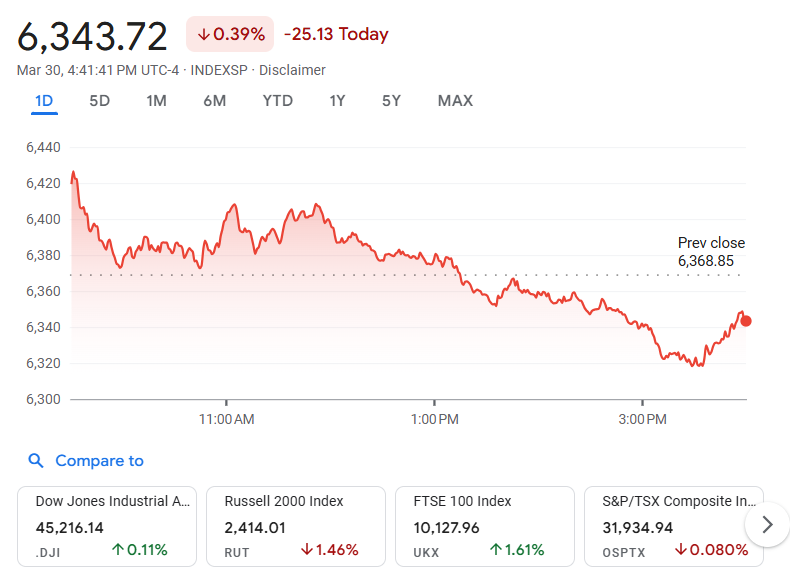
US equities rose slightly on Monday after hitting multi-month lows as Treasury yields slipped and investors weighed the inflationary effects of rising energy prices against the growing risks to economic growth.
The S&P 500, Dow Jones Industrial Average, and Nasdaq 100 mildly recovered from earlier losses as bond yields fell across the board. The move gave rate-sensitive sectors a break after a long selloff driven by tighter financial conditions and global uncertainty.
The Middle East crisis is still affecting markets, as rising tensions and supply disruptions have driven crude prices higher. Attacks on shipping lanes in the Red Sea and threats to Iranian exports have heightened investor concern about global energy flows. Brent crude prices rose by one of the biggest amounts in a month on record.
The oil shock is making the big picture more complicated. Investors have a harder time figuring out when high energy prices will normalize, become a cause of inflation, and start to hurt growth. Higher oil prices usually lead to higher prices, but if they stay high for a long time, they could hurt demand and corporate profits, raising concerns about a recession.
This dual dynamic was seen in lower Treasury yields, which means that markets have started factoring in risks to growth even though inflation expectations are still strong. The Federal Reserve’s path has already been repriced in the money markets, with hopes for rate cuts this year fading in favor of a “higher-for-longer” stance.
Sector performance showed a cautious rotation. After big losses last week, tech stocks bounced back. NVIDIA, Amazon, and Microsoft, for example, all saw gains of more than 1%. There are signs of “AI trade” fatigue, but the recovery still occurs as investors rethink their positions and valuations in crowded sectors.
Financials also rose alongside higher yields, while energy stocks gained slightly alongside higher crude prices. Aluminum producers, on the other hand, rose sharply due to supply concerns.
Despite the recent upside, US equities remain under pressure. Major indexes have dropped for several weeks in a row, with the Dow confirming that it is in correction territory and the Nasdaq and Russell 2000 already there. The S&P 500 is very close to the same level.
Strategists are becoming more cautious. Even though US assets are still attracting safe-haven flows, rising yields near key levels and high oil prices are bad for stock prices. However, strong earnings growth and structural advantages in innovation are seen as possible buffers. This suggests that the current downturn may be nearing the end of a correction rather than the start of a deeper bear market.