


- Oil prices pared losses, moving well above the $100 mark as Trump’s speech poured cold water on de-escalation hopes.
- Potential attacks on Kharg Island could further escalate the war.
- The EIA warns that prices could soar further as pre-conflict cargoes run out.
Oil prices surged more than 6% in Thursday’s Asian session as markets adjusted to the fact that the US and Iran are likely to stay in a long-term conflict. President Trump’s recent speech did not make it clear how the situation could be de-escalated.
Benchmark Brent crude rose more than 6% to trade above $107 per barrel. US West Texas Intermediate (WTI) rose past $105, making up for earlier losses triggered by hopes of diplomatic progress. The sharp rise shows how sensitive oil markets are to geopolitical signals, especially related to the Strait of Hormuz, which carries about one-fifth of the world’s oil.
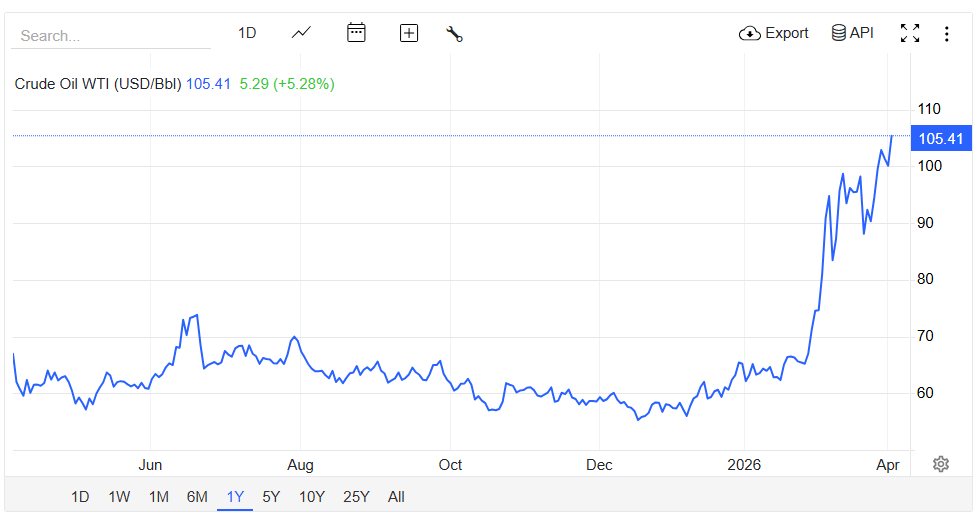
Trump’s comments, which stressed more military action in the coming weeks but didn’t give a clear timeline for a ceasefire, made markets worried about supply disruption lasting a long time. Analysts noted that the lack of clear diplomatic communication has changed the story in the market from short-term volatility to a longer-term supply risk.
The situation is getting worse as maritime security threats are growing. Recent attacks on oil tankers in the Gulf, including ships owned by QatarEnergy, have caused fears that shipping routes could be closed for a long time. If security conditions get worse, it could make it harder for commodities to move in the entire Gulf region.
Market participants are also paying attention to important infrastructure like Kharg Island, which is Iran’s main oil export terminal. Any direct attack or disruption of the facility would hurt Iranian exports and make the global supply shock worse, especially since there isn’t much spare capacity elsewhere.
The International Energy Agency has warned that supply pressures are likely to get worse in April when pre-conflict cargoes run out. This will remove a key buffer that has so far curtailed the oil rallies. This means that the current bullish phase could have more room to grow.
From a market structure point of view, oil is starting to act more like a supply-driven asset than a trade based only on sentiment. Some technical indicators show that momentum is slowing down, but the overall trend is still bullish as long as geopolitical risks stay high.
The oil market is once again at the center of macroeconomic risk as stocks fall and worries about inflation rise. This shows how a conflict with no clear end in sight can have far-reaching effects.