


- The US and Iran agreed on a two-week ceasefire, sending oil lower.
- Thursday’s attacks on Lebanon signaled cracks in the US-Iran ceasefire agreement.
- FOMC minutes revealed that some policymakers were open to rate hikes.
Oil prices plunged on Wednesday after reports of a two-week ceasefire in the war between the US and Iran. However, there was a slight recovery on Thursday as cracks emerged in the deal with attacks on Lebanon. Meanwhile, FOMC minutes revealed a less dovish tone among policymakers.
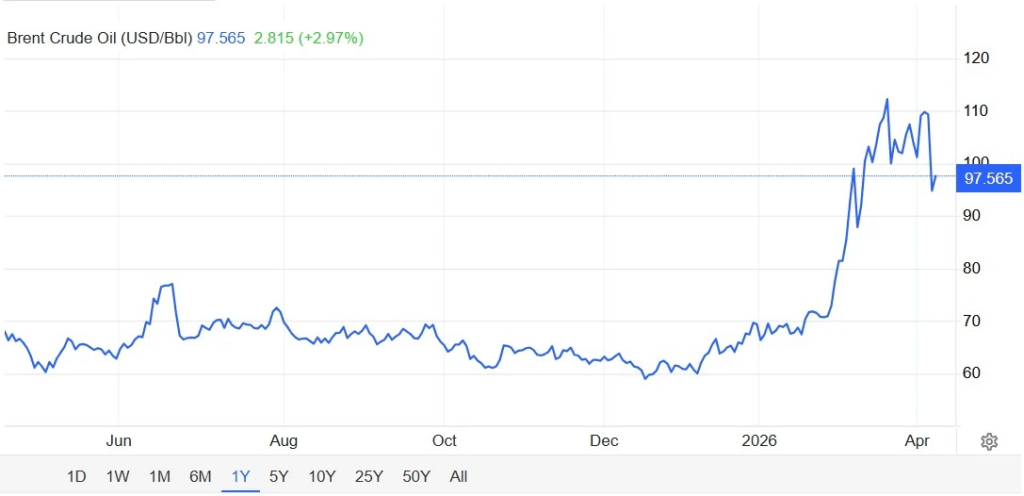
Brent Crude Oil (Source: Business Today)
The US and Iran agreed on a two-week pause to the almost month-long war, sending oil prices down. In the deal, Iran agreed to reopen the Strait of Hormuz. However, analysts noted that traffic remained low soon after the agreement. Most traders remained concerned about potential attacks and the safety of their crew members.
Nevertheless, the deal eased concerns about oil supply. Initially, the conflict and Trump’s threats to escalate it had sent prices skyrocketing. The closure of the Strait was in retaliation for US and Israeli attacks on Iran. It caused significant disruptions in oil supply. This, in turn, increased the likelihood of a spike in global inflation.
On Thursday, oil prices recovered after attacks on Lebanon signaled cracks in the ceasefire deal. Tehran responded with stern warnings of retaliation. Despite the deal, tensions remain high as the world watches to see whether both sides will respect it. Moreover, negotiations will continue during the pause. The war could persist if a long-term deal does not materialize. Such an outcome would mean further oil supply disruptions and higher prices.
Elsewhere, FOMC minutes revealed that some policymakers were open to rate hikes due to recent inflation concerns. The spike in oil prices has changed the policy outlook. Officials now believe it will take longer to lower inflation. This will push back rate cuts and increase the likelihood of rate hikes.
In the long run, rate hikes would slowdown the economy, reduce demand for oil, and ease inflation. The US economy has shown pockets of strength, especially in the labor market, which will likely influence future policy. Employers hired 178,000 new workers in March, beating forecasts of 65,000. At the same time, the unemployment rate eased.
The next major US report will show the state of consumer inflation. A hotter-than-expected figure would increase bets for a less dovish Fed.