



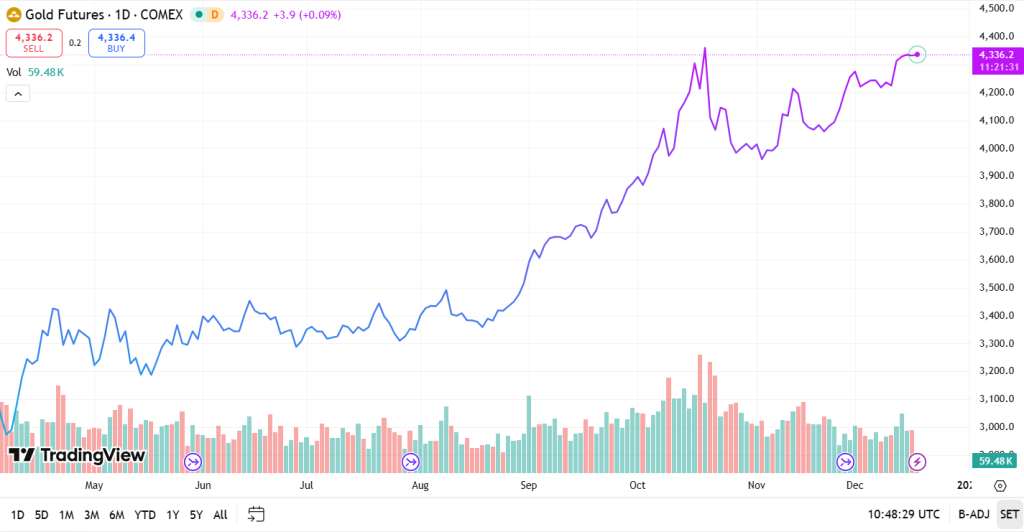
- Gold futures remain near 7-week highs as markets experience shifting dynamics.
- A softer dollar after mixed US NFP keeps the gold prices underpinned.
- Structural demand for gold and a dovish Fed keep the long-term bullish bias intact.
Gold futures are still trading near seven-week highs, remaining around the $4,350 level. The upside reflects shifting expectations surrounding US monetary policy as incoming data points to a slowing, but not sharply deteriorating, US economy. Lower yield expectations and a softer dollar reveal sustained demand across gold futures markets.
Recent US labor data sent mixed signals. Nonfarm Payrolls increased 64k in November, recovering slightly from October’s sharp drop. At the same time, the unemployment rate rose to 4.6%, which is the highest rate since 2021. Wage pressures eased with average hourly earnings increasing only 0.1%. Together, these figures suggest that labor market momentum is waning, reinforcing expectations of continued accommodative policy.
Markets have reacted by raising expectations for additional Fed rate cuts in 2026, which supports non-yielding metals. As real yields soften, futures positioning favors gold longs, especially during periods of weaker economic data.
The Fed has already had three 25-basis-point rate cuts in 2025. While official projections indicate only one more cut next year, policymakers are divided. Some officials still highlight inflation risks, while others focus on rising employment concerns. Futures markets continue to price in two rate cuts in 2026, which keeps pressure on the dollar and supports gold futures prices.
Inflation is the key variable. Upcoming US Consumer Price Index and Personal Consumption Expenditures data will be closely watched for confirmation that price pressures are easing without a renewed acceleration in growth. Softer inflation would bolster the argument for further easing and provide support for gold futures, while stubborn inflation could slow the pace of policy adjustments.
Geopolitical risks are also playing their part in the supportive backdrop. Reports of US actions aimed at sanctioned oil shipments in connection with Venezuela have contributed to general uncertainty. Gold futures tend to experience increased demand during periods of geopolitical turbulence, particularly when accompanied by a weaker dollar environment.
Structural support remains in place due to continued central bank buying. World Gold Council data shows net central bank purchases reached 254 tons through October, with continued increases in reserve allocations by China, Poland, and Turkey. This demand ensures a stable base for the gold futures, even with intraday swings.
As long as the markets expect rates to move lower and uncertainty remains high, gold futures are likely to be supported near current levels.