


- Gold futures have surged to a 2-week top as US-Iran war de-escalation weighs on the dollar.
- The geopolitical situation remains unclear, acting as a headwind for the gold rallies.
- Markets await the US ADP, retail sales, and ISM Manufacturing PMI for further fresh impetus.
Gold futures soared to two-week highs on Wednesday. Prices remain volatile due to changing expectations about the Middle East conflict and US monetary policy.
Bullion lost some of its small gains from the Asian session but managed to recover back above $4,700. Investors are pricing in Trump’s comments that Washington could end its military operation against Iran in two to three weeks. He also said that Tehran might not need to make a deal to end the conflict, which raised hopes that things would calm down.
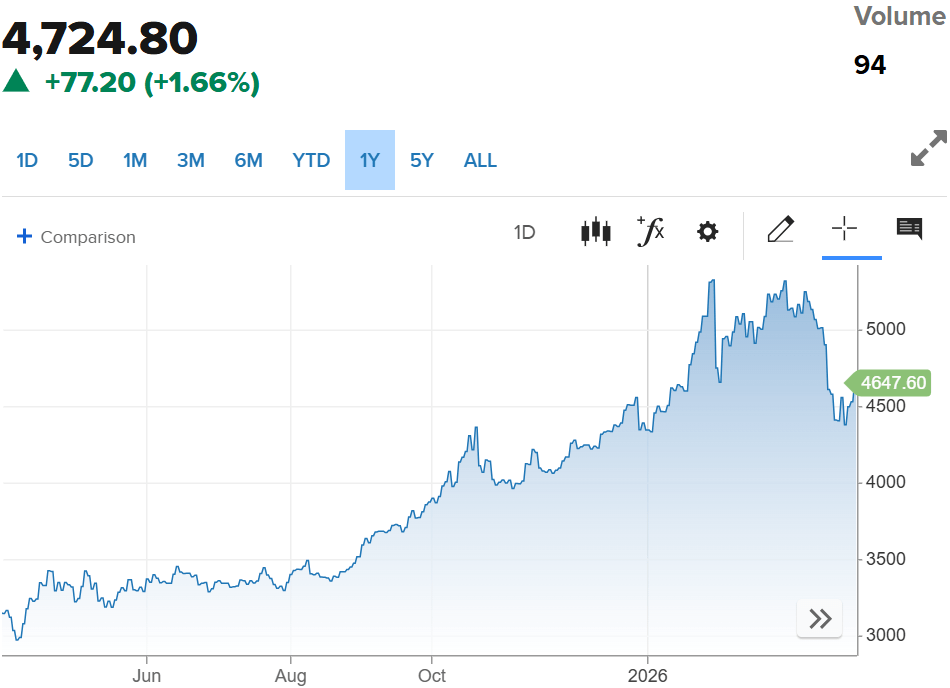
The comments pressured the US dollar, which fell about 0.2%, boosting gold prices. The US gold futures for April delivery rose about 1% to around $4,740. Spot gold was around $4,730 per ounce.
However, gains are still limited as geopolitical risks keep inflation expectations high. The US has sent 3,500 Marines to the Middle East, bringing the total number of troops in the area to 50,000. This is the biggest troop buildup in two decades. Reports that the United Arab Emirates is pushing for military action to reopen the Strait of Hormuz have raised fears of a larger conflict, which has caused oil prices to rise and stay high for a long time.
These dynamics have kept bets on higher interest rates alive, limiting the dollar’s downside and capping gold from aggressive rallies. Gold usually has a hard time in high-rate environments, being a non-yielding asset. The markets have mostly ruled out the possibility of the Federal Reserve lowering interest rates this year.
Market participants are now looking forward to Trump’s scheduled speech later on Wednesday, as well as several important US economic reports, such as:
- ADP employment,
- retail sales, and
- ISM manufacturing data.
These reports, along with speeches from FOMC members, are expected to affect prices in the near future.
Investors are also waiting for the nonfarm payrolls report on Friday, which is closely watched, to get more information about the future of interest rates.
Even though gold is going up right now, it is still under pressure. In March, it fell more than 11%, the biggest monthly drop since October 2008, because of a stronger dollar and hawkish policy expectations.