



- The US attacked an Iranian island in the Strait of Hormuz.
- Fed Chair Kevin Warsh struck a hawkish tone at the Jackson Hole symposium.
- Forecasts show an addition of 55,000 US jobs in August.
Equities fell on Monday as oil prices rose after the US attacked an Iranian island in the Strait of Hormuz. Iran retaliated by targeting US bases in Jordan, causing worries about an escalation that would send inflation higher. Stocks declined on Friday after Fed Chair Kevin Warsh’s remarks led to an increase in rate hike expectations.
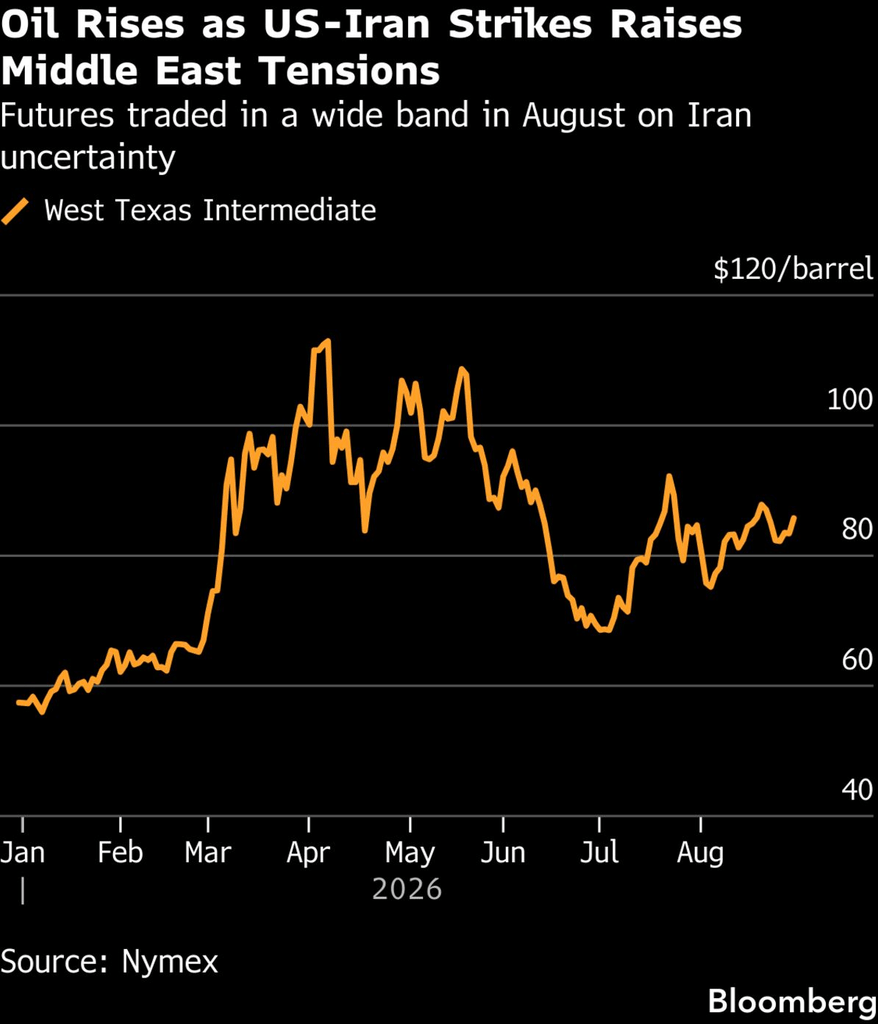
WTI (Source: Nymex)
Tensions between the US and Iran escalated on Monday after an attack on Iran’s Larak Island left soldiers dead and wounded. Iran quickly retaliated by sending missiles to US bases in Jordan. Consequently, oil prices rose, rekindling inflation worries.
The attack came after a pause that had allowed traders to hope the two nations would focus on other ways to resolve their conflict. Last week, the US announced economic sanctions on Iran. Although it showed there was still no agreement, it was better than drones and missiles that caused destruction.
At the same time, reports last week revealed that Iran and Oman agreed to jointly manage the Strait of Hormuz. As a result, oil prices pulled back. The renewed fighting this week could mean higher oil prices. This, in turn, would put pressure on the Fed to hike interest rates. The stock market suffers when borrowing costs increase. Businesses find it difficult to grow at rates seen when borrowing costs are low, particularly in the tech industry. As a result, equities decline.
At the Jackson Hole symposium on Friday, the Fed Chair struck a hawkish tone. He noted that inflation remains a big concern. IIf inflation does not come down, the Fed will have to lower price pressures.These remarks sent the likelihood of a September hike to 57%, up from around 30%.
“With the Chairman appearing to stress the Fed’s inflation-fighting mission, unexpectedly strong labor-market data this week might be taken as bad news by the market, since it could reinforce expectations for a rate hike,” Chris Larkin, E*TRADE from Morgan Stanley’s Managing Director, Trading and Investing, said.
Market participants will now wait to see the state of the labor market on Friday. Forecasts show an addition of 55,000 jobs in August. An upbeat report would boost rate hike expectations.