



- Currency futures continue to struggle as risk-off sentiment keeps the dollar elevated.
- Upbeat US NFP data points to odds for “higher for longer” Fed policy.
- Markets await the US ISM Manufacturing PMI for fresh impetus.
Currency futures moved in favor of the US dollar on Monday as solid labor data and rising geopolitical tensions increased demand for the safe-haven dollar, while traders recalibrated their expectations for global interest rates.
During Asian hours, the US Dollar Index stayed close to 100.25, supported by news that the US economy added 178k jobs in March, well above the estimates. The unemployment rate fell slightly to 4.3%, which supports the idea that the Federal Reserve can keep policy steady for now.
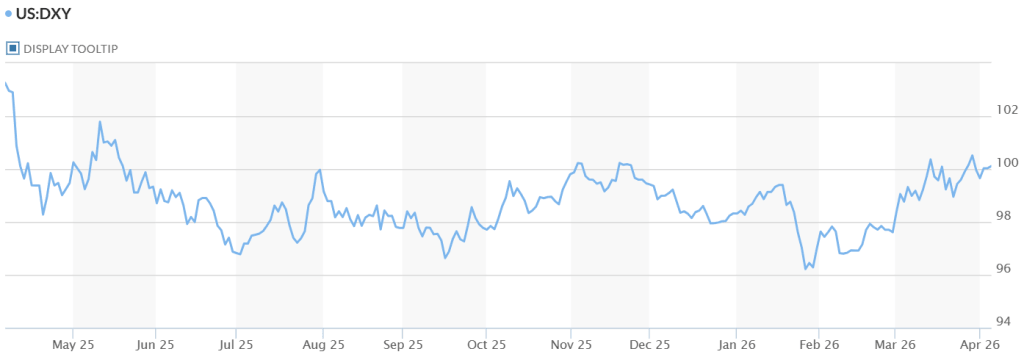
In currency futures markets, traders bought more long positions in contracts linked to the dollar, like Euro FX futures (6E), British Pound futures (6B), Japanese Yen futures (6J), Australian Dollar futures (6A), and Canadian Dollar futures (6C). The move shows investors’ anticipation that US rates will stay higher than those of other countries, supporting the dollar.
The CME FedWatch tool’s futures pricing shows that markets expect no chance of a rate change at the April FOMC meeting. There is also a strong chance that the Fed will stay on hold until the end of the year. This outlook has given currency futures a stable base for dollar demand, especially against currencies paying less interest.
On the other hand, US-Iran tension grew, with uncertainty about a possible ceasefire. This led to more safe-haven flows into the dollar. However, reports of ongoing talks for a temporary truce capped gains, which led to mixed positioning across major currency futures.
The euro traded close to 1.1520 against the dollar as traders thought the European Central Bank would keep its strict policy. Meanwhile, the pound rose slightly above 1.3200, but gains were still small due to ongoing global uncertainty.
Currencies linked to commodities moved in different directions. The Australian dollar fell to 0.6885 amid deteriorated risk sentiment. The Canadian dollar, on the other hand, got mild support as geopolitical tensions eased a little, which hurt the US dollar. Meanwhile, the Japanese yen gained slightly as the fear of Japanese government intervention grew.
Market participants are now waiting for the US ISM services data. A weaker reading could put recent dollar strength to the test, while a strong print could strengthen bullish momentum in currency futures linked to the Greenback.