




- Currency futures continue digesting the Fed decision, with looming ECB, BoE and BoJ decisions this week.
- Pound lagged peers amid downbeat GDP, increasing odds of BoE rate cut this week.
- Dollar softness being a center stage, keeps markets on toes, awaiting delayed NFP and CPI data ahead.
Currency futures opened the week with uneven price action as traders adjusted positions following last week’s Fed decision and shifting expectations around global monetary policy into 2026. The broader US dollar trend remains softer, while price behavior across euro, pound, Australian dollar and Japanese yen futures shows increasing sensitivity to relative data surprises and yield movements rather than headline policy signals.
Euro futures (6E) continue to trade under recent highs, underpinned by steady demand against a weakening dollar. Firm Eurozone inflation dynamics and ECB communication have provided support, suggesting limited appetite for further easing in the near term. ECB officials have signaled that policy settings are sufficiently restrictive, prompting traders to scale back expectations for additional cuts. Euro futures positioning now appears increasingly dependent on incoming inflation and PMI releases, which will determine whether growth risks begin to outweigh the benefit of stable policy expectations.
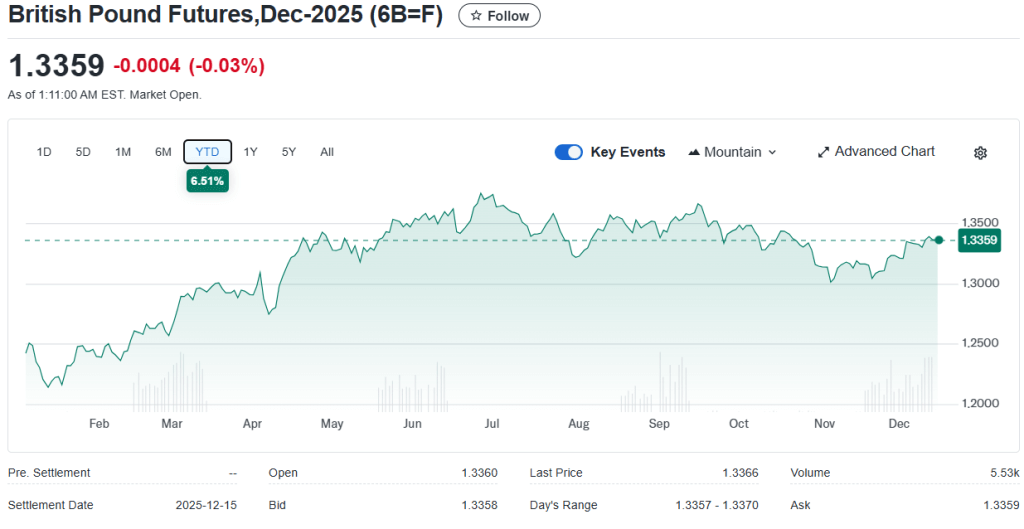
However, the British pound futures (6B) have lagged peers, reflecting a more cautious outlook for the UK economy. Recent GDP data has pointed to subdued growth momentum, keeping the Bank of England under pressure as markets reassess how long rates can remain restrictive. While sterling has avoided a deeper pullback, futures traders have been hesitant to add exposure ahead of key labor market data. Wage growth and employment figures will be closely watched, as any deterioration could strengthen expectations for an earlier policy shift.
Meanwhile, Australian dollar futures (6A) have eased following a strong rebound earlier in the month. Softer Chinese activity data has reintroduced concerns around external demand, while weak domestic employment figures have dampened expectations of further tightening from the Reserve Bank of Australia. Even so, losses have been contained by broader US dollar weakness and relatively stable risk sentiment. AUD futures direction now depends on upcoming US labor data, further Chinese releases, and Australian PMI surveys, all of which could influence rate differentials and risk appetite.
On the other hand, Japanese yen futures (6J) remain sensitive to moves in US yields but have shown signs of stabilization. Markets continue to price a slow and cautious path toward policy normalization by the Bank of Japan, with officials increasingly confident that inflation is becoming more durable. Any renewed decline in US Treasury yields could prompt short-covering in yen futures, while upside in yields would likely reapply pressure.
Looking ahead, several major events are expected to drive volatility across currency futures markets. US Nonfarm Payrolls and CPI data will be critical for dollar pricing. In Europe, inflation and PMI figures will shape ECB expectations, while UK labor market data will guide sterling positioning. The Bank of Japan’s policy meeting and Chinese economic releases will also play a key role, particularly for yen and Australian dollar futures.
Overall, futures markets remain dominated by relative policy expectations and data-driven repricing, with traders increasingly focused on where growth and inflation diverge across economies rather than headline rate decisions alone.