



- April was the strongest month for the S&P 500 in nearly 6 years.
- Iran started attacking the United Arab Emirates on Monday.
- This week, the US will release its monthly employment report.
US equities pulled back slightly on Monday after hitting fresh record highs in the previous session amid earnings optimism. Market participants have decided to focus more on the upbeat earnings reports, indicating a solid start to the year. However, downside risks remain due to the uncertainty surrounding the Iran war.
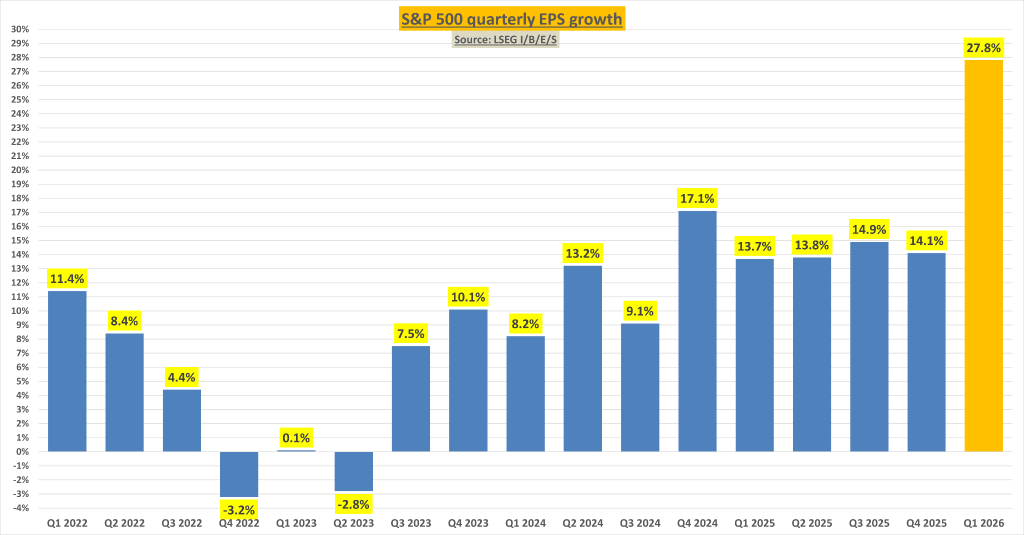
S&P 500 EPS (Source: Investing.com)
April was the strongest month for the S&P 500 in nearly 6 years. Last week, the index hit all time highs despite intensifying tensions between the US and Iran. Analysts believe market participants have chosen to focus on the first quarter earnings reports. Upbeat earnings from companies point to strong economic performance in the first quarter.
However, this solid performance could change in the second quarter. The Iran war has led to fears of a spike in inflation. An increase in inflation will and has already put pressure on the Fed to consider higher interest rates. When borrowing costs go up, the business environment deteriorates as company costs increase. At the same time, consumer spending is affected as purchasing power drops. Such an environment would send equities lower.
On Wednesday, oil prices spiked after Trump rejected Iran’s new proposal to end the war. Iran wanted the US to end its blockade and postpone nuclear talks. However, Trump said he would not agree to any deal without nuclear talks. Meanwhile, Iran has refused to open the Strait of Hormuz until the US ends its blockade.
Iran sent the US an updated peace proposal on Friday. However, Trump said he was not satisfied with it. Still, it gave traders hope that the two countries are working towards ending their conflict.
On Monday, Trump started freeing ships that were transiting the Strait. However, the conflict escalated when Iran started attacking the United Arab Emirates. Moreover, the US sank Iranian boats in the Strait of Hormuz.
Traders are also watching US economic data for clues on the state of the economy amid the ongoing Iran war. This week, the US will release its monthly employment report. Economists believe employers added 60,000 new workers in April. This would be a drop from March when they added 178,000 workers. A bigger-than-expected number would increase inflation concerns and rate hike expectations.