



- Risk appetite plunged when Iran seized two ships in the Strait of Hormuz.
- Sales in the US increased by 1.7% compared to the forecast of 1.4%.
- The euro eased after data revealed weak business activity in the Eurozone.
Currency futures struggled last week amid a decline in risk appetite due to escalating tensions between the US and Iran. Meanwhile, the dollar gained as demand for safe-haven assets increased. Additionally, market participants paid attention to US sales data, which pointed to strong consumer spending.
Risk appetite plunged when Iran seized two ships in the Strait of Hormuz. Meanwhile, the US captured a tanker carrying Iranian oil in the Indian Ocean. The moves sparked panic in markets, sending traders to the safety of the dollar. However, by the end of the week, there was hope that the two countries would hold talks in Pakistan. Consequently, the dollar pulled back, and currency futures gained.
However, sentiment shifted over the weekend after the planned Pakistan talks failed. The negotiations were cancelled after Trump said that Tehran’s leadership was still largely confused. As a result, there was uncertainty about the future. Fortunately, reports indicate that Iran has also offered a new proposal to open the Strait. Traders remain hopeful that there will be progress towards ending the war.
Meanwhile, data released on Tuesday showed that US retail sales increased by 1.7%, beating the forecast of 1.4%. The upbeat numbers pointed to solid consumer spending that will likely encourage the Fed to keep rates on hold. The recent rally in oil prices amid the Middle East conflict has forced the Fed to reconsider its rate-hike plans. As a result, bets for a rate cut this year have fallen.
Elsewhere, the pound received support after data showed strong consumer spending. Moreover, the UK’s manufacturing and service sectors expanded, putting pressure on the Bank of England to keep interest rates high.
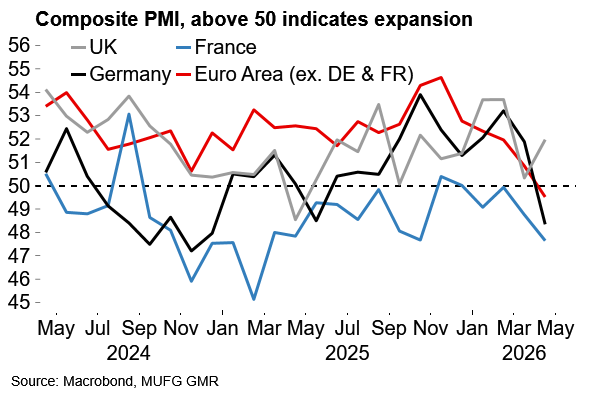
Eurozone composite PMI (Source: Macrobond, MUFG GMR)
On the other hand, the euro eased after data on Thursday revealed weak business activity in the Eurozone. Rising energy prices are hurting the economy and fueling recession worries.
This week, the FOMC meeting will shape the outlook for future policy moves. Market participants will watch policymakers’ comments on war, inflation, and interest rates. Hawkish remarks will support the dollar and weigh on currency futures. On the other hand, if policymakers are dovish, currency futures will gain. The US will also release its crucial core PCE price index report.