


- US-Iran tensions, Iran-Russia naval drills, and failed Ukraine-Russia talks have all added a risk premium to oil prices.
- Traders anticipate that Middle East crude exports will remain unchanged even in the event of a minor conflict.
- Rising inventories, slow demand growth, OPEC+ supply flexibility, and strong Russian flows to China cap oil price rallies.
Crude oil prices have settled down after a sharp rise due to geopolitical events. Brent is trading above $70, with WTI above $65. The recent uptick stems from the reports that the US could take military action against Iran in the near future and that Iranian and Russian naval forces were holding extended drills in the Sea of Oman and the northern Indian Ocean.
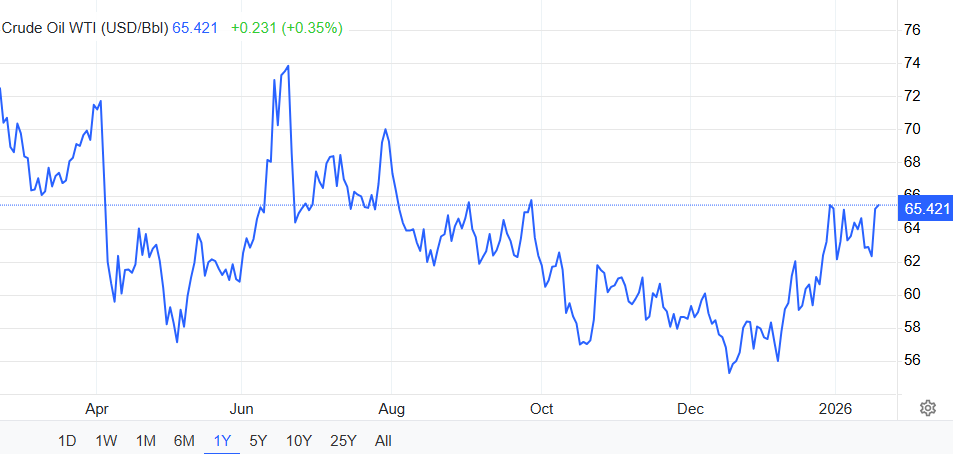
Markets have been pricing in a higher risk premium for Middle East supply, especially around the Strait of Hormuz, which accounts for about 20% of the world’s crude oil flows. Some estimates put the geopolitical premium at $7 to $10 per barrel. However, prices have been oscillating without any clear direction over the past two weeks.
The key geopolitical driver is the rising tension between Washington and Tehran, with nuclear talks stalled but indirect diplomacy continuing. The US is showing intent to launch a credible strike, but its current stance looks more like pressure and leverage than preparation for a big invasion or an open campaign to change the government.
However, even a small attack could raise risk premiums, especially if Iran threatens to close transportation routes or infrastructure in the region. The market, on the other hand, anticipates that major supply flows will continue even in the event of a conflict, as has happened in past Middle East crises.
At the same time, bigger geopolitical risks go beyond the Gulf. The failure of peace talks between Ukraine and Russia in Geneva has also contributed to rising crude oil prices. This has caused concerns about longer-lasting interruptions and kept a bid under traditional safe-haven assets. Meanwhile, naval exercises between Iran and Russia make people think they are working together to push back against Western pressure, which in turn makes crude prices more volatile.
On the other hand, fundamentals seem more balanced but a little weak. The International Energy Agency has raised its forecast for global demand growth in 2026 to 930k barrels per day. However, it still expects a surplus in the end.
In the US, an 8.5 million-barrel increase in crude oil inventories suggests supply will remain stable in the near future, even though production is expected to slow slightly after peaking in 2025. Talks within OPEC+ to raise output again in April, along with record Chinese purchases of discounted Russian barrels, show that there is still sufficient physical availability.
In the near future, the most likely path is more volatility, this time driven by headline updates rather than structural tightness. Prices will fluctuate with each sign of progress or setback in US-Iran diplomacy and at other geopolitical flashpoints.
However, the fundamentals will keep prices from rising for a long time unless there is a real physical disruption. On the economic calendar, traders will be eyeing US GDP, the Core PCE Index, and Flash PMI data to gauge economic momentum. Stronger activity indicators signal higher oil demand, pushing crude prices further up.