



- US interest futures remain volatile, digesting the downbeat US CPI and mixed NFP data.
- The 2-year and 10-year yields indicate a flattening of the curve, revealing economic uncertainty and concerns about growth.
- The markets now anticipate more than one Fed cut in the first half of 2026.
US interest futures have remained volatile as the markets digest recent inflation and employment statistics, re-evaluating their expectations of the Fed’s policy path in 2026. A surprisingly cool CPI data and mixed NFP figures drove markets to price in two more rate cuts in 2026.
Treasury yields highlight these dynamics. The 2-year yield, which reflects short-term expectations of Fed policy, has dropped from its recent high of 3.50%. The downside indicates that traders are becoming increasingly optimistic that the Fed will reduce rates as inflation subsides and job growth decelerates. Reduced short-end yields are an indicator of more rate cuts in the first half of 2026.
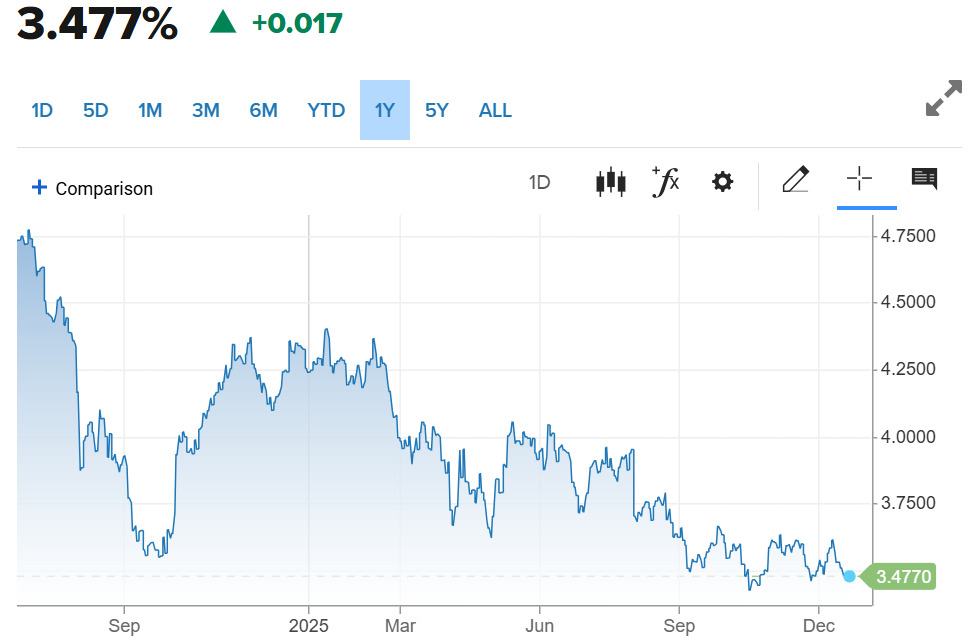
In the meantime, the 10-year yields have fallen into the low-4.10% area. These reflect long-term growth and inflation expectations; thus, a decline indicates that investors are assuming a weaker growth outlook or a phase of below-trend growth, which suggests stronger odds of continued easing policy. A combination of decreasing long-term and short-term yields indicates a flattening of the yield curve, which the markets interpret as a sign of uncertainty over future economic strength.
Fed funds futures reveal a shift in the dynamics. Where markets previously believed that rates would remain on hold, they are now pricing a sizeable probability of a decline as early as Q1 2026. This change gained momentum following the under-forecasted inflation numbers. The Fed officials focus on data-driven policy.
The correlation between the 2-year and 10-year yields is important to understand rate-future pricing. The narrowing spread indicates that the markets anticipate a slowdown and a decline in growth, affecting the pricing of interest rate derivatives and mortgage-backed securities, which are sensitive to future rate expectations.
Moving forward, market participants will closely monitor inflation, employment, and the Fed’s commentary to gain further insights into the Central Bank’s expectations. In the event of inflation resurgence or robust job data, it would restrain aggressive easing. On the other hand, soft data will probably continue to lean the tone towards more cuts. In that regard, Treasury yields and interest futures remain closely correlated predictors of changing policy expectations.

