



- Gold futures rise as US-Iran tensions mount over certain incidents, along with new demands from Iran regarding negotiations.
- The US dollar weakened amid ongoing Fed worries, while markets brace for two more cuts this year.
- Gold and silver ETFs have posted a sharp recovery but lie below the all-time highs marked in January.
Gold’s latest leg higher is best understood through futures-led risk repricing. As tensions between the US and Iran grew, investors quickly moved into safe havens, pushing gold futures up 3.49% to $5,107 and spot prices through the $5,000 psychological barrier to $5,089. Silver rose 5.77% to $88.00, which supported the “panic hedge” trade. This aligns with high-beta participation during periods of rising volatility.
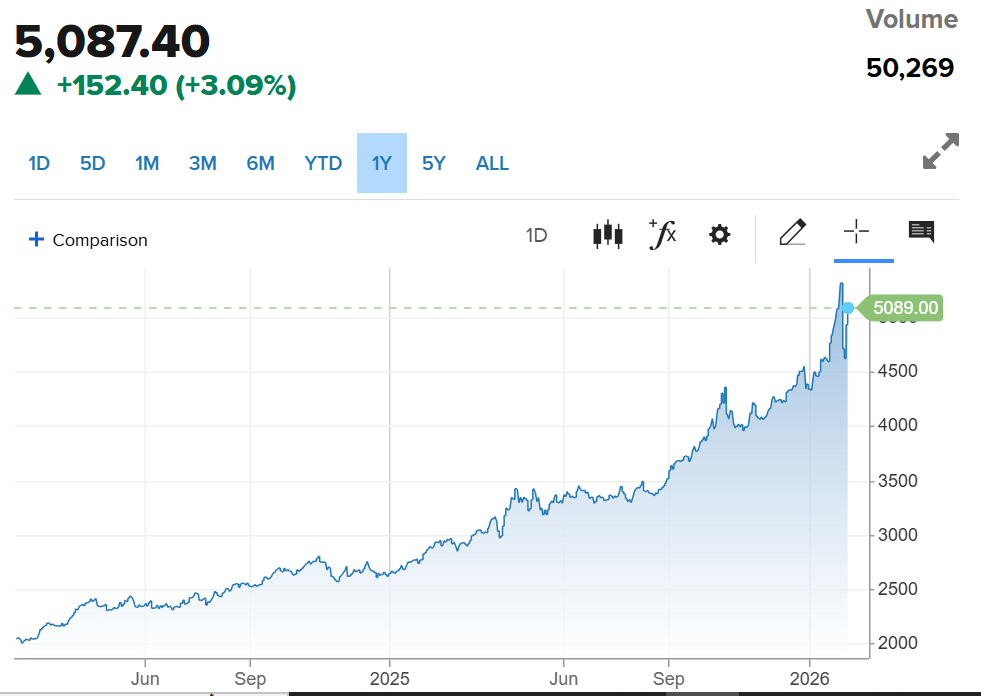
The trigger was a series of quick military flashpoints near key shipping lanes. Like, the US shot down an Iranian drone that was getting too close to the USS Abraham Lincoln in the Arabian Sea. Then, there were reports of Iranian gunboats bothering a US-flagged oil tanker near the Strait of Hormuz. These events destroyed hopes for quick diplomacy and forced a reevaluation of tail risk, helping gold break through several technical resistance levels in just a few hours.
The White House said talks could still take place on Friday. Still, Tehran’s new demands, moving the talks to Oman and limiting the agenda to nuclear technicalities, made it more likely that the talks would be delayed or fail, which kept demand for hedging high.
The US dollar’s weakness also bolstered futures momentum, as traders revisited the Fed’s rate path amid a possible growth shock. Real rates are what really affect gold’s macro sensitivity. When markets lower policy rates, the opportunity cost of holding non-yielding gold goes down, leading to more futures buying.
Reports that President Donald Trump nominated Kevin Warsh (seen as hawkish and supportive of the dollar) led investors to worry about tighter policies. However, traders still favored the view that there would be at least two Fed rate cuts this year, which kept USD bulls in check.
After a big drop in metals and related ETFs, gold and silver ETFs bounced back sharply on February 4, but they were still below their all-time highs from late January. The bigger picture, geopolitics, central bank reserve diversification, and macroeconomic uncertainty, remain the same. However, the market’s direction in the near term depends on US data (ADP, ISM Services) and changing yields/USD.