




- The currency markets tumble at the start of the week, continuing Friday’s trend as the dollar recovers after Warsh is nominated as Fed Chair.
- Euro, pound, Aussie, CAD, and yen futures struggle amid a less dovish Fed narrative.
- The market participants await key US labor market data, as well as rate decisions from Australia, the UK, and the Eurozone.
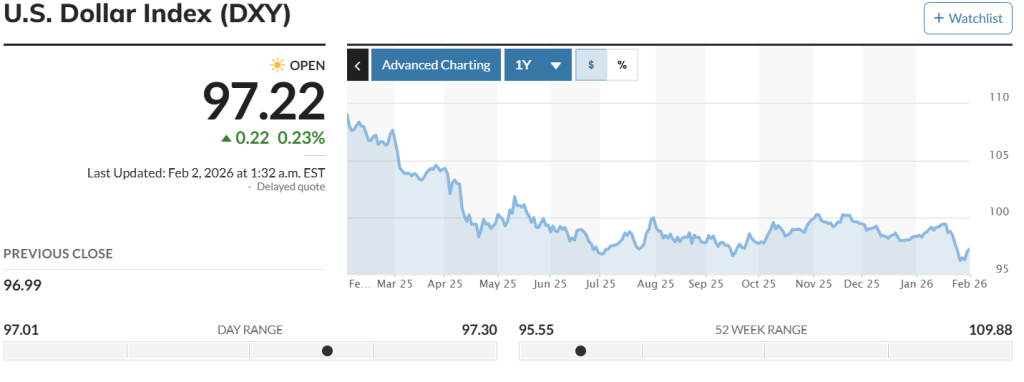
Currency futures markets are recalibrating amid political and macroeconomic events in the US that are affecting investors’ sentiment toward the US dollar. The nomination of Kevin Warsh as the next Fed Chair has changed expectations toward a less flexible policy path. This has supported the US dollar across futures markets.
The bias in euro FX futures (6E) remains cautious. Even though Eurozone growth data has been slightly better than expected, with steady GDP growth and falling unemployment, this hasn’t changed the policy gap with the Federal Reserve. Meanwhile, the US wholesale inflation came in strong, with core PPI rising. It supports the narrative that US rates will stay high for a longer period. This background weighs on the 6E uptrend, especially since long-term US yields are still high.
The tone of British pound futures (6B) is more neutral. The UK inflation and retail sales data have lowered short-term expectations of aggressive Bank of England easing, helping stabilize sterling positioning. However, the US monetary policy expectations still have a big effect on the overall direction of 6B. Under Warsh’s leadership, the Fed is seen as patient and aware of its balance sheet. This limits the pound’s ability to rise over time, even though UK data is relatively strong.
The Australian dollar futures (6A) have also dropped as traders balance a stronger Australian economy with chaos in the rest of the world. Australian inflation remains well above the target, while labor market indicators show renewed momentum, keeping expectations of strict RBA policy in place. Still, the fact that inflation data is slowing each month and there is uncertainty about what the RBA will do next has led investors to be less certain about holding long positions. A stronger US dollar and mixed signals from China’s manufacturing data limit 6A’s short-term upside.
The mood in yen futures (6J) stays defensive. The Bank of Japan keeps stressing the need to return to normal, yet real rates remain very low. Even though Japanese officials downplay concerns about the yen’s weakness, US policy remains restrictive compared to Japan’s, keeping pressure on yen futures.
The Canadian dollar futures (6C) have come under pressure as falling oil prices are hurting Canada’s trade terms. This, along with a stronger US dollar and the Fed’s cautious tone, makes 6C more likely to go further down.
Finally, the Dollar Index futures (DXY) remain the key driver. Dollar futures maintain a positive bias across the board as fiscal uncertainty is lower, inflation pressures are high, and Fed officials are pushing back against early cuts. The market participants await key US labor market data, as well as rate decisions from Australia, the UK, and the Eurozone.