



- Currency futures remain fragile amid elevated geopolitical risk.
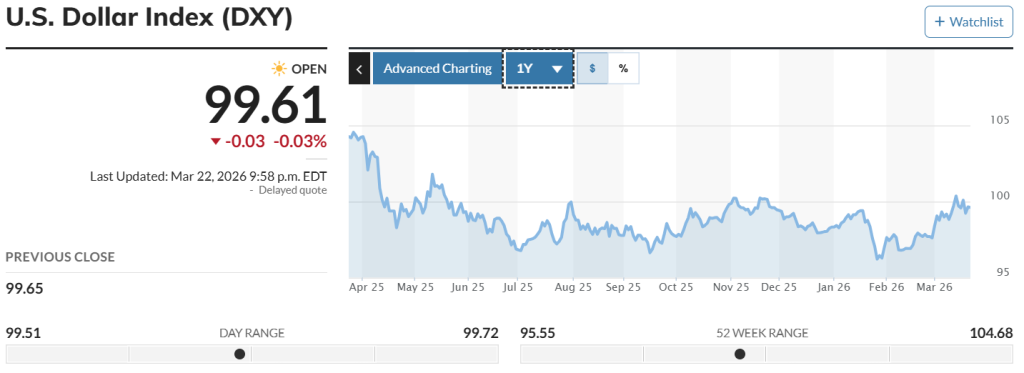
- The US dollar lacks follow-through, trading below its previous week’s high.
- The euro, pound, yen, and Aussie pose a risk of further downside.
Global currency futures indicated the week would start slowly. The US dollar held steady amid rising geopolitical tensions and a mixed outlook for monetary policy.
The US Dollar Index futures (DXY) traded near 99.65, up slightly, as investors sought safety in the dollar. But the move lacked strong follow-through, as it failed to break above last week’s highs, which shows the traders are hesitant to add to their bullish positions aggressively.
Rising tensions in the Middle East prompted investors to buy dollars as a safe-haven asset. President Trump gave Iran 48 hours to reopen the Strait of Hormuz. He said he would target important energy infrastructure if they didn’t. Iran warned that it would hit back at regional energy assets, which kept crude oil prices high and raised concerns about inflation.
This trend in currency futures markets made it easier to go long on dollar pairs, especially against the euro and pound. Euro FX futures (6E) fell to near 1.1560 as investors showed less risk appetite and were uncertain about the European Central Bank’s policy outlook. The ECB recently kept rates unchanged but warned that inflation risks were higher due to the conflict. This led traders to rethink their expectations for possible rate hikes later this year.
The British pound futures (6B) also fell, remaining around 1.3320. Before an emergency meeting of UK policymakers to discuss the economic effects of rising energy prices and geopolitical instability, market sentiment remained weak.
Currencies linked to commodities were also under significant pressure. The Australian dollar futures (6A) fell slightly, approaching 0.7000, even though the Reserve Bank of Australia was hawkish and raised rates to 4.10% earlier this month.
Japanese yen futures (6J), on the other hand, did not perform despite rising geopolitical risks. Investors still preferred the dollar over other safe havens. However, yen losses remain limited amid the risk of BoJ intervention near the 160 level in USDJPY.
Overall, the currency futures markets show a fragile balance between safe-haven flows that support the dollar and changing expectations for global policy that make markets less certain about directional trades.